
Ever since fitness trackers came onto the market, it has been a fascinating journey of constant innovation.
While back in the day only pedometers were available to count steps, today’s sophisticated wearable technology provides a wealth of health data.
These devices are mostly worn on the wrist and can monitor calories burnt, distance covered during an activity, sleep, menstrual cycle, stress, blood pressure, etc.
Using an optical technique called photoplethysmography (PPG), they detect changes in the blood volume in tissue microvascular beds.
A wearable device shines light – commonly green, red or infrared – onto the skin and measures the amount reflected back.
Variations in reflected light correspond to the pulse wave generated by the heart, allowing the device to calculate heart rate, heart rate variability (HRV) and oxygen saturation.
The latest ones can also track physiological changes linked to insulin resistance, potentially helping users to identify metabolic risks before pre-diabetes or Type 2 diabetes set in.
Of all these markers, HRV is most often at the heart of distinct algorithms designed to track the wearer’s stress, readiness and fatigue levels.
Unlike measuring heart rate, i.e. the average number of heartbeats per minute, HRV focuses on the slight fluctuations of the heartbeat and usually measures the variation time in milliseconds.
However, there is a gap between wearable wellness metrics and how HRV is being interpreted (or misinterpreted), with some users getting anxious over low scores.
In preventive health settings, clinicians are increasingly looking at HRV, alongside markers tied to stress physiology, recovery capacity, sleep quality, metabolic health and autonomic nervous system function.
Even in apparently healthy individuals, HRV can indicate the presence of health problems, including heart conditions and mental health issues like anxiety and depression.
HRV explained
HRV is basically the tiny variations in time between two consecutive heartbeats.
“It’s a way to measure how well the autonomic nervous system is cycling between the ‘fight-or-flight’ stress response and the ‘rest-and-digest’, or relaxation, response.
“When you have good HRV, it gives us an insight that your body is functioning well by adapting to stress and recovering well,” says functional and longevity medicine practitioner Dr Iman Thalia Khan.
The autonomic nervous system has two main branches: the sympathetic nervous system (fight-or-flight) and the parasympathetic nervous system (rest-and-digest).
HRV reflects the dynamic interplay between these systems, showing how effectively your body responds to internal and external stressors.
HRV measurement was a metric previously reserved for elite athletes, requiring expensive equipment and interpretation by a cardiologist.
These athletes began measuring HRV to gain a deeper understanding of their autonomic nervous system’s function and to optimise their training and recovery processes.
HRV provides insights into the body’s physiological capacity to handle stress and adapt to training, which is crucial for performance and longevity.
By monitoring HRV, the athletes could make informed decisions about their training intensity, recovery strategies and overall health, leading to better performance outcomes and reduced risk of injury.
Dr Iman says: “The increased awareness about longevity, stress, burnout and how to recover has pushed HRV to the layman, and this shift was made possible by the evolving wearable technology out there.”
No perfect score
As children, we were all told that our heartbeats had to have a regular rhythm.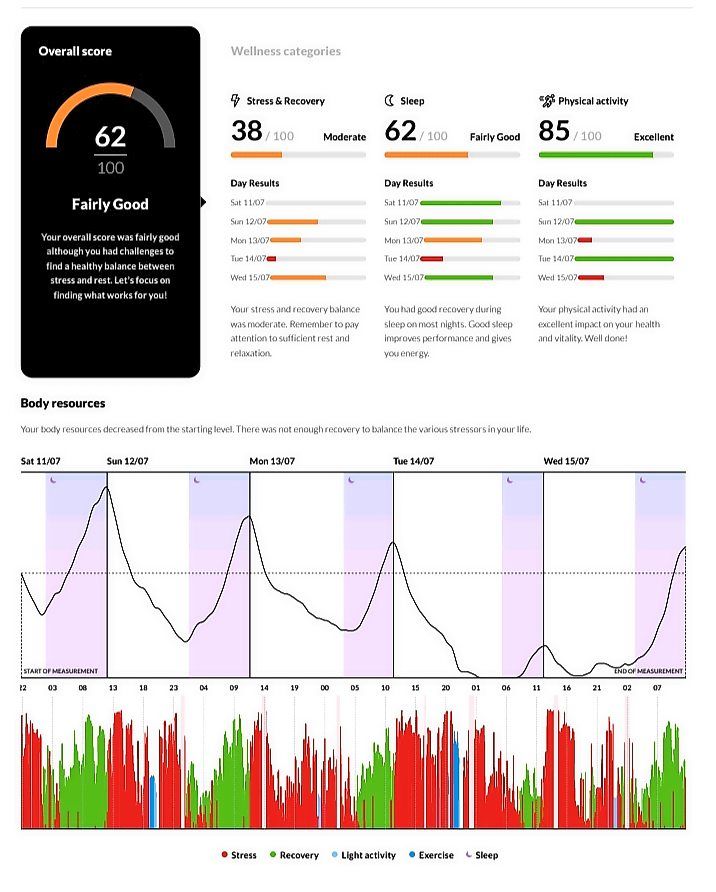
Lifestyle medicine practitioner Dr Beatrice Chia says: “We think that if we have an irregular rhythm, that’s bad.
“Now, we’re zooming into each heartbeat and realising that having a bit of variability is only human – that’s the reason it’s called HRV.
“Having a bit more variability means your system is able to adapt to a bit of stress and relax from it.”
Variability can happen when we inhale and exhale.
“When we breathe, there is a physiological change in volume in our body, hence the bit of variation.
“That doesn’t mean a higher HRV is better,” she adds.
There’s no single ideal HRV score, as it varies by age, fitness level, sex, sleep quality, stress, diet, medications, lifestyle habits, tracking device and calculation method.
It naturally decreases with age and can be lowered by poor sleep, high stress or sedentary behaviour.
Dr Chia highlights that people are struggling to interpret their scores as they keep comparing themselves with others.
“There is no normal – you have to see what is normal for you.
“These devices were designed to compare with yourself, not with your friends.
“Clinicians prefer a higher HRV score, which means your body has the ability to adapt to changes, but how high is high and how low is low is all subjective.
“You probably may not understand whether you’re in a healthy or unhealthy range – that’s where you need to seek advice from a clinician,” she says.
Generally, low HRV is considered a sign of current or future health problems because it shows your body is less resilient and struggles to handle changing situations.
Gold standard
There are two ways of detecting HRV, and obviously, the medical-grade devices used by clinicians are the gold standard, not the self-monitoring wearables.
Dr Chia says: “We’re looking at electrocardiogram (ECG)-based beat-to-beat HRV, via sensors using clinically-approved medical electrodes.
“This is different from the one you have on your wrist.”
The sensors continuously record HRV over several days, providing insights into autonomic nervous system activity, stress levels, recovery capacity and sleep quality.
You wear it over three to 14 days.
The collected data is uploaded and analysed by software, which generates a report highlighting stress/recovery, sleep and physical activity metrics.
“This is not to say the self-monitoring wrist wearables are bad – they are good too as so people are curious about their health – that’s how to get the conversation started.
“The problem is that people don’t know how to manage the results, who to go to for advice, and if the score is very aberrant, what to do about it.
“Or they ignore the red flags,” she points out.
Dr Iman adds: “The wearables shouldn’t cause stress, especially if you’re constantly seeing a low score – that would be counterproductive.
“For elite athletes with low scores, they know they may have to increase their nap time or lower their training level, etc, but the ordinary person may not know what to do.
“That’s why you need to go to the right person to interpret your data.”
Measuring with intent
The medical-grade devices are suitable for individuals who have already addressed basic lifestyle factors like sleep, nutrition and exercise, and are looking to optimise stress recovery balance or gain deeper insights into nervous system function.
“Ideally, when we measure HRV with a medical-grade device, we want to include one day of stress, one day of relaxation and a ‘mixed’ day, or depending on what the clinician thinks you require.
“After you’ve done your measurement and intervention, we repeat the measurement again.
“So, this is done with intention,” explains Dr Chia.
With a medical-grade device, it only does one thing and it does it well, i.e. more accurately than the wearables.
She says: “We take every patient’s complaint seriously; we don’t dismiss them because their wearable is a low grade one or purchased off e-commerce platforms.
“It’s the doctor’s professionalism to review the data and explain to the patient because we don’t want to miss an irregular heartbeat (arrhythmia), which could be life-threatening.”
Both the doctors, who work in a private longevity centre focusing on improving patients’ healthspan, often put their heads together to discuss a patient’s report to come up with the right management.
“Some patients have issues that can affect their sleep and this can affect their HRV scores, e.g. gut issues, hormone imbalances, women in perimenopause, relationship problems, burnout, etc.
“We take the score and pair it with other things to investigate further.
“We give them insights on what we can do next, e.g. if they have sleep issues, we treat this with cognitive behaviour therapy (CBT).
“Technology provides data, but clinicians provide meaning,” Dr Iman concludes.