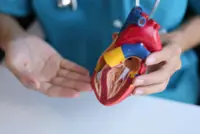
People often worry about heart attacks and strokes but overlook aortic disease.
While most commonly affecting men after the age of 60, women and those younger can be susceptible to multiple conditions, including aortic aneurysms, aortic dissections and aortitis.
Northern Heart Hospital Penang consultant general and vascular surgeon Associate Professor Dr Edward Choke said the aorta is the largest blood vessel in the body.
“It was recently designated an organ rather than just a blood vessel.
“If it is affected by disease, blood supply to vital organs is compromised.
“People know about heart disease, heart attacks and strokes, but few have heard of aortic disease.
“Aortic disease usually causes no symptoms until it is too late,” he said.
He said the most common aortic disease is an aortic aneurysm, which is the dilatation of the aorta, weakening the wall which can lead to an aneurysm rupture, where the patient loses blood quickly.
“The second is an aortic dissection, while the third is blockage of the aorta,” Assoc Prof Choke said.
He said it normally affects males in their older age, especially smokers, those with high blood pressure and high cholesterol levels.
“There is a genetic component to it as well so it tends to run in families but it does not just happen overnight.
“The disease develops over many years without patients knowing.
“It is often detected incidentally during an ultrasound, CT or MRI scan,” he said.
Assoc Prof Choke said aortic disease can progress without the patient knowing until it becomes life threatening.
Patients referred to him are usually already diagnosed with it.
“It is often discovered during scans for unrelated conditions, such as prostate or kidney problems.
“In rare cases, patients may feel a pulsating sensation in the abdomen,” he said.
Assoc Prof Choke said the main goal is to detect it early enough as if it ruptures, patients do not always survive because they lose a lot of blood quickly into the abdominal cavity.
“If the rupture is contained at the back of the abdomen, there may be enough time for emergency surgery,” he said.
He added that when there is an aortic dissection, there is a tear in the aortic wall.
“The patients will develop chest pains and they do not lose blood immediately.
“In these cases, patients need to undergo an operation to fix the tear, to stop it from weakening, becoming bigger and potentially rupturing in future,” Assoc Prof Choke said.
He said those who have a small abdominal aortic aneurysm are put under a surveillance programme where it is checked every three to six months until it is stable.
“Repair is recommended only if it reaches a certain size.
“We look at size and shape, when it reaches a size of 5cm, we may consider repair,” he said, adding that with technological advancements the majority are performed through minimally invasive techniques.
“We repair the aneurysm through two small incisions (2mm) in the groin using a stent graft.
“The graft redirects blood flow, preventing further growth or rupture,” he said.
The goal is for 100% sealing to stop the pressurisation of the abdominal aortic aneurysm.
“We do not want the blood to enter the aneurysm sac,” he said.
Assoc Prof Choke said in the majority of cases, these are repaired through endovascular repair which is minimally invasive where recovery is quick.
“Open surgery requires a five- to seven-day hospital stay but has a lower risk of recurrence than endovascular repair, which requires lifelong surveillance,” he said.
Assoc Prof Choke said there is a need for awareness on aortic disease as it is common and potentially life threatening.
He advised doing an abdominal ultrasound during routine health checks because it is quick, simple and relatively inexpensive.
“People should avoid smoking and control their blood pressure and cholesterol levels.
“If they know that they have a family history of aortic diseases, I would encourage them to seek screenings with an ultrasound scan, especially around the same age when the family member developed it,” he said.
He said people with chest or abdominal pain should also consider the possibility of an aortic dissection or aneurysm.
Assoc Prof Choke said technology has advanced in the past decade where minimal invasion is required which has helped save lives.
“We want to offer the best possible outcomes with low complication rates across the full range of complex aortic disease treatments,” he said.