
Every parent wants a healthy newborn, free of genetic or hereditary disorders.
The reality is that this isn’t always the case.
Annually, it is estimated that around 3% of Malaysia’s babies are afflicted with congenital abnormalities such as heart defects, sickle cell anaemia, brittle bone disease and spinal muscular atrophy, among others.
About one-third of these babies are likely to succumb to these illnesses before reaching their first birthday.
Some genetic diseases can be recognised at birth, while others are diagnosed later in life.
Patients and families dealing with these diseases confront a number of obstacles, such as lack of knowledge, limited resources and reduced awareness among healthcare professionals, as well as high cost of treatment.
These can lead to negative social consequences such as stigmatisation and discrimination of individuals and families with genetic disorders.
Test before getting pregnant
Often, individuals themselves do not know if they are carriers of genetic diseases.
As being a carrier for one or more genetic conditions is not unusual, couples who are planning to have a child should consider having genetic carrier screening, which can detect over 400 diseases.
The results can provide important information about their risk of having a child with one of those few hundred genetic conditions.
“For people who already know that someone in the family has a genetic disease, or if both husband and wife are known carriers of a disease such as thalassaemia, then there is a high risk that their child will inherit the disease.
“We want to make sure that the child is not carrying the condition, so it’s recommended that the couple go for genetic carrier screening first,” says Tee Sze Tian, chief embryologist at a private fertility centre in Selangor.
While couples having children the natural way have to take the chance on whether their child will inherit genes that cause them to develop a genetic disease, those who undergo assisted reproductive techniques like in vitro fertilisation (IVF), have more options.
The IVF process works like this: The woman’s eggs are retrieved from her ovaries and placed in petri dishes.
It’s then mixed with the man’s sperm to enable fertilisation to take place in the lab.
A number of embryos are usually formed from the procedure.
It takes about week from fertilisation to get to the embryo stage, after which tests such as preimplantation genetic testing (PGT) can be conducted to check if the embryo is free from genetic diseases before it is transplanted into the womb.
Tee says: “If a couple is planning a kid and doesn’t want any ‘unpleasant’ surprises, then we advise both of them to go for genetic carrier screening first.
“Let’s say both are thalassaemia carriers, then we suggest the next step, which is the PGT.”
Test before being implanted
PGT is recommended for older patients – such as women above the age of 35 – to minimise the risk of miscarriages and improve their chances of having a successful pregnancy via IVF.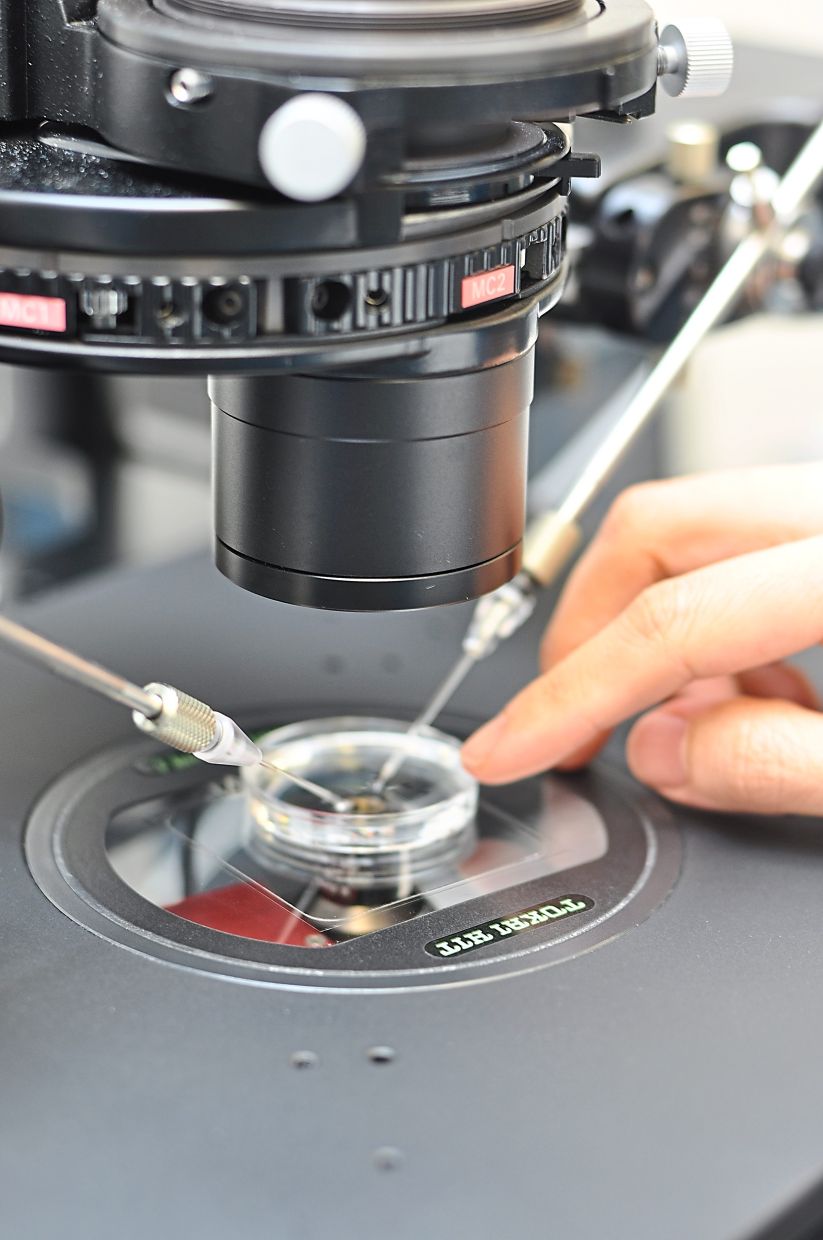
“We can then select the best embryo to be transferred,” says Tee.
These tests are individually designed by the genetic scientist to fit what the couple is testing for.
“There are different PGT tests that you can do and patients must get the right one to address what they are specifically worried about.
“For example, Down syndrome is often associated with older mothers because as a woman ages, her egg cells are more prone to random errors when arranging the chromosomes.
“So patients can opt to do a PGT for aneuploidy (PGT-A), which is used to analyse the number of chromosomes present in the IVF embryo,” says genetic scientist Dr Soo Ying-Chen.
Most babies inherit 23 chromosomes from each parent for a total of 46: half the chromosomes come from the egg (the mother) and half come from the sperm (the father).
In Down syndrome, there is an additional copy of chromosome 21, resulting in the child having three copies of the chromosome instead of the normal two copies.
Dr Soo explains: “You can have extras of any chromosome; for example, if you have an extra chromosome 1, the embryo will not implant or will miscarry at an early stage, which is what we want to avoid.
“But with chromosome 21, the embryo can survive until birth, and then you have a Down syndrome child.”
These children often have difficulties with learning and are slower to achieve developmental milestones, with most having mild to moderate intellectual disability.
They also tend to have low muscle tone (hypotonia), and around half will have congenital heart defects and problems with hearing and vision.
Limitations to the test
Every embryo contains a few hundred cells, but the embryologist only extracts a small number (five to 10 cells) to do the biopsy.
The PGT can test for only one genetic disease at a time.
This is why the carrier screening test is essential – so that the genetic scientist can zoom in on the exact condition to test for.
If it is absolutely necessary, such as in cases where the unfortunate couple are carriers of more than one genetic disease, then two genetic diseases can be tested for.
However, this means that more cells have to be extracted from the embryo.
“Because the embryos are very small, they have a limited number of cells.
“So we can’t pick too many cells or we will damage the embryo.
“This extraction process causes a small injury to the embryo, but 99.9% recover – like when you take a blood test, there may be a bit of bruising, but you will recover.
“It boils down to the skill of the embryologist,” Tee explains.
The embryo itself is then frozen.
Dr Soo adds: “The cells are then sent to the genetic lab where we extract the DNA (deoxyribonucleic acid) and analyse it.
“We produce a report for the patient, which can say ‘this embryo has no abnormality, so it’s fine to transfer it’, or if it has abnormalities, ‘we do not recommend implanting it’.”
Decision after the test
Should the PGT test show abnormality, the couple will then have to make the decision on what to do.
As the embryos will be discarded, they will have to either retry the IVF process or give up on the procedure.
“Usually, the number of eggs extracted depends on the age of the woman.
“If she is 22, then we can get about 15-20 eggs, but for someone who is 40, we may only get three to five eggs.
“We test all the embryos at one go and if all have abnormalities – which happens quite often in advanced age women – the patient will have to discuss the next step with the doctor,” says Tee.
For those who choose to try the IVF process again, the fertility specialist may recommend supplements to help improve the woman’s egg quality or to stimulate the ovaries to produce more eggs.
“That gives us more cohorts for a better chance to get a healthy embryo.
“Unfortunately, you can’t fix what is in the genes,” says Tee.
She adds: “In my experience, the oldest person to have a successful pregnancy using her own eggs is 45.”
PGT has been available in Malaysia for a decade, although Tee believes that only two private fertility centres offer this service.
Says Dr Soo: “Roughly 25% of embryos tested are found to be defective, but at least, the patients who have the finances have the option of doing this test and ensuring peace of mind that the embryo is a healthy one.”
Every IVF procedure costs between RM20,000 and RM30,000, and PGT will increase the cost by another 20%.
Already a subscriber? Log in
Get 20% OFF The Star Digital Access
Cancel anytime. Ad-free. Unlimited access with perks.