Haze matters: Give the public the most current API to make the best health decisions


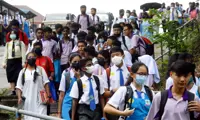
The decision to close schools or halt outdoor activities is usually based on the API of the previous 24 hours, which may not reflect the current haze situation. — Filepic

Haze and outdoor events do not mix.

However, this year (2023), the haze season coincides with sports day season in many Malaysian schools.

On Oct 2, our Education Minister reminded us that the ministry’s guidelines on haze management stipulate that schools cannot conduct outdoor activities if the air pollution index (API) reading exceeds 100.

During the 2019 haze season, more than 600 schools around Malaysia were closed due to heightened API readings.

For the 2023 haze season, we have already heard of at least one school having to cancel their sports day per this guideline, and that at the very last minute.

Such closures and cancellations can obviously be very distressing for both students and parents.

A 2021 report published by Unicef Malaysia details how children are highly sensitive to air pollution because they breathe more rapidly than adults, taking in a relatively higher proportion of pollutants.

Their lungs, brains, physical defences and immune systems are furthermore still underdeveloped, making them more susceptible to pollutants.

At the same time, school closures can disrupt children’s education and wellbeing.

Therefore, while it is definitely important to prioritise health during the haze season, we must also consider if we are making decisions like calling off outdoor events, in the optimum way, utilising the best and most timely information.

In our view, there are opportunities to improve the information on air quality provided to the public and to further protect our health.

Not current info

The Environment Department (DOE) maintains its Air Pollution Index Management System (APIMS) website and app, where the public can view the API for a wide range of locations in Malaysia.

Over the years, the DOE has made significant improvements to the quality of API data available to the public.

For example, the DOE began to use PM2.5 data within API calculations in 2018, adding to the PM10 data that had long been used.

PM2.5 is often the most dominant pollutant, especially during periods of haze.

It denotes particles that are 2.5 microns or less in diameter.

For haze, this is generally understood to be the parameter of most concern for health.

Due to their smaller size, these particles can easily enter the lungs, and even the bloodstream, causing serious damage.

However, the API reported in the APIMS is calculated based on 24-hour running averages of PM2.5.

The API shown is not then a current reflection of air quality, but an average over the preceding 24 hours.

A decision that is made using the latest reported API therefore, may not be a very good one.

Even though the air quality may have improved quickly in the last few hours, the API may still show a higher number, and vice versa.

Such situations would have occurred as the PM2.5 levels have fluctuated during the past few weeks of haze.

Present and future

We can look at our neighbour in the south for some ideas on how to improve API reporting for the benefit of all Malaysians.

In addition to its Pollutant Standards Index (PSI, which is equivalent to Malaysia’s API) reflecting the air quality of the past 24-hour period, Singapore reports the actual PM2.5 concentrations over the most recent one hour.

During haze, it provides a forecast of the PSI for the next day.

Singapore’s National Environment Agency advises the public to “refer to the one-hour PM2.5 for immediate activities, and the 24-hour PSI forecast to plan ahead”.

Similar information available through our APIMS could greatly aid the quality of our decision-making during haze.

For instance, people can instantly decide if it’s safe to go outside based on the actual past one-hour air quality.

And school administrators can base decisions on whether to proceed or cancel outdoor activities (or closures in more severe haze) a full day in advance, based on forecasts.

Indeed, the suggestion to provide one-hour data has been made before in a 2016 Universiti Kebangsaan Malaysia (UKM) Review of Air Pollutant Index commissioned and made available online by the DOE.

Providing the amounts of pollution in the past hour is essentially a matter of making public data that already exists.

Providing public API forecasts may require technical work to develop a forecast system and test its quality, although comments reported on Oct 9 from the Natural Resources, Environment and Climate Change Minister suggest positive movement in this direction by the relevant agencies.

Making healthy decisions

Coupled with more effective communication, more detailed data should contribute to more public awareness of the health risks of haze and air pollution in general.

In fact, air pollution (largely by PM2.5) is a risk factor of the same magnitude as obesity and smoking in leading causes of death worldwide, including from stroke, heart and respiratory diseases.

A greater public awareness of air pollution risks to health may help to motivate protective behaviour, as well as policy to address pollution sources.

While it is important for us to continue to work hard to resolve the haze issue once and for all, it is also vital to ensure that all Malaysians have the best possible access to air quality data and information.

Some of these suggested improvements in the way information on air quality is presented will go a long way in helping us make good decisions about our health during haze.

Associate Professor Dr Helena Varkkey specialises in environmental governance and politics at Universiti Malaya, while Assoc Prof Dr Matthew Ashfold specialises in atmospheric sciences at University of Nottingham Malaysia. For more information, email starhealth@thestar.com.my. The information provided is for educational and communication purposes only, and should not be considered as medical advice. The Star does not give any warranty on accuracy, completeness, functionality, usefulness or other assurances as to the content appearing in this article. The Star disclaims all responsibility for any losses, damage to property or personal injury suffered directly or indirectly from reliance on such information.

Get 20% OFF The Star Digital Access

Monthly Plan

RM 13.90/month

RM 11.12/month

Billed as RM 11.12 for the 1st month, RM 13.90 thereafter.

Best Value

Annual Plan

RM 12.33/month

RM 9.87/month

Billed as RM 118.40 for the 1st year, RM 148 thereafter.

Follow us on our official WhatsApp channel for breaking news alerts and key updates!
Child health , haze , API

Next In Health

Healthy habits for World Cup viewing
Laxative found to help brain�function in depression
Testing drugs that could treat dengue�
A ‘master key’ for vaccine development�
How to instil street-smarts in your kids
Do men undergo menopause too?�
Take control of your diabetes, don't let it control you
Potential pesticides on coffee beans�in Europe
Malaysians are not ageing well
Can our bodies adapt to heatwaves?�

Others Also Read