All patients with end stage kidney disease (ESKD) require either dialysis or a kidney transplant to stay alive.
The latter may be the best option to lead an almost normal life, but the reality is that the shortage of organs – both from live and deceased donors – is a constant problem.
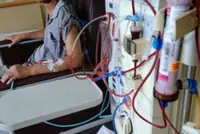
When it comes to dialysis, Malaysian ESKD patients would rather be strapped to a machine for four hours three times a week to clean and purify their blood (haemodialysis or HD), instead of doing it themselves (peritoneal dialysis or PD).
Although PD was introduced in Malaysia in the 1960s, it has been slow to catch on.
According to the Malaysian Dialysis and Transplant Registry 2018, out of the 44,136 patients on dialysis, 39,593 (89.7%) were on HD and only 4,543 (10%) on PD.
Another 1,801 had kidney transplants.
There were a total of 8,431 new dialysis patients in 2018, with 7,200 new HD patients and 1,231 new PD ones.
Chronic kidney disease (CKD) cases are on the rise, driven by the increase in non-communicable diseases, particularly type 2 diabetes (although scarily, only 5% of CKD patients are aware they have it).
The registry showed that almost 69% of ESKD was caused by diabetes.
“Our patients choose HD, perhaps because of the power of ‘persuasion’.
“When the doctor gives them the treatment options, patients will go back and ask their family and friends.
“They also see many HD centres around, and that could influence their decision to choose HD,” says Universiti Kebangsaan Malaysia Medical Centre senior consultant nephrologist Professor Dr Abdul Halim Abdul Gafor.
In HD, the treatment is taken care of by nurses at the dialysis centre.
With PD, you have to do it yourself or rope in your family members to help.
PD filters waste products from your blood with a cleansing solution that flows from a bag through a catheter into the lining of your abdomen (peritoneum).
When the bag is empty, you disconnect it and place a cap on the catheter so that you can move around and perform your normal activities.
While the dialysis solution is inside your belly, it absorbs wastes and extra fluid from your body.
After a few hours, the solution and the wastes are drained out of your belly into the empty bag.
Then you repeat the process (called an exchange) with a fresh bag of solution.
The exchange takes around 30 to 40 minutes and is usually done four times a day.
There are two kinds of peritoneal dialysis: continuous ambulatory peritoneal dialysis (CAPD) and automated peritoneal dialysis (APD).
As per its name, CAPD is a continuous process and can be done as you go about your normal activities.
With APD, a machine (cycler) delivers, then drains the cleansing fluid for you.
It is usually done at night while you sleep.
Both are home-based therapies.
Take charge of your life
“We want to encourage ESKD patients to be independent as PD has many advantages that are backed by science.
“There are both small and large molecule toxins in the blood.
“HD is good at removing the small toxins, but PD can remove both.
“When a patient is on HD, he does it every alternate day, but the kidney is supposed to be working 24/7.
“With CAPD, you will be doing the treatment continuously, so it is mimicking the kidney,” points out Prof Abdul Halim.
The benefits of PD include greater lifestyle flexibility and independence; a less restricted diet as the continuous dialysis means that there is less accumulation of potassium, sodium and fluids, which reduces the stress on the heart and blood vessels; and longer lasting residual kidney function.
Plus you don’t have to share the machine with other patients and can time the exchanges according to your own schedule.
The Malaysian Society of Nephrology president adds: “Almost everybody can do PD! It’s great for self-esteem.
“Like taking medications, you take care of your own disease. You don’t have to go to the doctor to take medicines.
“Now with Covid-19, PD also helps reduce the risk of infections.
“But some ESKD patients who have had many surgeries in the abdomen may not be suitable candidates as the adhesions can disturb PD.
“Others who cannot do PD include those who are obese, who don’t have a helper and are diabetic or cannot see well, or who have poor hygiene.
“There is also an economical advantage, as our data showed that if we can push PD more, we can save money.”
While ESKD patients can switch between HD and PD – though it’s a bit difficult – for new patients, it’s best to start with PD before changing to HD if necessary.
Peritonitis (infection of the peritoneum) is an occasional complication of PD, although with precaution and proper hygiene, it can be avoided.
In such situations, the patient is temporarily switched to HD.
“They eventually go back to PD, but we have to make sure they don’t change their minds!” says Prof Abdul Halim.
Patients can also choose hybrid treatments, where they start with PD, and perhaps once a week, do HD.
“PD is gentler compared to HD, and with older ESKD patients, many of them have heart disease.
“Ultimately, the main reason for dying is heart disease and co-morbidities (concurrent illnesses), not kidney failure,” he says.
If an ESKD patient can get a kidney donor, all the better.
“The problem with Malaysia is that there is no exit point.
“In the West, patients continue with dialysis until they get a transplant.
“We seem to have this culture of feeling kesian (pity) for potential donors.
“Some patients will say kesian that their family member wants to donate, so they refuse donation. They say their life is okay with HD.
“I had one patient who wanted to buy a kidney from India instead of getting it from a family member – such is their attitude!” he laments.
First choice

Peter Tan was only 18 when a spinal cord injury left him paralysed from the upper chest down.
A typical teenager, he was fooling around with his friends and dived into a swimming pool, with the water level at a mere five feet (1.5m).
“It was something I had done hundreds of times, but that one time I jumped head-in first instead of horizontally, and crashed to the floor.
"I was floating face down and thought I was going to drown because I couldn’t feel my body. My friends pulled me out.
“At that age, you feel you are invincible – everything is an adventure and you don’t think too much of the consequences,” recalls the 54-year-old disability equality training facilitator.
He spent three-and-a-half months in hospital to surgically remove the fragments from his shattered cervical spine.
In 2004, he was diagnosed with CKD, which slowly progressed to the most advanced stage in 2017.
Tan needed dialysis and opted for PD.
He says: “From the time of my injury, I had anticipated ESKD, although I didn’t know when it would strike.
“So when the time came, the doctor presented the options, but I already knew what treatment I wanted because I had seen a series of campaigns on television back in the 80s on the different modalities of treatment.
“I noticed that PD would give me a lot of freedom.”
Though he has limited hand function and uses a manual wheelchair, Tan is managing just fine with CAPD with help from his wife, whom he met after his accident.
PD has become second nature to him, just like eating and sleeping.
“Hygiene is of utmost importance and the challenge is to keep the catheter clean.
“Recently, I contaminated my catheter, but thankfully, there was no infection.
“PD has enabled me to do a lot of things I love with the people I love.
“I’ve also been able to travel domestically, but I haven’t gone on long flights because of the logistics involved,” he shares.
Tan loves swimming, but hasn’t gone back to the pool since that fateful day in 1984.
“If I had to relive my life again, I’d probably live a little less recklessly,” he says, admitting that he hasn’t given much thought to getting a transplant.
Making adjustments

For writer Dr Mohd Reduan Buyung, 35, the symptoms of lethargy, tiredness, loss of appetite and insomnia first began in 2014.
He assumed it was because of the stress from pursuing his PhD in property and facilities management at Universiti Tun Hussein Onn Malaysia.
After all, he had always been perfectly healthy.
So he popped a paracetamol pill whenever he had a fever and continued with his studies.
It wasn’t until he started vomiting every time he put food in his mouth and his weight plummeted from 62kg to 49kg within a few months that he realised something was not right.
“One night I just couldn’t sleep despite being exhausted and I began to hallucinate.
“The next day, I decided to go to the clinic.
“The doctor referred me to the hospital where I did some blood tests and discovered only 9% of my kidneys were functioning.
“I was diagnosed with ESKD (stage five),” he says.
Shocked, Dr Reduan was warded and given fluid and blood transfusions.
His parents were also devastated upon hearing the diagnosis of their only son.
“The specialist and I are not sure how my illness came to be so bad,” he says, sharing that he never smoked or drank carbonated beverages, although he rarely exercised.
“As I was still studying, I was advised to go on PD, and since then my life has turned around 180 degrees.
“I’ve had to make a lot of adjustments and watch my diet carefully, but I have a new lease of life.”
An activity he really misses is camping as he’s afraid of getting infections – he had already experienced that nightmare twice, and had to be hospitalised for two weeks each time.
So he sticks to cycling and light exercises.
Like Tan, Dr Reduan is taking it one day at a time.
Currently, he is in the midst of publishing his first short story anthology, while waiting for a kidney transplant.
“My father wanted to donate his kidney, but his lungs are weak.
“I haven’t found another donor yet – (but) hopefully soon,” he says.
Those interested in finding out more about PD can visit this website.
Boost your health with the best vitamins at the best prices with iHerb Promo Code
Already a subscriber? Log in
Get 20% OFF The Star Digital Access
Cancel anytime. Ad-free. Unlimited access with perks.