Not all the signs of ageing announce themselves in the mirror. The silver streaking through your hair, the fine map of lines around your eyes, the slight stoop that settles into your shoulders – these are the visible, expected souvenirs of time.
But others arrive with far less fanfare. They appear at the dining table, where a plate of crispy fried chicken or rich, peppery sup tulang – once a source of pure joy – now demands a second thought. The crunchy greens you used to love get nudged to the rim of the plate, abandoned mid-meal.
They linger at family gatherings, too. Your laughter shrinks, stories get shorter because a loose denture turns a hearty chuckle into a hazard and a simple sentence into a careful performance. So you smile less, speak less, and withdraw a little more with each passing year.
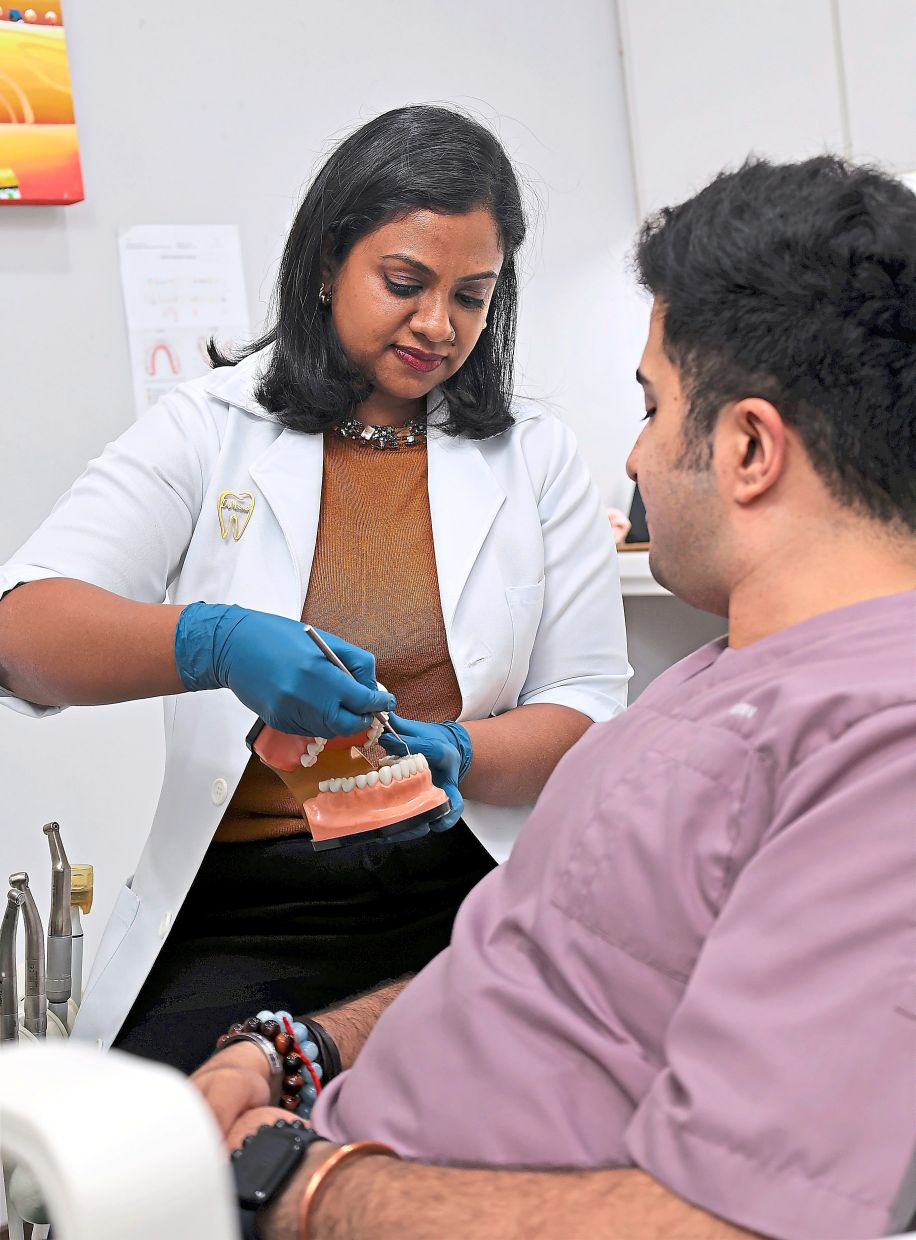
However, general dentist Dr Meera Asokan, who has a special interest in geriatric dentistry, is quick to debunk what she deems one of the biggest myths about ageing: “That losing your teeth is just part of getting older,” she says.
“I have patients in their 90s with a full set of teeth. I also see people in their 50s who have lost most of theirs – not because of age, but because of years of unaddressed problems.”
It is a myth Malaysians should really chew on.
By 2050, nearly a quarter of Malaysians – 23.4% – will be aged 60 and above, according to data from the Department of Statistics Malaysia (DOSM).
The country is on track to officially become an ageing nation even sooner, by 2030, once seniors cross the 15% mark – a pace DOSM says is faster than most nations have managed.
A recent Malaysian study of residents in a long-term care facility found that every single one of them had lost teeth, and nearly all – 94.8% – were already showing signs of poor oral function. For Dr Meera, a former head of the department of special care dentistry at Cheras Rehabilitation Hospital, that number should sound the alarm bells.
“Tooth loss is not a natural consequence of ageing,” she asserts. “It is the consequence of untreated disease.”
And the myth, she warns, does something particularly cruel: It removes urgency.
“I hear it constantly – ‘she’s 80, what do you expect?’ – as if deterioration is inevitable,” she says.
As a result, families stop advocating for ageing parents’ teeth because they assume nothing can be done.
“And so the very people who need the most attention receive the least.”
The ageing mouth
Ask Dr Meera what she sees most often in her older patients, and the list is grim: Gum inflammation and recession, tooth and root decay, tooth wear, tooth loss, ill-fitting dentures, oral fungal infections, dry mouth, and difficulty maintaining basic oral hygiene.
What troubles her more than this list is how readily it gets explained away.
According to her, our teeth do not simply “wear out” because we grow older. Instead, it’s what the years carry – disease, drugs, and the slow erosion of daily care – that finally reaches our teeth.
What does change with age, however, is the mouth’s vulnerability to disease and the many health conditions that accompany later life.
“Your mouth ages dramatically,” says Dr Meera. “But not because of biological ageing itself ... that doesn’t cause teeth to decay.”
Rather, it is the accumulation of chronic illnesses, medications and physical changes that create the perfect storm.
“Here’s the grim picture,” she says. “Older adults are more likely to have chronic medical conditions like diabetes, hypertension, heart disease, gastrointestinal disorders, Parkinson’s disease, or dementia.”
They often take five or six medications a day, many of which reduce saliva production.
“Dry mouth accelerates decay at a rate that would shock you,” says Dr Meera. “Gums recede, exposing root surfaces that were never designed to face the world.”
Other conditions bring their own challenges. Acid reflux gradually erodes tooth enamel, making teeth increasingly brittle and sensitive.
Arthritis can make holding a toothbrush difficult, while poor eyesight may mean dental problems go unnoticed until they become painful.
“And then there’s the cognitive part – someone in early dementia may simply forget whether they’ve brushed their teeth,” she adds. “By the time anyone notices, the damage may already be severe.”
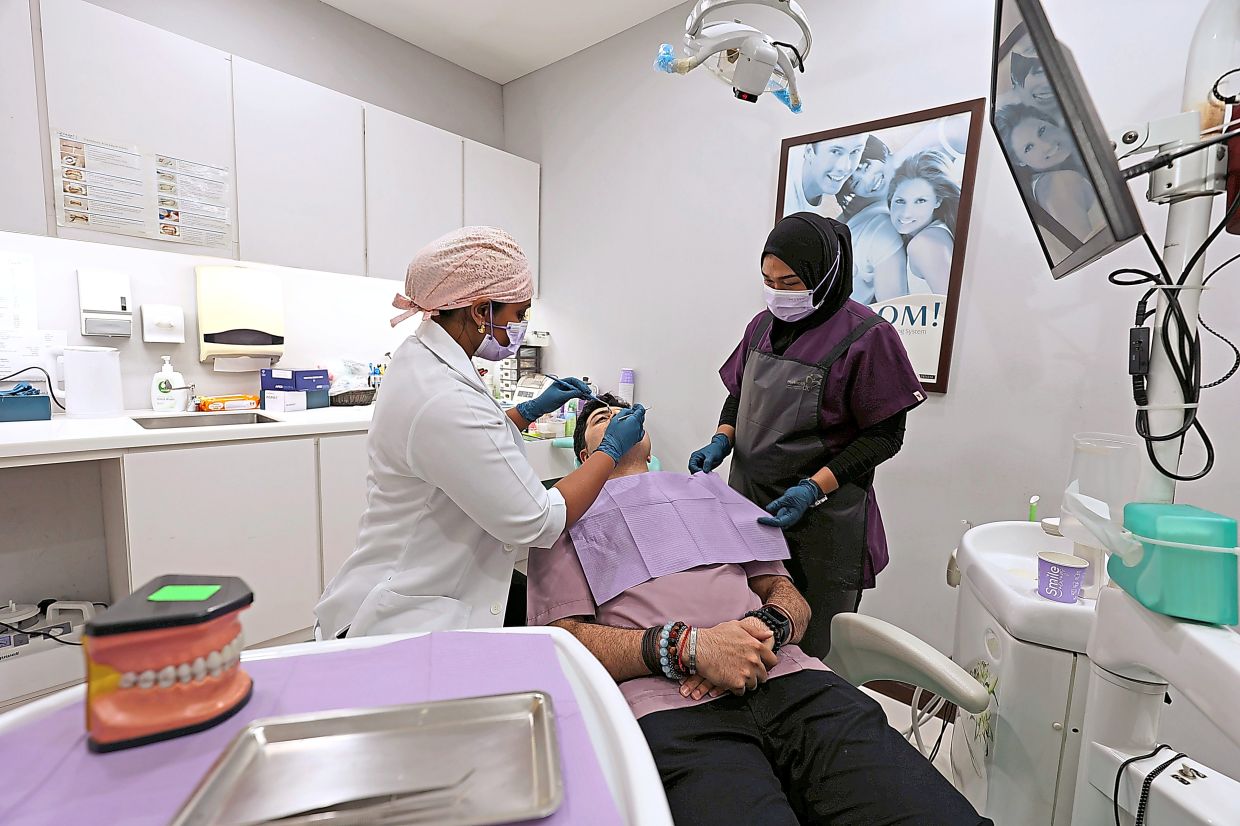
This is what makes geriatric dentistry unique: It goes beyond simply treating teeth.
“Children require dedicated dental care as they grow and develop,” says Dr Meera. “But older adults have a unique set of oral health challenges that cannot always be managed in the same way as younger children.”
According to Dr Meera, treating an older adult is no longer just about filling a cavity or replacing a missing tooth. Every treatment decision must take into account the person’s medical conditions, medications, nutrition, mobility, cognitive function and, often, the support they receive from family or caregivers.
“A treatment plan that works for a healthy 40-year-old may not be appropriate for an 85-year-old living with frailty or dementia,” she says.
And there is something else, she adds, that people rarely address out loud.
“Older adults care about how they look. Losing teeth changes your face. It changes whether you smile in photos or whether you feel like yourself. That’s not vanity, that’s dignity.”
What a mouthful
If older adults have more complex mouths, modern medicine is also discovering that oral health is far more important than we once believed.
The mouth is no longer viewed as something separate from the rest of the body, but as one that can influence overall health in surprising ways.
For years, says Dr Meera,
dentistry and medicine largely operated in separate silos – teeth belonged to dentists, while the rest of the body belonged to doctors.
“Today, we recognise that the mouth is not isolated from the rest of the body,” she says. “Oral health and overall health have a bidirectional relationship – what happens in the mouth doesn’t stay in the mouth.”
Take diabetes, for example.
“Poorly controlled diabetes increases the risk and severity of gum disease, infections and delayed wound healing,” she explains.
“At the same time, severe gum disease makes it more
difficult to control blood sugar levels.”
Patients with uncontrolled diabetes who have already lost teeth may no longer be suitable candidates for dental implants, leaving dentures as their main treatment option. As the disease progresses, bone loss can also make dentures increasingly loose and uncomfortable.
“This significantly impacts nutrition and, in turn, quality of life,” says Dr Meera.
Heart disease tells a similar story.
When gums remain chronically inflamed because of periodontal disease, bacteria and inflammatory substances can enter the bloodstream.
“This may contribute to inflammation elsewhere in the body, including the blood vessels,” she says. “Chronic inflammation is a recognised risk factor for cardiovascular disease.”

The relationship between oral health and dementia is equally complex.
Painful teeth, severe gum disease, missing teeth or poorly fitting dentures can make eating difficult.
Over time, they may begin avoiding certain foods, eating less altogether or withdrawing from social situations because eating and speaking become uncomfortable.
“These factors can contribute to frailty, poorer overall health and potentially accelerate cognitive decline,” explains Dr Meera.
The cycle then comes full circle.
“As dementia progresses, individuals frequently lose the ability to maintain proper oral hygiene, which significantly accelerates dental decay and infections.”
It is another reminder that caring for the mouth is not simply about preserving teeth. It is also about protecting nutrition, independence and overall wellbeing.
The quiet changes
The fruits of poor oral health do not usually announce themselves all at once. More often, they show up as a series of small withdrawals – the foods someone stops ordering, the gatherings they start declining, the laugh that no longer comes easily.
“When someone is missing many teeth or struggling with loose dentures, eating becomes hard work,” says Dr Meera.
Over time, she adds, they quietly stop eating the foods they love – not by choice, but because chewing has simply become too difficult.
“Crunchy vegetables, nuts, a good piece of chicken: These gradually disappear from the plate, replaced by softer, often less satisfying alternatives,” she adds.
Speech changes too.
Dentures that no longer fit well can alter the way someone talks, making conversation effortful rather than easy.
Rather than persevere, she says, many people simply stop wearing them altogether – which, in turn, makes eating even harder.
“The ripple effect touches everything,” says Dr Meera. “Nutrition, energy, confidence, and the simple joy of sharing a meal.”
It is a cost that is rarely written on a medical chart, yet it shapes daily life profoundly. A missed dinner invitation here, a skipped family celebration there – not because someone no longer wants to be there, but because being there has quietly become uncomfortable.
Small habits, big difference
For adult children and caregivers, Dr Meera says the good news is that meaningful protection often comes down to a few consistent daily habits rather than anything complicated – brushing, flossing, and tongue cleaning, none of which take more than a few minutes.
What ties it together, she says, is timing. “Many people assume they can deal with their teeth later,” she says. “The reality is that as we age, our medical history becomes more complex.”
A simple extraction today could become a far more complicated procedure tomorrow, once conditions like osteoporosis set in or medications like blood thinners enter the picture. Catching problems early, before such complications limit what is possible, remains one of the strongest arguments for preventive – rather than reactive – care.
It brings the conversation back to where it began: The myth that ageing and tooth loss simply go together.
For families watching a parent or grandparent quietly give up their favourite foods, stop smiling in photographs, or grow quieter at the dinner table,
Dr Meera’s message is simple.
“What changes as we age is our vulnerability,” she says. Ageing doesn’t affect our teeth or our will, but our ability to withstand the side effects of medication, the toll of chronic illness, and the physical limits that make brushing, flossing, and rinsing more difficult than they used to be. Visit the dentist regularly. Low-risk seniors may only need a check-up every 12–24 months, while those with diabetes, gum disease, mobility limitations or cognitive decline may benefit from reviews three to four times a year."