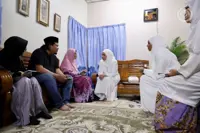
Championing the rights of children in Malaysia


'Children have rights, just like adults. It’s more than just meeting their basic needs, they have a right to education, healthcare, participation, being safe and speaking out.' Photo: Freepik

Six-year-old Shira’s family lost everything in the flood. While her parents and older siblings were busy struggling to get things back to how they used to be, Shira was mostly left to her own devices.

“I no longer have any books to read or toys to play with – they were all destroyed by the flood. My laptop which I used for classes and shared with my older sister was also damaged in the flood,” she says sadly.

“We may talk about ‘Keluarga Malaysia’ and ‘leaving no one behind’, but unfortunately, there are many children in Malaysia who are being left behind,” says Childline Foundation executive director Datin PH Wong who is part of the Child Rights Coalition Malaysia (CRCM) co-secretariat.

Children have rights, just like adults, that extends beyond just meeting their basic needs, says Wong.
CRMC was formed in 2012 by a group of NGOs who had worked together to write the first comprehensive NGO Alternative Report on the Convention of the Rights of the Child (CRC) for Malaysia. The coalition now has 13 partners and affiliates.

“Children are always the last to be considered even during a disaster situation such as the pandemic and the recent floods that hit Malaysia. But they are just as traumatised as adults in such situations and need comfort, encouragement, help and protection,” says Wong.

“In times of difficulties, children need something to occupy themselves with that will keep their minds off the distressing situation while their parents are struggling to get back on their feet,” she says.

This was also true during the pandemic. Worldwide statistics show that throughout the pandemic, child helplines have seen a 30% to 40% increase in calls dealing with emotional health issues such as depression, loneliness and self-harm. And the calls are from children as young as five years old, reveals Wong.

“Children have rights, just like adults. It’s more than just meeting their basic needs, they have a right to education, healthcare, participation, being safe and also speaking out. “

It is with this in mind that the Child Rights Coalition Malaysia, which advocates for the implementation of the UN Convention of the Rights of the Child and promotes children’s rights in Malaysia, launched 12 position papers as well as their website and media guide on Human Rights Day (Dec 10) last year. The aim? To fight for children and champion their causes.

The 12 position papers cover important children’s issues on the following topics: adopting a child rights-based approach in education, early childhood care and education, child health, child participation, removing accessibility barriers and creating inclusivity for children with disabilities, situation of children in Sarawak and Sabah, stateless children, refugee children, citizenship for children, eliminating violence against children, and online child protection.“

In 1989, the United Nations General Assembly adopted the Convention on the Rights of the Child (CRC) which is a worldwide treaty that recognises the human rights of children or persons under the age of 18. This treaty is ratified by 196 countries, including Malaysia, where it is used to guide local policies.

“So we should all fight for those rights for children – and this includes undocumented and stateless children, as long as they’re in Malaysia,” says Wong.

“These 12 position papers are the policy briefs that will be used by CRCM to lobby for change and advocate for children in Malaysia,” she explains.

The Child Rights Coalition Malaysia launched 12 position papers as well as their website and media guide on Human Rights Day (Dec 10) last year to fight for children and champion their causes. Photo: Freepik

Learning for all children

In Malaysia, primary school education is mandatory and public education is free. However, there are still many children who do not attend school for various reasons and this needs to be addressed.

“No child should be left behind, including the over 100,000 stateless and refugee children in Malaysia as well as those in the interiors of Sabah and Sarawak. Children in Sabah and Sarawak go through all the issues that children in other states face, plus a set of issues that are unique to them.

“Also, one in 10 children in Malaysia live with disabililities,” says Make It Right Movement chief executive officer Brian Lariche, who is part of the Child Rights Coalition Malaysia (CRCM) co-secretariat.

No child should be left behind, including children with disabilities or those who live in rural or interior areas, says Lariche.
According to Mariammah Subramaniam, co-founder of Vanguards4Change, there should be a child rights based approach to education.

“Education needs to be child-centred, child-friendly, and empowering. However, there are currently gaps and loopholes in the system, including access to education, quality of education and safety in schools,” she says.

Access to education includes issues of bureaucracy, inclusion, distance and affordability for certain children (such as those from remote areas in Sabah and Sarawak), while quality of education includes balance between a focus on intellectual, physical, mental and emotional aspects as well as training of educators. Safety in schools refers to sexual harassment, corporal punishment, structural issues such as dilapidated schools, regulation and monitoring of childcare centres, and implementation of school safety policies, says Mariammah.

“Beyond schooling, we need to inculcate in our children the whole range of life experiences and learning processes, because when such methods are applied, the child’s development is much more holistic. All aspects of the child’s development – personality, talents, mental and physical well-being – need to be developed to the fullest potential,” she says.

Two things that Mariammah highlights are the need for Orang Asli communities to have a local school and bureaucratic barriers towards children’s education to be removed.

“Having a localised school in their own community will help lessen school dropouts of Orang Asli children due to distance or lack of accessibility,” she says.

She adds that children who are caught in citizenship or residency limbo should not be punished by being excluded from the education system nor be deprived of the right to go to school.

The right to be safe

Mariammah is pushing for Orang Asli communities to have a local school in their villages and for bureaucratic barriers towards their children’s education to be removed.
There are also gaps in child healthcare in Malaysia, says Mariammah. These include the under-five (age) mortality rate, breastfeeding and nutrition, immunisation programme, non-communicable childhood diseases, child mental health, adolescent health and teenage pregnancies, and child marriage.

“Mental health has emerged as one of the challenges faced by families and children during the pandemic. When schools were closed, being confined to the home with increased screen time and lack of social interaction, the likelihood of child abuse (violence) and feelings of isolation among children increased, along with depression, suicidal tendencies and other emotional and psychological problems,” she adds.

According to data from the World Health Organisation, about 75% of children between two and four years old have received violent disciplinary action from their parents or caretakers which has impacted them mentally and psychologically during the pandemic.

This, says Mariammah, will leave scars that last till adulthood.

Children have the right to be safe, says Protect and Save the Children advocacy and partnerships director Thulasi Munisamy, and violence against children, both online and offline, should be taken seriously and prevented.

Domestic violence, neglect, sexual abuse, physical, psychological and emotional abuse, child labour and trafficking (of refugees) leading to child sexual exploitation, cyberbullying and online crimes against children, child marriage, and female genital mutilation – these are just some of the crimes against children in our society, says Thulasi.

In, 2020, there were 1,721 child sexual abuse (comprising 651 rape, 344 molestations, 106 unnatural sex, 516 under sexual offences against children) according to data from PDRM (Royal Malaysian Police).

Between Jan-Apr 2021, out of 2,040 child abuse cases, 30% were physical and sexual abuse (Welfare Department), she says. “Out of 472 child abuse incidents, 319 cases occurred at home (Jan-Sept 2021). There was also an increase from 183,407 cases of online child abuse in 2019 to 203,400 in 2020, according to PDRM, with 20,000 IP addresses uploading/downloading child sexual abuse material.

And, there were also 543 child marriages/applications in 2020.

“In 2018, after the issue of an 11-year-old child getting married to a 41-year-old man in Kelantan was highlighted, the government launched a national strategic plan on child marriage, but it has yet to be implemented,” she highlights, adding that the impact of young girls being married off is more than just a child’s rights issue but also a health one.

“There are many negative impacts of what happens to a girl when she gets married at such a young age, including physical (health), mental and emotional issues, and we need to prevent this,” stresses Marriamah.

Synergy required

Malaysia has a child protection system in place but services for child survivors of abuse, neglect and exploitation and guidelines and SOPs on child protection are not harmonised says Thulasi.
According to Thulasi, some of the gaps in the system that need to be addressed include gender inequalities, under-reporting of violence against children, non-synergised laws, policies and guidelines with the Convention on the Rights of the Child, weak enforcement or prosecution, the lack of specialised services as well as a general low awareness on the rights of children, child protection laws and policies and referral pathways.

“In Malaysia, we do have a child protection system in place and there are services for child survivors of abuse, neglect and exploitation, as well as guidelines and SOPs on child protection, but they are not harmonised.

“Some are not even in line with the Convention of the Rights of the Child such as children being allowed to get married under Syariah Law, corporal punishment being allowed under the Education Regulations Act, or female genital mutilation for Muslim girls and women being allowed,” says Thulasi.

“So we do have all these laws and policies such as National Child Policy, Child Protection Plan, Child Act, Anti-Trafficking, Penal Code, Multimedia and Communications Act and Syariah Law, but we need better planning, implementation and inter-agency coordination between the authorities, ministries, NGOs and private sectors on prevention and prosecution,” she says.

Presently, many children who face violence have had to recount their experiences again and again to different parties, and as a result, many have opted not to go through the process and trauma of reporting and investigation to get the help they need.

“The process of helping the child, including the questions asked, also lack sensitivity. Children in an investigation room have been asked whether they ‘enjoyed the act’,” she cites as an example. And, some children, because they had to recount the experience to so many people, ended up self-hating and self-mutilating,” she says.

Because of discrimination and stigmatisation, gender stereotyping, social, cultural and religious barriers as well as poor awareness on child rights and child protection among families and communities, there has been an under-reporting of cases of violence against children, she adds.

“Measures must be taken to achieve Sustainable Development Goals 16.2 – to ‘end abuse, exploitation, trafficking and all forms of violence against and torture of children’. These include establishing child-friendly services such as child-friendly courts, specialised and trained interagency teams to respond to violence against children, rehabilitative programmes, public awareness, as well as strengthening family-and-community-based care,” she adds.

'Every child born comes with potential hidden within them, but this potential needs to be unearthed and nurtured.' Photo: Freepik

Every child born comes with potential hidden within them, says Marriamah, but this potential needs to be unearthed and nurtured. “It has been said it takes a village to raise a child – parents, caregivers, teachers, community and society. But there is a lot of disparity, inequality, and injustice embedded in the system. So every small step we take to correct this imbalance is important to make this world a better place for our children so that no child is left behind,” concludes Marriamah.

For more info: Child Rights Coalition Malaysia

Get 20% OFF The Star Digital Access

Monthly Plan

RM 13.90/month

RM 11.12/month

Billed as RM 11.12 for the 1st month, RM 13.90 thereafter.

Best Value

Annual Plan

RM 12.33/month

RM 9.87/month

Billed as RM 118.40 for the 1st year, RM 148 thereafter.

Follow us on our official WhatsApp channel for breaking news alerts and key updates!

Next In Family

How this retired Malaysian transformed his grief into an adventure for good
These dads are experiencing a shift in fatherhood as new norms take place
Study suggests women who do strength training will live a longer, healthier life
Are we failing neglected seniors in Malaysia?
It's time for parents to adopt these Japanese child upbringing approaches
Families in Sri Lanka are bearing the cost of the Middle East conflict
Why parents should step back and allow kids learn on their own
Helping single mothers get back on their feet
Helping single mothers build financial resilience and community
A platform for women entrepreneurs to lead and give back

Others Also Read