Osaka in Olympic spotlight but biracial Japanese face struggles


By AGENCY
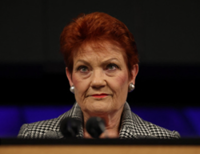
Torchbearer Emili Omuro, who is biracial, was thrilled by Naomi Osaka's star turn at the Tokyo Olympic opening ceremony, but the biracial teenager says Japan must do more to accept people of mixed heritage.Photos: AFP

Emili Omuro was thrilled by Naomi Osaka's star turn at the Tokyo Olympics opening ceremony, but the biracial teenager says Japan must do more to accept people of mixed heritage.

Four-time Grand Slam winner Osaka, whose mother is Japanese and father Haitian, climbed a replica Mount Fuji on Friday to light the cauldron in the ceremony's crowning moment.

And she wasn't the only athlete of dual heritage representing the host.

Japanese-Beninese NBA basketball star Rui Hachimura was one of the flagbearers leading Japan's team into the Olympic Stadium.

Osaka and Hachimura are adored in Japan, and boast lucrative sponsorship and advertising deals.

But many young people of black and Japanese heritage still struggle in an often conservative and largely homogenous society.

"There were many times when it was hard," 14-year-old Omuro, born to a Japanese mother and a black American father, told AFP of her childhood in a town north of Tokyo.

"People would whisper behind my back and make fun of me at extra-curricular clubs, or when I was walking down the street."

Looking to draw attention to the bullying and discrimination faced by some biracial Japanese, Omuro applied and was chosen to be a torchbearer in the nationwide Olympic flame relay before the Games.

She also hoped to highlight the country's increasing but often overlooked racial diversity.

"Some people say, 'for mixed people, bullying is inevitable.' And other people don't know there is discrimination, or pretend not to see it," she said.

Looking to draw attention to the bullying and discrimination faced by some biracial Japanese, Omuro applied and was chosen to be a torchbearer in the nationwide Olympic flame relay before the Games.

'Ignorance, not hate'

When coronavirus measures began to force sections of the relay off public roads, Omuro reconsidered taking part, worried about the pandemic.

But she ultimately decided her participation would be important.

"We need to create a society where people can feel at ease, even if they are different."

Kinota Braithwaite is painfully aware of how discrimination can affect Japanese biracial children.

The black Canadian's daughter Mio, whose mother is Japanese, suffered racist taunts in second grade in Tokyo.

"This happened to me when I was a kid growing up in Canada, and I thought that the world was a place where this wouldn't happen any more," he said.

"So it really broke my heart."

This year, he published a children's book called Mio The Beautiful about his daughter's experience.

And he gives talks in schools to raise awareness of an issue that he says Japanese teachers are often not equipped to handle.

Braithwaite, a teacher himself, sees discrimination in Japan as largely driven by "ignorance, not hate".

Athletes like Osaka and Hachimura give his two children "role models", he said.

And the pair are huge fans – "My son has a Rui Hachimura water bottle, he has his hair cut like Rui, he plays basketball," he laughed.

"For Japanese people, it sort of opens their eyes too, which is a good thing."

Now, more people of black and Japanese or mixed Asian heritage are

Representation 'does matter'

Japan remains a largely homogenous society.

An analysis of government data by Kyodo News agency found just 20,000 of 1.02 million babies born in 2014 had Japanese and non-Japanese parents.

And only recently has the image of mixed Japanese started to include those with black heritage, said Sayaka Osanami Torngren, associate professor of international migration and ethnic relations at Malmo University in Sweden.

"Historically, mixed persons have always existed (in Japan), but the image of mixed persons has always been white or Caucasian and Japanese," said Torngren.

Now, more people of black and Japanese or mixed Asian heritage are "raising their voices and addressing their experiences of discrimination or racism".

Even stars like Washington Wizards power forward Hachimura and Osaka are not immune to racist language and tone-deaf depictions.

In 2019, Osaka's sponsor Nissin Foods was accused of "whitewashing" over an animated advert depicting the 23-year-old with light skin, and a Japanese comedy duo apologised after joking she was "too sunburned" and needed "bleach".

Hachimura meanwhile revealed this year that he receives racist messages "almost every day".

"There are people who say there is no racism in Japan," wrote his brother Aren Hachimura, posting a hateful message he received online.

"But I want people to pay attention to the issue of racism."

So seeing Hachimura and Osaka represent Japan on the global stage is important, said Torngren.

"Even though it might be token, it does matter." – AFP

Get 20% OFF The Star Digital Access

Monthly Plan

RM 13.90/month

RM 11.12/month

Billed as RM 11.12 for the 1st month, RM 13.90 thereafter.

Best Value

Annual Plan

RM 12.33/month

RM 9.87/month

Billed as RM 118.40 for the 1st year, RM 148 thereafter.

Follow us on our official WhatsApp channel for breaking news alerts and key updates!
racism , naomi osaka , japan

Next In Family

Helping single mothers get back on their feet
Helping single mothers build financial resilience and community
A platform for women entrepreneurs to lead and give back
Doctors observe a higher rate of paediatric visits, especially for anxiety
Here's how to ensure your children stay safe when enjoying water parks
Recess in schools are important for kids' physical, social and emotional growth
Prenatal anxiety is affecting more Malaysian woman than commonly thought
Beyond the scale: Reframing conversation around weight management
A father's legacy that lives on through the art of dance
Young adults today are more likely to be dependent on their parents

Others Also Read