



In the countryside of Le’an county, Jiangxi province in China, Russian actor Antonov Dmitry stood face-to-face with Chinese actor Chi Shuai on the set of the revolutionary historical micro-drama Bright Horizon.
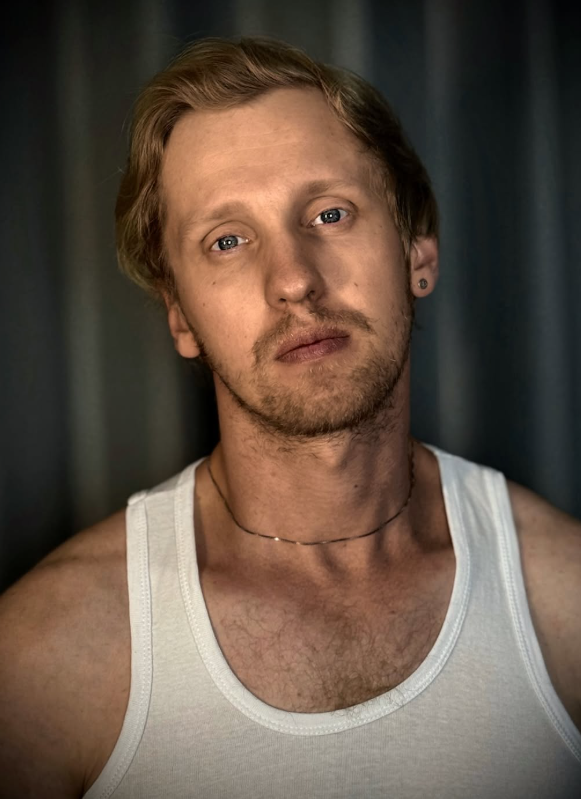
Dmitry, 37, plays Otto Braun, also known in China as Li De, a German military adviser sent to China by the Communist International in the 1930s.
In the scene, Braun insists on his own military judgment and demands full command of the troops, while Mao Zedong, played by Chi, argues for tactical adjustments based on the realities on the battlefield.
“This is one of the most emotionally charged scenes I’ve ever filmed,” Dmitry said, recalling how he slammed the table so hard during shooting that he bruised his hand.
“But I didn’t feel the pain,” he said. “I was completely immersed in the role.”
Even during camera adjustments and brief water breaks, the actors stayed in character, maintaining the emotional pressure throughout.
“If you relax for even a second, the tension disappears,” he said.
Dmitry admitted that in recent years he has begun carrying heart medication with him on set as a precaution.
“It shows how physically and emotionally demanding historical roles can be,” he said.
For Dmitry, the scene was more than just a performance.
It reflected what has drawn him ever deeper into acting in China: the challenge of entering another history, another emotional world and another way of storytelling.
Finding his rhythm
Dmitry did not originally plan to become an actor.
He studied engineering at university, specialising in mining and natural gas.
“It was a very technical and logical world,” he said.
But art had always been part of his upbringing in Russia.
Music, painting, and theatre surrounded him from an early age, and at 18 he started teaching himself classical vocal performance, an experience that later helped him develop his voice, stage presence, and acting skills.
“That early exposure to art became an outlet that helped me balance the rigidity of engineering,” he said.
His interest in Chinese culture deepened after he watched a Chinese stage performance in Moscow.
“It was completely different from what I knew,” he said.
“It was subtle, restrained, almost like an ink painting. It didn’t explain everything, but it made you feel everything.”
That impression stayed with him.
Years later, Dmitry came to China for postgraduate studies.
Then, in 2019, a friend working in media production offered him an unexpected opportunity: a small role as an extra in a TV drama being filmed in Nanjing, Jiangsu province.
“That was my first time on a film set,” he said. “I stood quietly at the edge with no lines, thinking, ‘Where am I, and what am I supposed to do?’”
But as soon as filming began, the atmosphere changed.
“The director called ‘Action!’ and the set suddenly came alive,” Dmitry recalled.
By the third take, he began to understand the rhythm of filmmaking.
“Even without any lines, I felt like I was part of something meaningful.”
Building a portfolio
Over the next six years, Dmitry gradually built a career in China’s entertainment industry, moving from extra roles to supporting parts and more complex characters in TV dramas and films.

The work, he said, has often been physically demanding.
He remembered one film shoot that lasted 21 hours, with long periods of waiting in the makeup room and only brief moments to rest.
As his experience grew, Dmitry began collaborating regularly with agents, casting directors, and production companies.
Most of his roles, he said, come through in-person auditions, online castings, or self-taped submissions. Sometimes, production teams contact him directly after seeing his portfolio.
Language skills and cultural understanding, he added, have been central to his progress.
“I don’t really feel like a laowai anymore,” he said, using the Chinese term for “foreigner”.
“I understand how Chinese sets operate, how directors communicate, and how emotions are expressed in Chinese storytelling. Maybe I’ve become more of a laonei – an insider.”
Every detail helps
For Dmitry, acting is not only about speaking lines.
Costumes, lighting, and the surrounding environment all help him connect with a character.
He recalled filming at Hengdian World Studios in Dongyang, Zhejiang province, where he played a French envoy in a historical drama.
“The moment I put on the costume, the entire environment brought the character to life,” he said.
“A chair, a lantern, a beam of light – every detail helps you step into the role.”
Working with experienced actors has also deeply influenced him.
Earlier this year, he acted alongside Mei Ting – one of China’s best-known actresses and a national first-class performer – in the film Heart Of Gold.
Four years earlier, Dmitry had watched Mei’s performance in Blind Massage (2014) and was struck by her precision and professionalism. On set, he said, he saw that same mastery up close.
“She is extremely focused and has a remarkable sense of the camera. In one scene, she conveyed complex emotions through very small movements, with perfect timing,” he said.
“That is not acting – it is living in the moment.”
From screen to stage
Outside of filming, Dmitry balances several pursuits.
He is a partner in a fitness club chain in Russia while also continuing to read extensively on acting theory and biographies of great performers.
But his main artistic goal now is to join a theatre company.
That ambition grew stronger last May after he watched Canadian international students perform an opera adaptation of Thunderstorm, the classic drama written by Cao Yu in 1934.
“They crossed cultural boundaries and expressed pain, passion, and conflict with such sincerity that the audience burst into applause,” he said.
“I was completely captivated.”
The performance made him think more seriously about theatre.
Unlike film, theatre allows no retakes or editing.
Everything depends on the actor’s voice, timing, and direct connection with the audience.
Dmitry said he hopes to further develop his improvisation skills, voice control, and stage presence, and to better understand China through its classic works.
“Acting is no longer just my job. It is part of who I am,” he said.
“I cannot imagine my life without it.” – China Daily/Asia News Network

