
National Laureate (Sasterawan Negara) Datuk Seri Dr Abdul Samad Mohamad Said, one of Malaysia’s most cherished literary figures, died earlier this week at the age of 91 following health complications.
He was admitted to Kuala Lumpur Hospital (HKL) on Nov 23 and passed away shortly after 6pm the following day (Nov 24).
Better known as A. Samad Said, or affectionately as Pak Samad, he was a writer whose work captured the lives, struggles and aspirations of ordinary Malaysians. Across novels, short stories, poetry, plays and visual art, he brought a keen eye for humanity and an enduring sense of compassion to his craft.
The outpouring of tributes following his death, from the Prime Minister and national leaders to fellow writers, artists, former colleagues and everyday Malaysians, reflected the place he held in the nation’s life.
On social media, his poems and novel excerpts have been widely shared since his passing, a testament to how widely his work continues to be read.
“He was a dedicated person, a lover of art and literature, and an educator of the nation,” said Prime Minister Datuk Seri Anwar Ibrahim after paying his last respects to the National Laureate at Masjid Saidina Abu Bakar As-Siddiq in Bangsar on Nov 24.
Anwar also recalled their close relationship, which was reflected in an exchange of letters, and added that A. Samad Said had consistently supported the causes of justice and the advancement of Malay literature.
“When it comes to reading, I have yet to meet anyone as dedicated as A. Samad Said. He sought to master literature from around the world. I do not think it will be easy to find someone who can match his command of knowledge, especially in literature,” said Anwar.
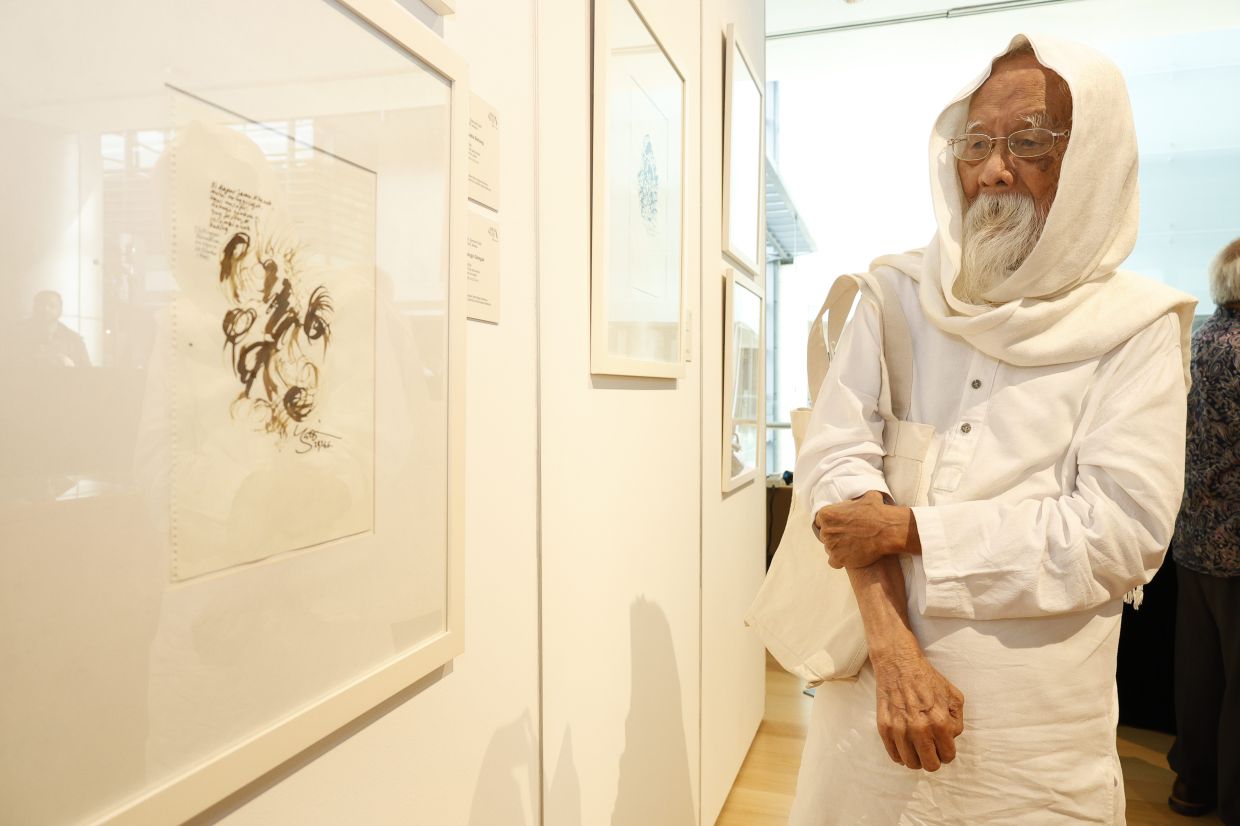
The government will also consider naming a Kuala Lumpur street after A. Samad Said and establishing a gallery dedicated to his work.
“We will look at these proposals. For me, what matters most is that we appreciate his work and remember that he championed the rights of ordinary people,” said Communications Minister Datuk Seri Fahmi Fadzil.
For many, his influence as an approachable, people-friendly National Laureate extended beyond literature into civic movements such as Bersih, where he inspired younger Malaysians at rallies and solidarity gatherings in Kuala Lumpur.
In an unexpected turn in 1992, he also won admirers among the rock community by speaking out against the government’s moral crackdown on long-haired musicians and rock fans, defending their freedom of expression.
Newsrooms to novels
Born on April 9, 1935, in Kampung Belimbing Dalam, Durian Tunggal, Melaka, A. Samad Said’s childhood took him from rural Melaka to Singapore, where his schooling at Sekolah Melayu Kota Raja began in 1940 but was interrupted by the Japanese Occupation during World War II. He resumed his education after the war, before moving on to Victoria Institution in Singapore.
His boyhood years thus straddled contrasting worlds: the relative idyll of pre-war Singapore, the hardships of wartime and the colonial-era school environment, where English-language education opened another window to the wider world.
In school, Charles Dickens, Percy Bysshe Shelley, George Eliot and Robert Browning were among his early literary discoveries, before he developed an affinity for John Steinbeck, Ernest Hemingway and Robert Frost.
These Western writers shaped his literary imagination, as did Malay classics such as Sejarah Melayu and Hikayat Hang Tuah.
His literary career, primarily in Bahasa Malaysia, began to take shape in the years following Merdeka. After a brief stint as a hospital clerk in Singapore, an experience that later inspired a series of short stories, he moved to Kuala Lumpur and worked for several months at Fikiran Rakyat, a short-lived publication founded by Malay nationalist figure and writer Ahmad Boestamam.
In the late 1950s, he returned to Singapore to continue his journalism career with Utusan Melayu, where he worked alongside fellow literary figure Usman Awang. His duties included translating English-language stories and covering the arts.
He subsequently relocated to Kuala Lumpur to continue with the newspaper’s Malaysian operations, where he went on to edit Mastika, a Utusan Melayu-owned culture magazine. In 1961, he joined Berita Harian in Kuala Lumpur, where he remained until his retirement in 1987, bringing to a close a journalism career spanning nearly three decades.
The highest Malaysian literary recognition came in 1985, when A. Samad Said was named the fourth recipient of the National Laureate title. He followed Kamaludin Muhammad, better known as Keris Mas (1981), Shahnon Ahmad (1982) and Usman Awang (1983).
His decision to pursue writing full-time was not without its struggles.
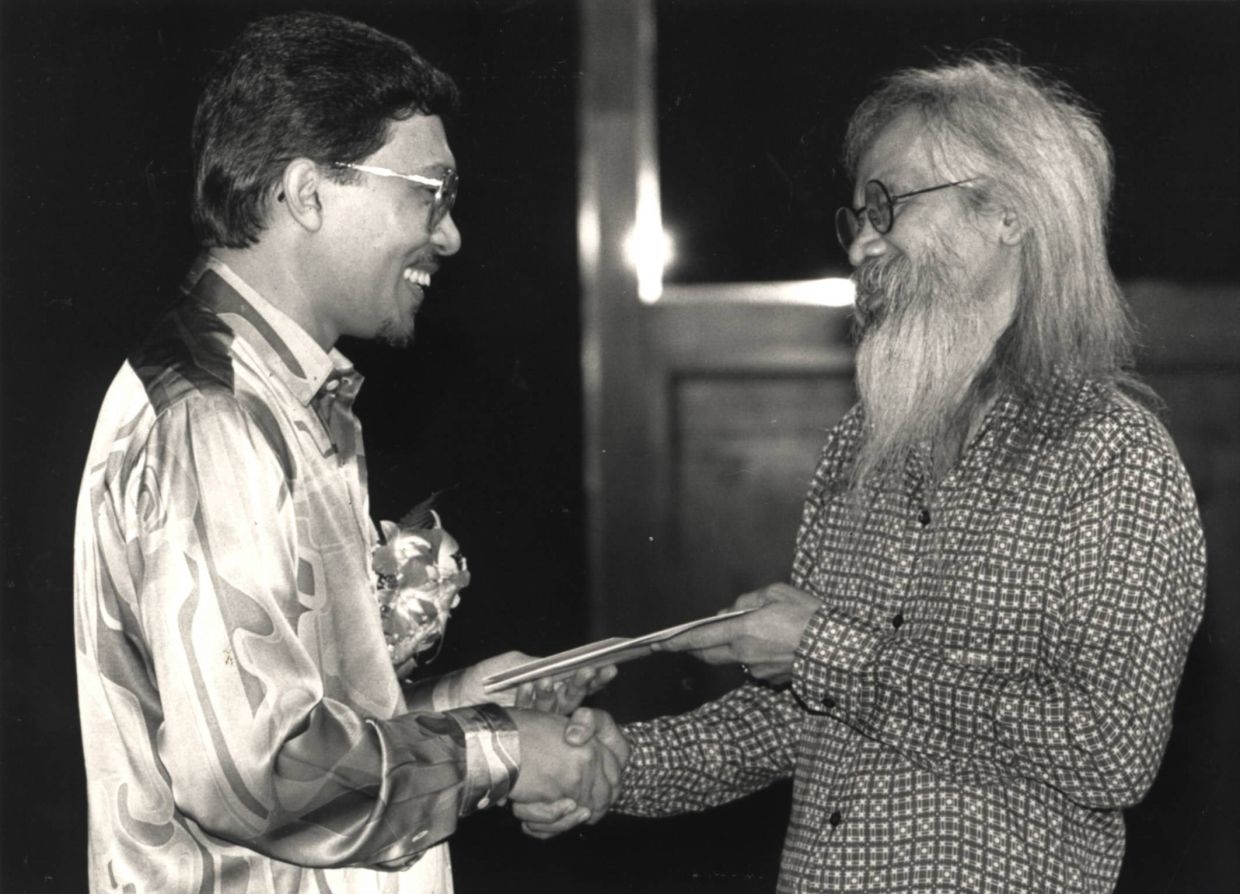
In mid-1989, A. Samad Said staged a mogok seni (protest of silence) against publisher Dewan Bahasa dan Pustaka, taking a stand over what he regarded as unfair treatment and delays in royalty payments. The protest stirred debate among the literary community, politicians and his many supporters, bringing wider attention to the rights and recognition of writers.
“Mogok seni is not like a railway mogok, or bus company mogok, which one can give up after some persuasion. Mogok seni touches one's conscience,” A. Samad Said told The Star in November 1989. He ended his mogok seni in July 1990, a year after it began.
Read, read, and read
On the sidelines of the National Laureate’s funeral, his son, musician-writer Az Samad recalled his simple but enduring advice to the public: “Read, read, and read.”
For A. Samad Said, books were a lifelong source of companionship and discovery. His early love of reading developed into a deep engagement with world literature, reflected in the extensive personal library he amassed over the years.
In his more active years, he was a familiar face in Kuala Lumpur’s bookshops, large and small, always on the lookout for his next read. Even in old age, his curiosity remained undiminished, as did his appetite for books.
Life as a National Laureate remained modest, but in the early 2000s, he began exploring another facet of his creativity through visual art, which also provided an additional source of income.
“Things are good sometimes, and not so good at other times. Thanks to the interest shown in my paintings, I have lived comfortably these past few years; I can even walk into a bookstore and buy a book,” A. Samad Said, then 80, told The Star in a March 2015 interview, discussing his Black And Red exhibition in Kuala Lumpur and how making art had helped supplement his livelihood.
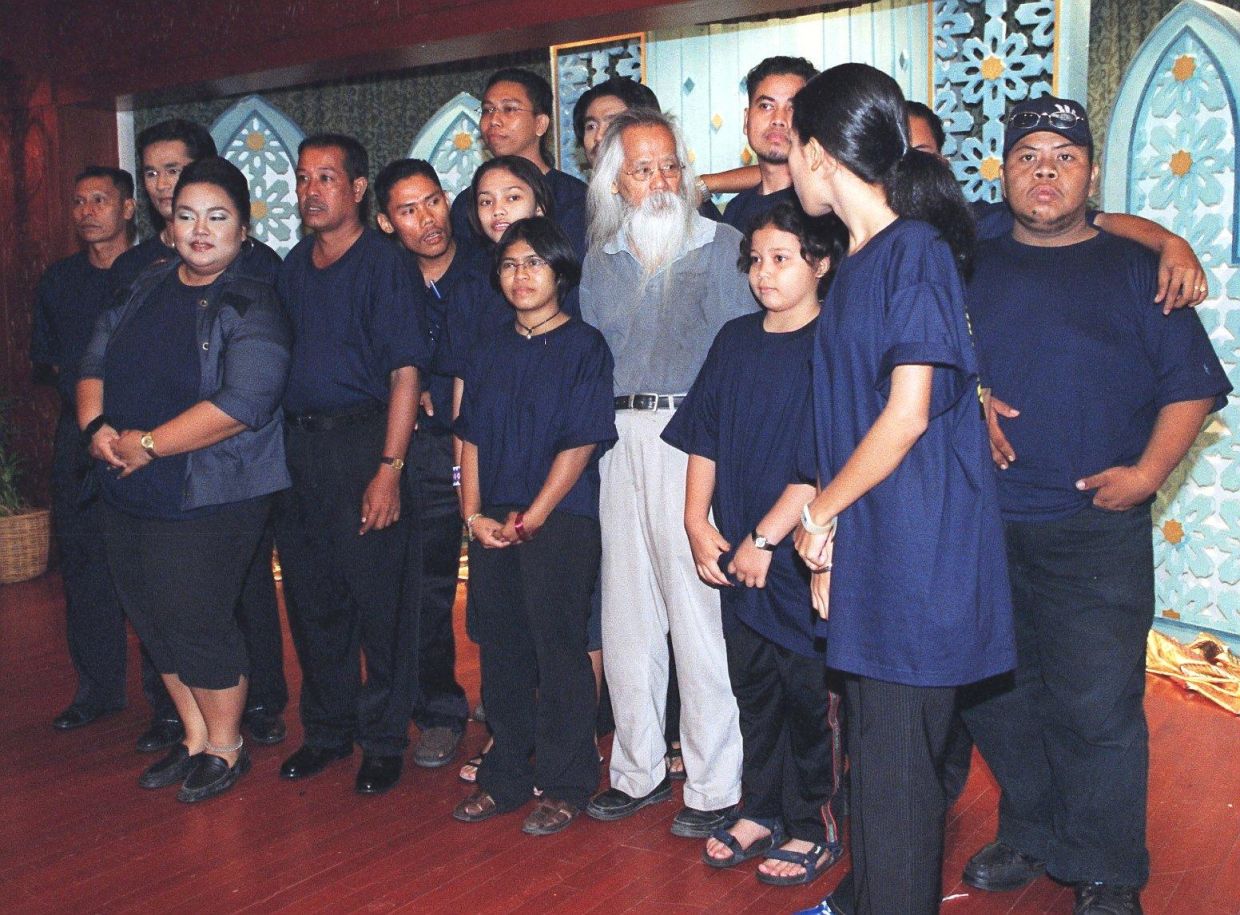
In his biography Memberi Hati Nurani (2012), this enduring attachment to literature is evident. Among the works closest to his heart was Dr Zhivago, the celebrated 1957 novel by Russian writer Boris Pasternak.
In a Bernama interview last year, marking his 90th birthday, he spoke of returning to the classics and catching up on books he had yet to finish.
“Now, I spend more time reading the classics I once left unfinished. I enjoy works by Fyodor Dostoevsky, Leo Tolstoy, and Ernest Hemingway ... I didn’t complete their books in the past, but now I’m taking my time, savouring each moment and ‘gathering’ wisdom,” he said.
The human experience
The hardships he experienced during the Japanese Occupation left a deep impression on A. Samad Said, later finding expression in his early short stories (cerpen), published in magazines, newspapers and journals throughout the 1950s and 1960s.
The suffering, uncertainty and resilience of family and community became recurring themes in novels such as Sungai Mengalir Lesu (1967), Di Hadapan Pulau (1978) and Keledang (1979), as he continued to grapple with the experiences of the past.
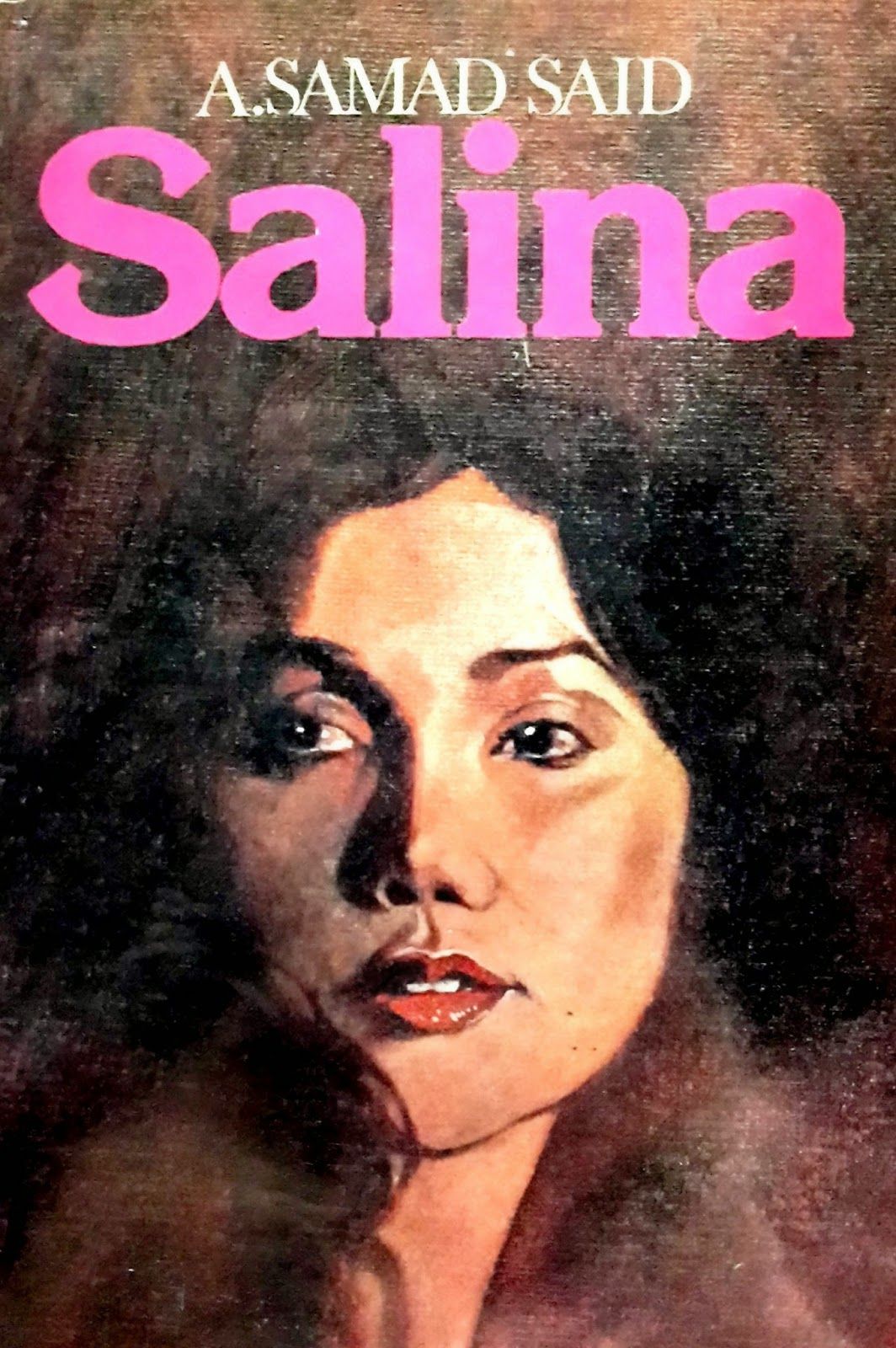
His literary voice would find its fullest recognition with Salina (1961), a novel that established his place in modern Malay literature. It tells the story of a woman driven by post-war hardship and poverty into prostitution in 1950s Singapore and Malaya.
“I knew many women like Salina. I was living in a red-light district near the New World Amusement Park after the war. Thirty per cent of the novel is true, and the rest is fiction,” A. Samad Said told The Star in a March 1986 interview, recalling the hunger and desperation of the post-war years.
Salina has been translated into several languages, including English and French. It has remained in print over the decades, with a 60th-anniversary edition published in 2021.
His later Kuala Lumpur-set novels, Daerah Zeni (1985) and Hujan Pagi (1987), further established his literary standing. The latter, set in the world of newspapers, is regarded as Malaysia’s first novel to explore magical realism, a genre associated with Latin American writers.
Throughout his illustrious career, he remained committed to Bahasa Malaysia while recognising, particularly in his later years, how other languages could enrich the country’s literary landscape, bringing fresh perspectives, cultural influences and experiences into the national conversation.
“In Malaysia, the question of language is very important. Despite there being many writers who write in English, it still isn’t accepted as national literature. (However), what’s important in literature is what we create; the language we do it in is circumstantial,” A. Samad Said shared his views with The Star in June 2013, following a panel discussion on “A National Literature” at the Edinburgh World Writers’ Conference (EWWC) in Kuala Lumpur.
Beyond his National Laureate title, A. Samad Said’s contributions to Malaysian literature earned him numerous national and regional honours, including the Pejuang Sastera award (1976), the SEA Write Award (1979), the Anugerah Sasterawan Nusantara (1999) and the Merdeka Award (2024).