Haze, floods, heatwaves, shifting animal habitats and other environmental phenomena can be explained through science, which helps us understand their causes and consequences. Yet it is often through art that such data and complex realities are translated into narratives that resonate with a wider audience.
In the group exhibition Seasonality Of The Anthropocene at the A.Pop space and the nearby Jalan Negara Kita community arts lane in Taman Melawati, Kuala Lumpur, artists explore the Anthropocene – the era in which human activity has become a dominant force shaping the planet – through a diverse range of mediums and creative responses.
The exhibition, featuring Bethany Luhong Balan, Chong Sue Yen, Lee Oscar and Celine Tan (Co2_karbondioksida), Tedd Louis, Felix Galistan and Katrina Jacinto (Singapore), George Hiraoka Cloke (Britain), and Stephanie Pearl (Britain), is on until June 30.
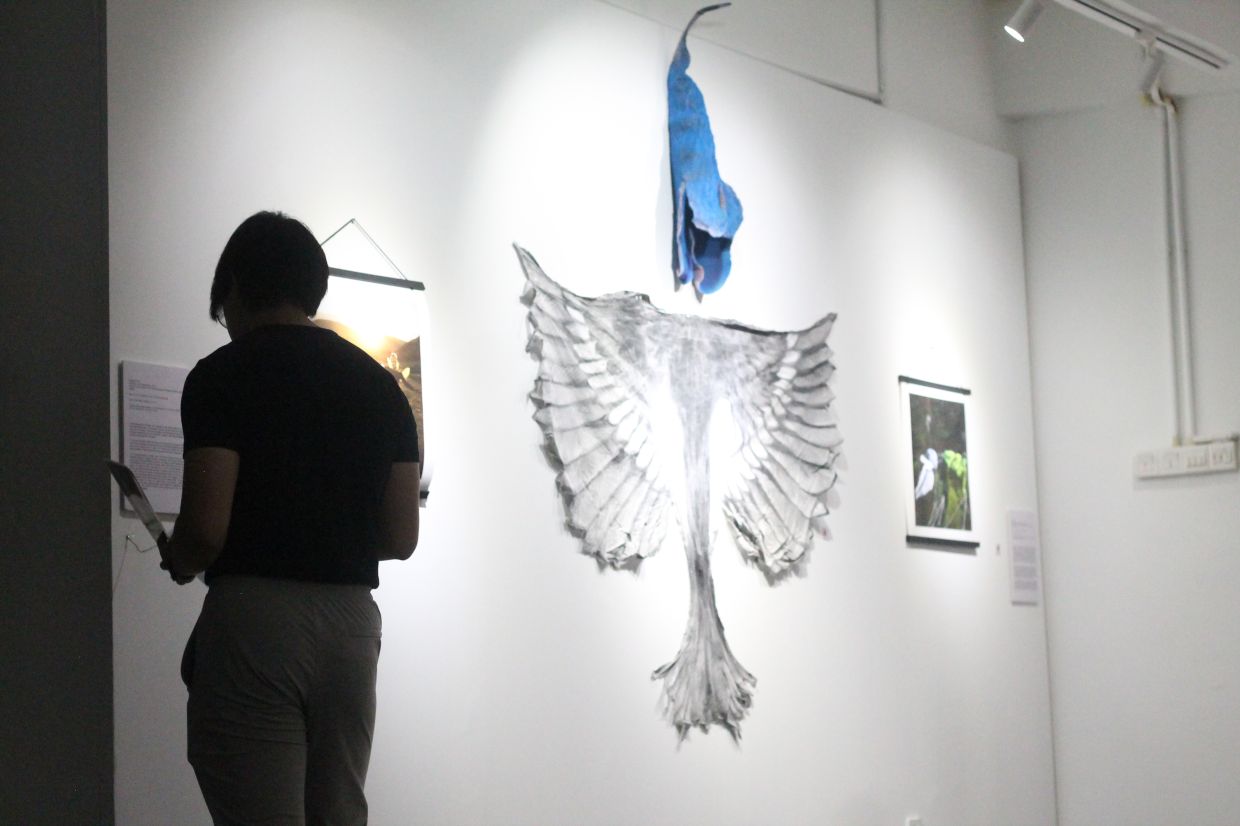
On the walls and in the public space, the artists examine the realities of climate change, offering reflections on environmental disruption, ecological fragility, and humanity’s evolving relationship with the natural world.
Supported by the "Connections Through Culture" grant from British Council in Malaysia, the exhibition is curated by KL-based artist Jakob van Klang in collaboration with environmental social scientist Dr Felicia Liu from the University of York, England.
"The idea is that the rhythms of both human and non-human life are being transformed – sometimes irreversibly – by human intervention in Earth systems. Familiar seasonal patterns such as monsoons, harvests, and animal migrations are increasingly disrupted, while entirely new 'seasons', such as of pollution, are emerging. At the same time, some seasonal practices and experiences that many people have taken for granted are beginning to disappear," says Liu in a recent interview.
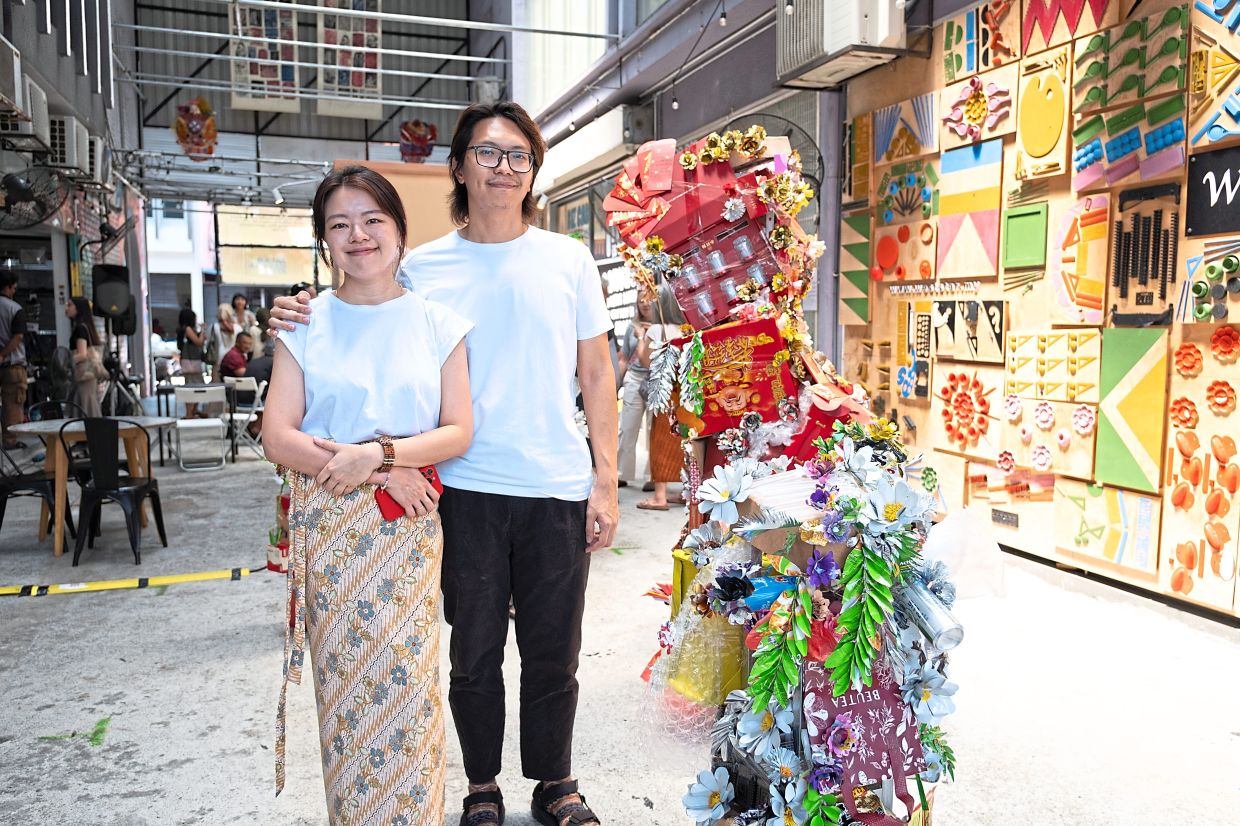
The collaborations between artists and researchers took several forms – some with established relationships with environmental scientists while others were connected with researchers through the curator's networks, allowing them to access relevant expertise, data, and perspectives.
"As an environmental researcher, this exhibition shows how art can help communicate environmental issues in ways that are emotionally resonant and accessible.
"Most people do not directly experience global environmental change, but we do notice shifts in our rhythms of engaging with the local environment, and art has a unique ability to make those changes visible and tangible," she adds.
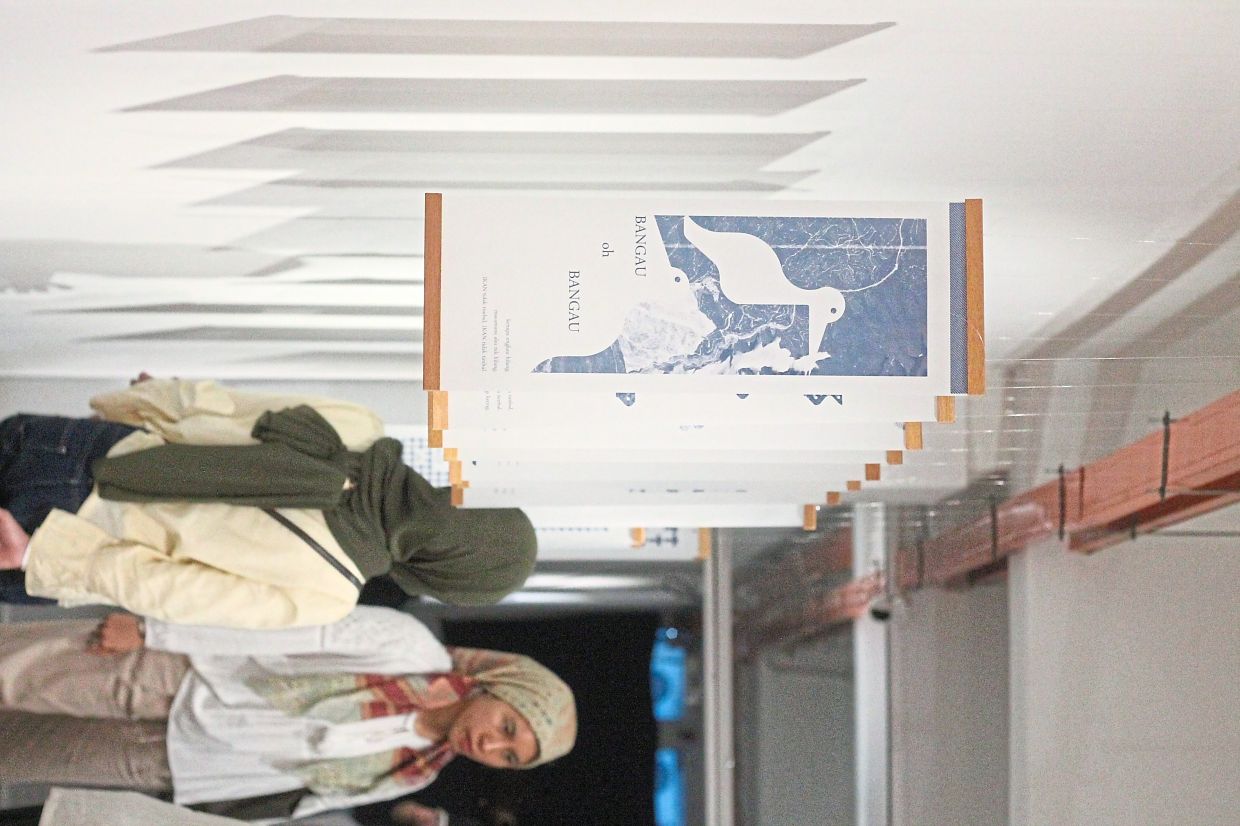
As an exhibition, Seasonality Of The Anthropocene remains accessible in nature despite its specialised theme, allowing visitors to walk around the installations, view the wall works and engage with ideas around climate change through an exploratory experience.
The cost of encroachment
Sarawakian poet and artist Bethany Luhong Balan draws on social and environmental narratives from her home state in a series of four transparent acrylic panes, each representing distinct eras of agricultural life, from rice and pepper to oil palm cultivation.
The third pane, however, disrupts this progression, depicting fire and ash as a stark reflection of the profound environmental transformation brought about by the construction of the Bakun Hydroelectric Dam.Her artwork Asap, referencing her hometown of Sungai Asap, narrates the forced displacement of more than 10,000 Indigenous people from communities such as the Kayan, Kenyah and Penan, who were relocated from their ancestral homelands.
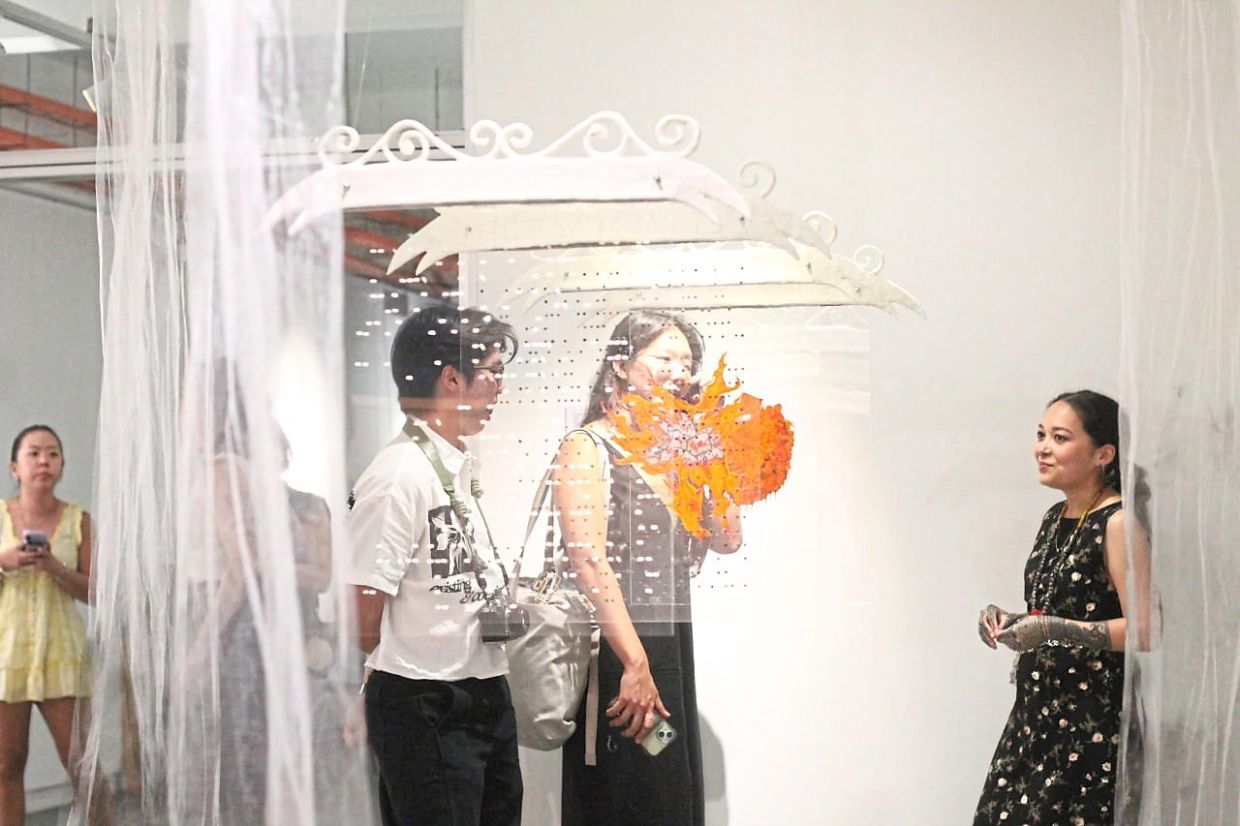
“I have always been fascinated by history, particularly that of my people, the Kayan community of Borneo. Yet I am also a modern person living in contemporary times, and I wanted to explore the tension between staying true to my roots while also confronting present-day realities – climate change, environmental degradation, and the broader anxieties of a hyper-capitalist world,” says Bethany.
For many artists from the interior of Sarawak, opportunities in their places of origin are often limited, leading them to relocate to the city in search of greater prospects – a move that can, in turn, come at the cost of a diminished connection to their cultural roots.
“This sense of yearning is second nature to me as a Sarawakian based in Singapore. But I choose to see it as another form of bejalai – the Iban concept of journeying or expedition – much like the way our ancestors once travelled. It is, to me, part of growing up, and of growing into our fullest and most mature selves,” she adds.
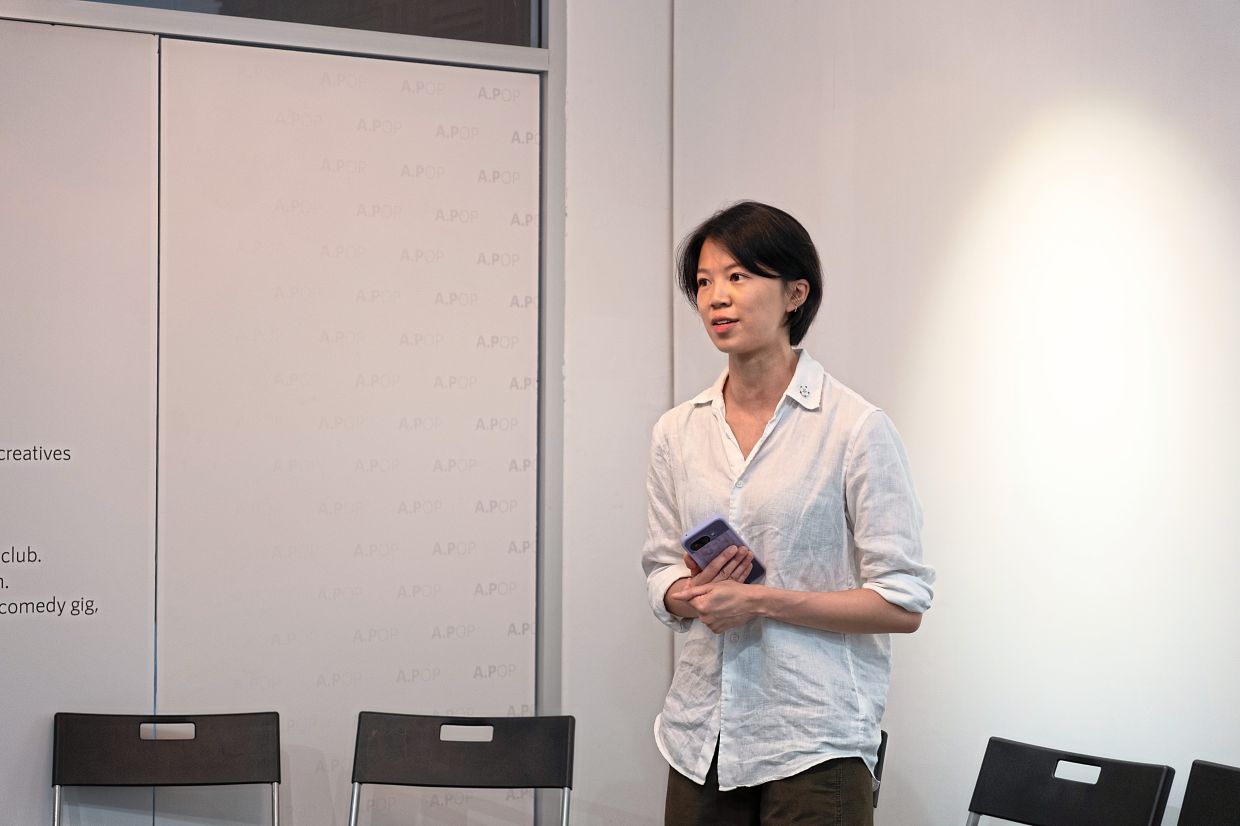
While most works are displayed at A.Pop gallery, two are installed along Jalan Negara Kita lane. Among them is Sabahan theatre practitioner Tedd Louis’ freestanding, 2.4m, four-sided column titled Kami Angkat – The Flood Gauge.
“I’m from Sabah but I now live in Kuala Lumpur, so when the floods come, I see them on my phone first, not through my (kampung) window. I read WhatsApp updates from my family while waiting for the LRT. There is a distance you don’t choose, but end up living with, and with it comes a sense of guilt – that I am dry while my kampung is wet. This work came from trying to stay honest with that distance, rather than pretending it doesn’t exist,” says Louis.
The artwork registers Sabah’s flood seasonality across seven decades, with each of its four faces articulating a different element – rain, land, flood, and hearing – integrating published hydrological research with sculpture, projection and a four-channel audio cycle of rain, forest sounds and Sabahan community voices.
“That is also why I wanted the work to be large and to exist in public space. What we carry (Kami Angkat) is something we have borne for years, and what lies ahead feels even heavier. Climate change is already here, the worrying trends are evident in the data. The question the work raises is simple: what are we doing to mitigate it – or are we content to merely watch?” he concludes.
Seasonality Of The Anthropocene at the A.Pop gallery, Taman Melawati, Kuala Lumpur is showing until June 30. It is open daily from 11am-5pm. Free admission. More info here.