When the World Cup kicks off this Friday (3am, Malaysian time), it will put a spotlight on 48 national teams with 48 national shirts – each carrying its own history, symbolism, and political baggage.
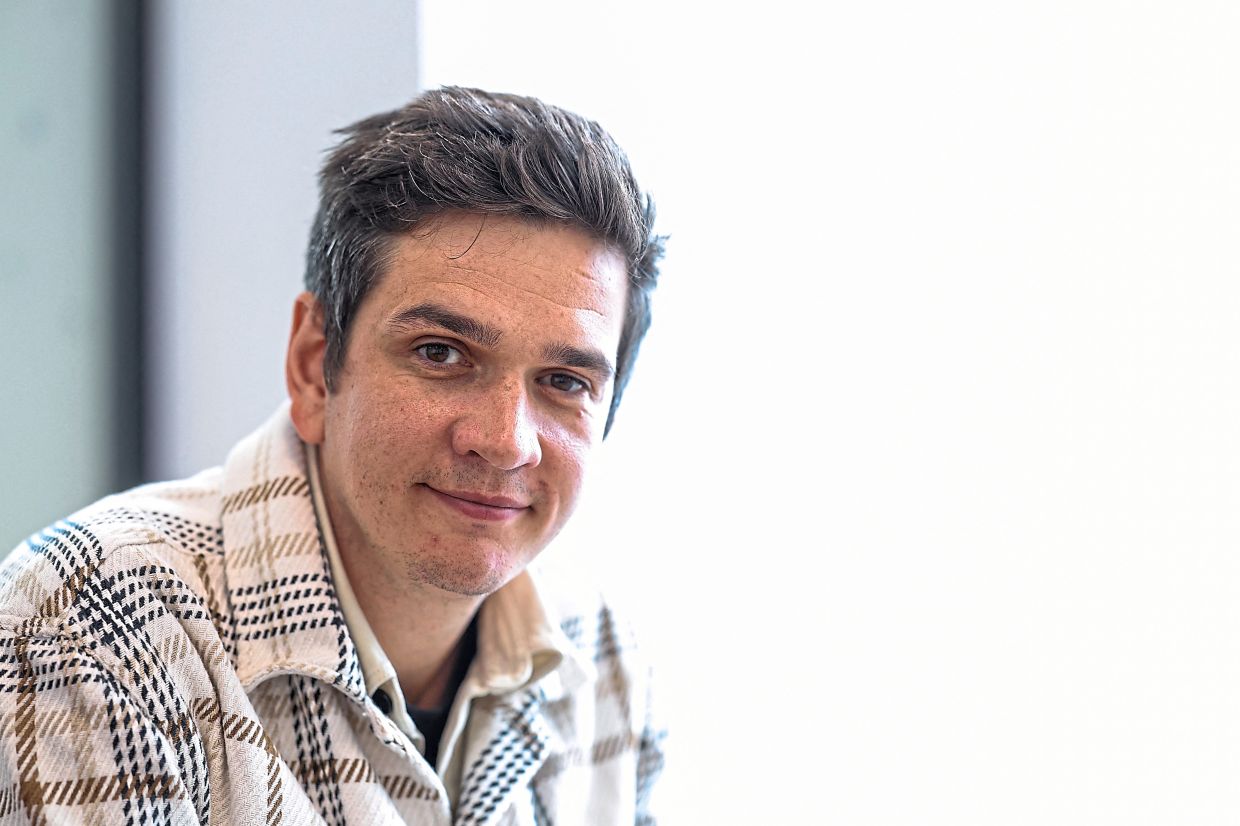
Joey D’Urso – the London-based author of More Than A Shirt, released in paperback last month – has spent years chronicling the politics, money and power woven into football jerseys. Speaking with Reuters ahead of the tournament, D’Urso discusses football’s soft power and how to read the stories stitched into the game’s biggest stage.
This conversation has been edited for length and clarity.
Your book looks at the financial and geopolitical influences underpinning football, or soccer, shirts. What first drew you to this idea?
I grew up very much just a football fan, without really thinking about politics too much. And then I personally went down a path of studying politics, becoming a political journalist, and eventually realising that these two worlds have so much crossover.
You have nation states buying up football clubs. Just look at the Premier League now – you've got Manchester City owned by the (UAE’s Sheikh Mansour bin Zayed al-Nahyan), you've got Newcastle United owned by Saudi Arabia. And this politics is everywhere now, so I think football fans who just want to watch the sport inevitably become interested. I think people who are interested in politics are (also) taking notice now because football is the biggest projection of power; it's the most popular cultural phenomenon there's ever been.
You chronicle the Russian energy firms using sponsorship as a form of soft power and the clubs advertising gambling sites and obscure crypto products. Did you expect these stories to be this overtly political?
There's some that are really prominent, like the (involvement of) big oil states, but there's some that I didn't know about. In Colombia, for example, there's a club (called Envigado FC) that was owned by drug cartel and there's a dead gangster's face on the back of the shirt. (Editor's note: US sanctions on Envigado FC over its ties to the Oficina de Envigado gang were lifted in 2018 after the club severed ties with the cartel.)
People often don't own football clubs for financial reasons. It's a way to lose a lot of money. But it's (also) a way to build prestige and power and be famous. People will happily lose money on football because it's fun and prestigious and cool, basically.
Have you found that fans are willing to overlook controversial owners – for example, Russian billionaire Roman Abramovich's former ownership of Chelsea FC – if it benefits their team?
Yeah, totally. Chelsea had won one league title before 2005 and are now the second-most successful club, after Man City, of this century with money that is directly linked to someone very close to the Russian state. But if you're a fan of that club, no one wants to hear about it. And I understand that. No one becomes a supporter of a football team to think about the complex politics of a country far away.
I’m reminded of a story line in the show Ted Lasso, in which one player protests their club sponsor Dubai Air because its parent company, "Cerithium Oil," is depicted as destroying the environment in his home country of Nigeria. Do you see that kind of awareness happening more in real life?
I think more aware. There are big differences in national cultures. English football has long been very apolitical. It's just not part of the culture. In a lot of European countries, Lazio is famously a very right-wing Italian club. There are others that have long left-wing connections, like St Pauli in Germany. So I think it really depends on what the country is.
German football (has) supporters involved in the running of the club that care about who owns it; they want to have voting rights. They have this 50 + 1 rule, which means that the majority of the club must be owned by supporters. So they're very conscious of these questions, which made (Russian energy giant) Gazprom (sponsoring German team Schalke FC until February 2022) even weirder because it has these very politically engaged fans. But you've got to remember that Russia in the mid-2000s did not have the reputation that it does now.
The world’s attention will soon be turning to the World Cup. How do national shirts differ from club shirts?
Well, the most fundamental one is they don't have sponsors. It's because UEFA and FIFA have their own sponsors, and they don't want sponsors competing with their sponsors. So if you watch an international game, there's blank shirts and you see the billboards more prominently. (Editor's note: In a statement to Reuters, a FIFA spokesperson said restrictions on the display of commercial branding "sit within FIFA’s role as the sole owner of the competition’s commercial rights and are designed to protect the integrity of those rights, prevent ambush marketing, and ensure that all commercial associations with the FIFA World Cup are clear, authorised and centrally managed.")
But what I found is there's lots of really interesting stories about why a certain team wears a certain colour. Germany, for example, play in white and black because it was (the colours of the) flag of Prussia, which was a sort of pre-German state. But there's some really interesting stuff about Germany and the flag and football because (under) Hitler and the Nazis, they're still playing white and black. But then after the war, Germany weren't in the 1950 World Cup because the place was in rubble and Germany was banished from all sorts of things. But in 1954, (in what) they call "the miracle of Bern” in Switzerland, Germany won. Then, in 2006, Germany hosted the World Cup and the flags were everywhere. And that's the first time the flag would be prominent in a sort of healthy, patriotic way that isn't associated with racism and whatever else.
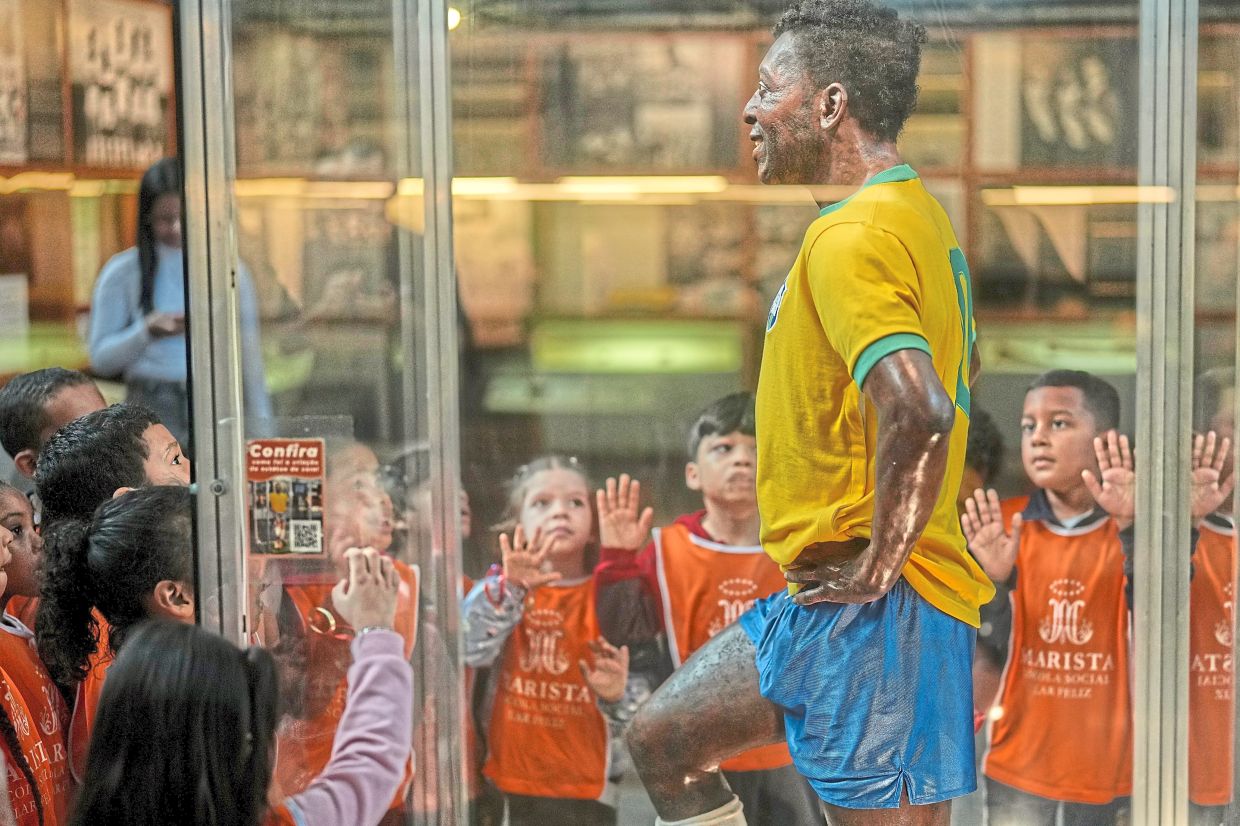
Another interesting shirt is (the yellow jersey of) Brazil – the most iconic football shirt in the world. But it actually comes from this spectacular failure of 1950 when Brazil hosted the World Cup. It completely expected to win and it built the Maracana, which is a sort of cathedral to football, and it lost against little Uruguay in the final. It was like a national tragedy for Brazil and it's so seared into their memory. They played in white in that final, and then they were like, "This white is so cursed, we need a new shirt." So they did a competition and the yellow came out of that.
This expanded World Cup will have 48 teams. Of the new countries coming in, are there any that particularly stand out to you?
Uzbekistan is a good one. They're at their first World Cup and their kit is bright blue, and that's (inspired by) Samarkand, one of the most ancient cities in the world (and) its blue tiling.
Ghana have been to the World Cup before, but there's a great story: They have a white shirt with a big black star on it because (of) the Black Star Line. There was this guy called Marcus Garvey, who was an (activist in the) Pan-African movement. He set up the Black Star Line, which was a black-owned shipping line. Then 40 years later, when you had independence in 1960, the Black Star Line became a symbol for that and they adopted it on their shirts.
For people watching the World Cup, what should they look out for if they want to read the shirts a bit differently?
Football shirts, before the 1990s or 2000s, were a bit of an afterthought. There was no design, thought, anything. And now there are like all these stories – this represents this moment in our history, this represents our oceans.
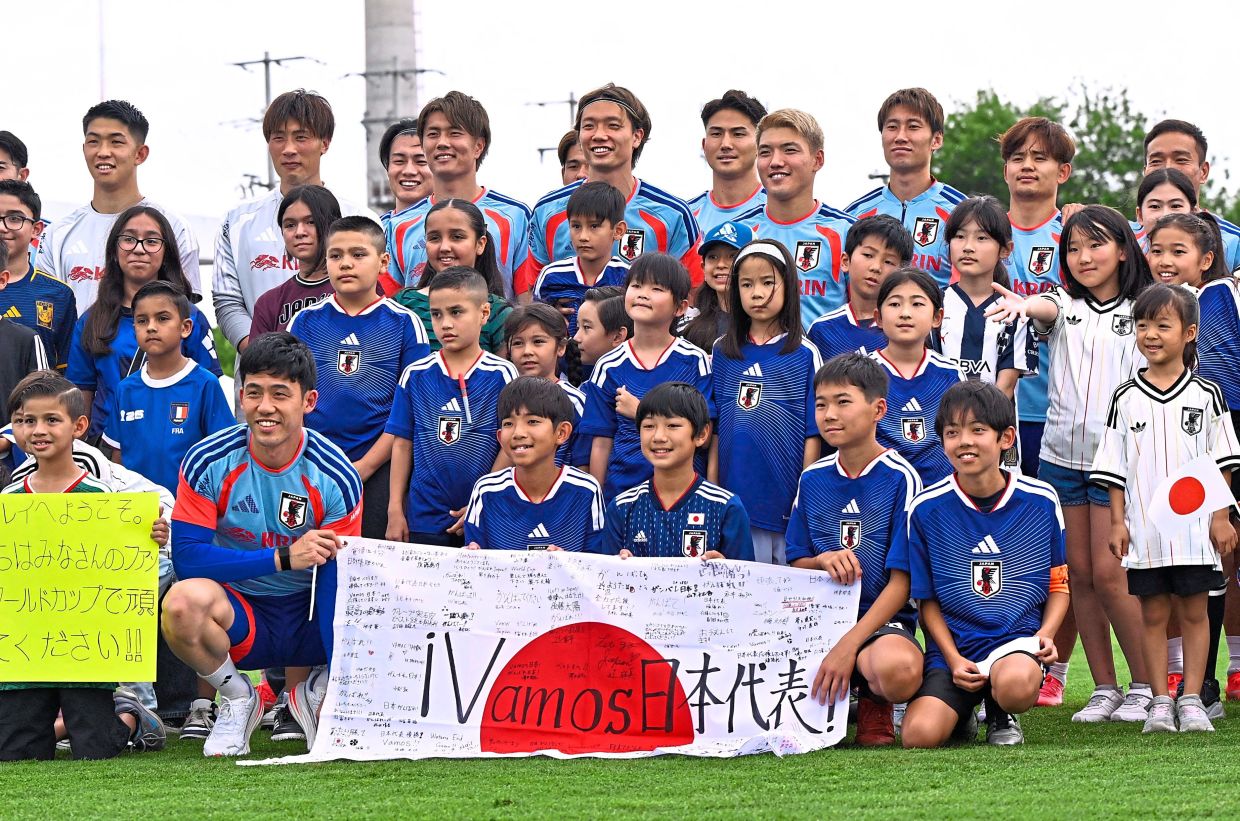
A lot of them are kind of slightly engineered after the fact. I noticed that in a lot of the football shirt stories, like Japan and the Samurai blue. Japan play in blue. It's quite a sort of weird story of a university team played in blue, then the university team became the Japanese national team. But marketing people now for 20 years have been like, "This is the colour of the samurai." A lot of it is quite artificial, so it's almost like there are multiple layers to it. But everyone has got a story in it because if you're charging people like £85 (RM460) for a piece of polyester, you want to sell them a story, I suppose. – Reuters