
"Stark and unsettling" is how judges of the International Booker Prize describe the novel that could make Brazilian Ana Paula Maia the first Latin American writer to win the prestigious award.
The prize, which will be handed out at a ceremony in London on May 19, recognises works of fiction from around the world that have been translated into English.
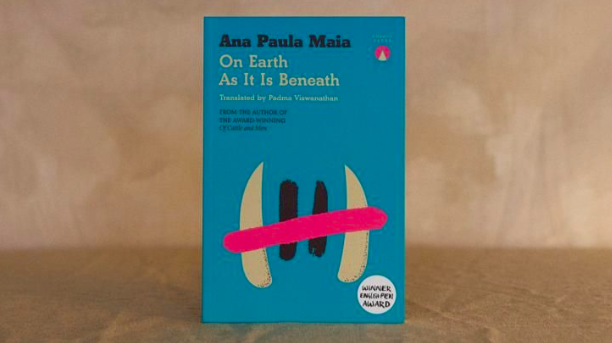
On Earth As It Is Beneath - or in its original Portuguese "Assim na terra como embaixo da terra", published in Brazil in 2017 - is a horrifying tale of a brutal prison colony in the remote wilderness.
The horror is laid bare in just 100 pages, but its author says the story filled with blood, guts and despair is not far from the world we live in today.
"Never before have there been so many people hunting down other people," the 48-year-old Brazilian told AFP via video call from her home in Curitiba in southern Brazil, referring to the plight of migrants around the globe.
Born in Nova Iguacu, a working-class suburb of Rio de Janeiro, and raised by a literature teacher and a bar owner, Maia grew up glued to the spaghetti Westerns of Italian filmmaker Sergio Leone, which would later inspire her male characters.
The shortlist includes several prominent writers, including French author Marie NDiaye - winner of France's top literary award Prix Goncourt in 2009 for Three Strong Women - who is in the running with her novel The Witch.
The story of a suburban woman who passes magical powers on to her daughters was originally published in French in 1996 but translated into English only this year.
Organisers say the award - whose £50,000 (RM267,000) prize is split equally between the author and translator - gives the writers a significant boost in profile and sales.
Four winners have gone on to become Nobel laureates.
What does it mean to you to be shortlisted for this award?
"I've always gone very much against the grain of Brazilian literature. I've always written things that were different, bizarre even. Horror literature is not very common in Brazil.
"Writing in this genre and making it this far is monumental. I'm only just starting to realise how significant it is."
Is the penal colony in your novel a metaphor for the world today?
"Yes, I believe this book is a representation of what we're living through. We live - quite calmly, in fact - inside a penal colony. We're always running from something, trying to survive, to overcome dangers and injustices and find allies."
This penal colony is on the grounds of a former slave plantation. Why make that connection?
"When I started studying the penal system, it was impossible not to associate it with slavery. A prison and a slave ship are essentially the same thing; only the era has changed. I thought a great deal about the Americas. Everything here is permeated by the legacy of slavery.
"The prison population is overwhelmingly Black. I can't speak about a punitive system without referring to those who were massacred."
The world has changed a great deal since the book was first published in Brazil nine years ago.
"I think it resonates even more deeply today. Never before have there been so many people hunting down other people. We're living through a manhunt. Immigrants are being hunted. I didn't see this before, people literally being hunted down." - AFP