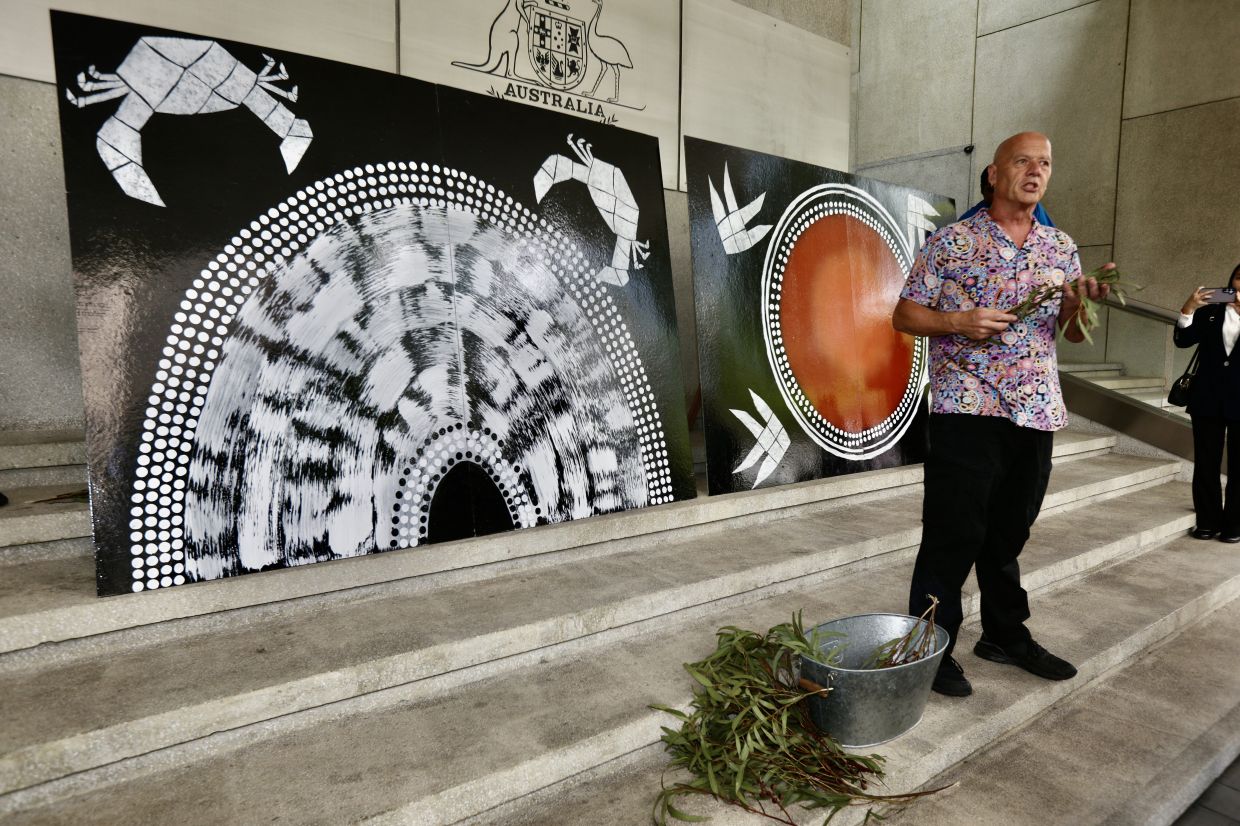
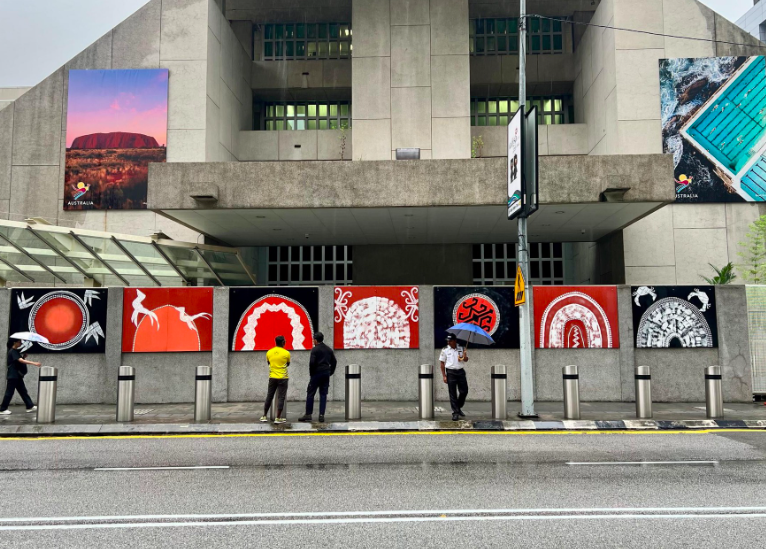
If you walk past the Australian High Commission on Jalan Yap Kwan Seng in Kuala Lumpur, you may notice a new mural (seven panels) stretching across its frontage.
The striking mural, created by Aboriginal Australian artist-photographer Wayne Quilliam and Malaysian artist-activist Shaq Koyok, from the indigenous Temuan community (in Selangor) was commissioned in celebration of the 70th anniversary of Australia’s diplomatic presence in Malaysia this year.
At the launch on Monday, Quilliam blessed the mural with a smoking ceremony, which involves smouldering native Australian ingredients, such as gum tree branches, a practice that has been performed by Aboriginal and Torres Strait Islander people for thousands of years to promote well-being and foster connections to culture and country.
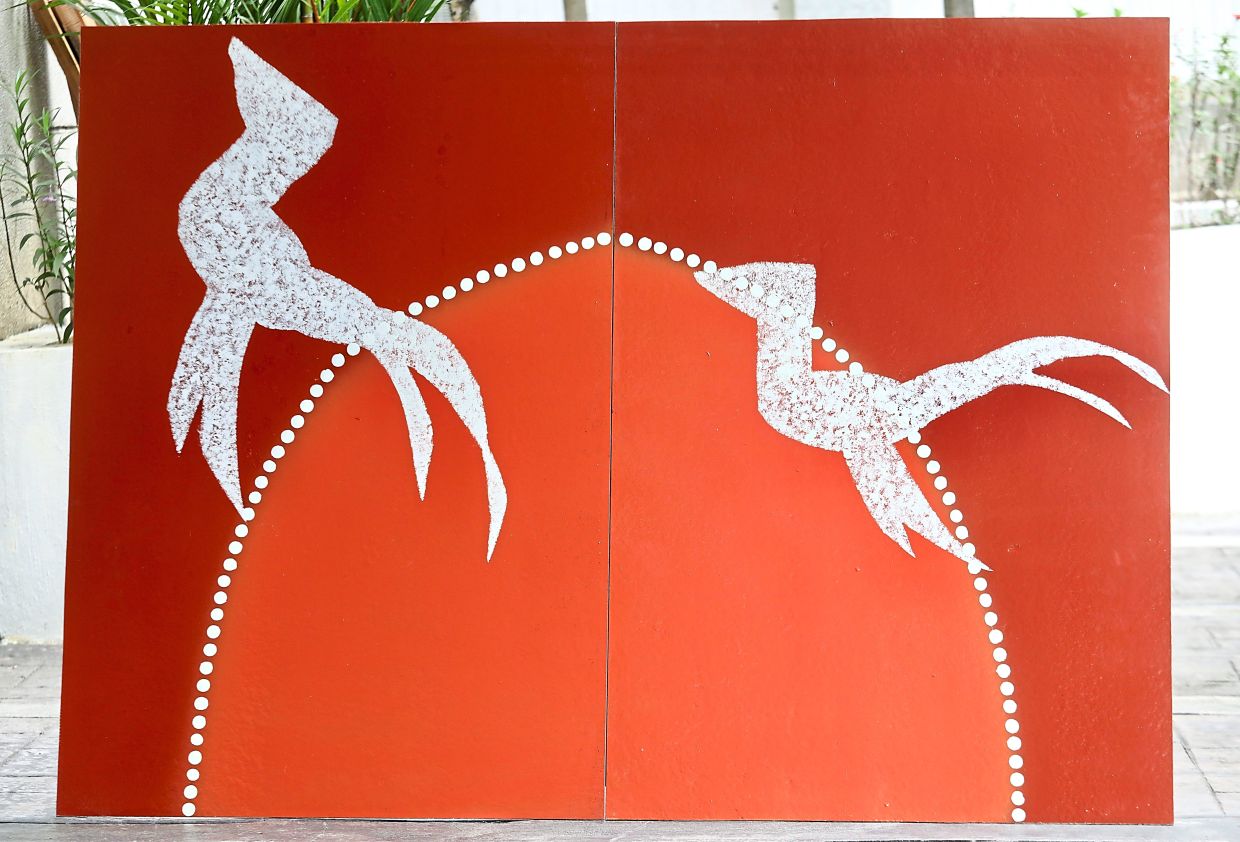
The artwork, done in bold colours such as red, orange, black and white, draws on Hobart-born Quilliam’s Palawa heritage, taking inspiration from the story of Bunjil, the great wedge-tailed eagle that created the earth and the sky.
The Palawa are the indigenous people of Tasmania.
“In Aboriginal Australia, we connect to land, sky and water. That is our culture. We didn't have a written language until we were colonised – everything that was done was painted. So all the artwork that you see, all the motifs, the colours, depicted where we lived, how we lived, and the seasons," said Quilliam.
“The way that our ancestors used to tell these stories was to paint on bark, paint on the walls, or paint on message sticks to share what the next season is and where they were going. So that's what influenced my part,” he added.
Pause for a moment
“We hope viewers of this artwork can pause for a moment to experience an artistic representation of the many stories that weave our two countries together. This mural is not a snapshot in time, but rather reflects on our historic ties and looks to the future of our relationship,” said Danielle Heinecke, Australian High Commissioner to Malaysia, at the event.
The panels also include elements of traditional Temuan weaving from Shaq’s community in Pulau Kempas, Banting, including marine creatures such as fish and crabs.
“When I first met Wayne to work on this project, I was inspired by the story of Bunjil that he told me. I realised that there are many commonalities between the stories of his people and the stories of my people, the Temuan community, as well as a shared deep connection to the land," said Shaq, whose real name is Shahar Koyok, in a separate interview.
(Shaq was unable to attend the Kuala Lumpur launch as he was at the UN Climate Change Conference (COP30) in Belem, Brazil.)
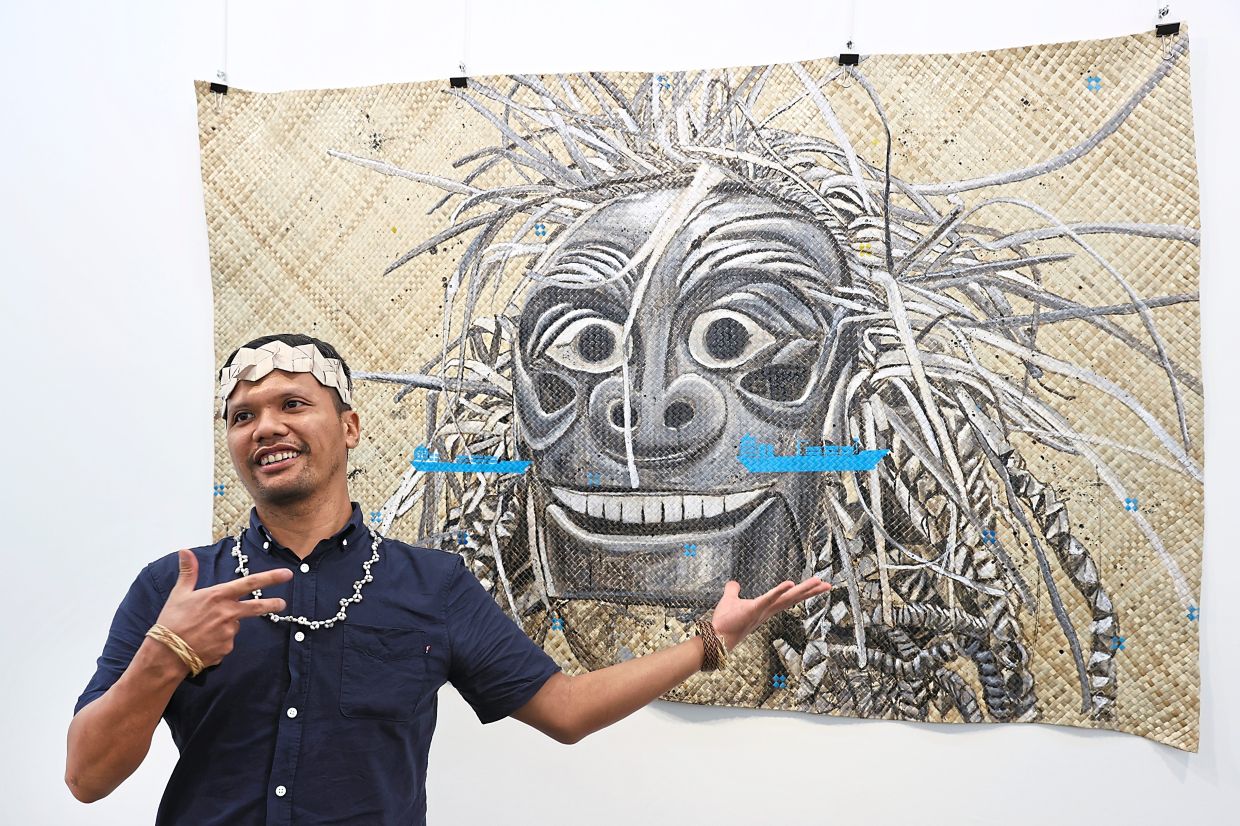
“In Temuan culture, we always welcome visitors and spirits with weaving, so in this mural, I stencilled silhouettes of weaving patterns on Wayne’s design. I’m pleased at how we were able to bring together both cultures that have the same spirit of respecting our indigenous ancestors’ wisdoms,” he added.
Together, both the artists’ concepts symbolise the deep connections between Australia and Malaysia and both nations’ indigenous communities.
In line with the design’s focus on the environment and nature, the mural was painted using ochre, naturally occurring pigments from Australia’s outback, and oil spray paints, to withstand Malaysia’s weather. The panels are Malaysian-made ECOPEAL boards, fabricated from recycled beverage cartons.
"It’s a good thing we went with this for the base, because not only is it waterproof, but it truly reflects sustainable practices in art-making.
“I’m also grateful for the help of my good friend and fellow artist William Koong, who let us use his studio space in Klang to work on the mural and recommended which materials to use. Wayne’s son, Nathan, was a huge help as well in putting everything together,” said Shaq.
Located a short distance from Kuala Lumpur’s Twin Towers, the mural will be on long-term public display for passers-by.
“I hope everyone who sees the mural will be touched by a sense of wonderment – a sense of wonderment and appreciation for all the ways that we’re different, and all the ways that we’re alike,” concluded Quilliam.