Teater Untuk Semua, a groundbreaking collective of disabled, deaf, and neurodivergent artists, is redefining the stage – pushing for a theatre scene that’s truly inclusive and accessible to all.
Its debut production Siapa Cacat?, showing at Five Arts Centre, GMBB in Kuala Lumpur on Nov 22 and 23, celebrates difference as a source of culture, aesthetics, and creativity – challenging stereotypes and reshaping perceptions of disability in Malaysia.
Set at a bus stop, the story unfolds as performers come and go, each waiting for the “Bus 801” – a public service ride said to be accessible to people of all abilities.
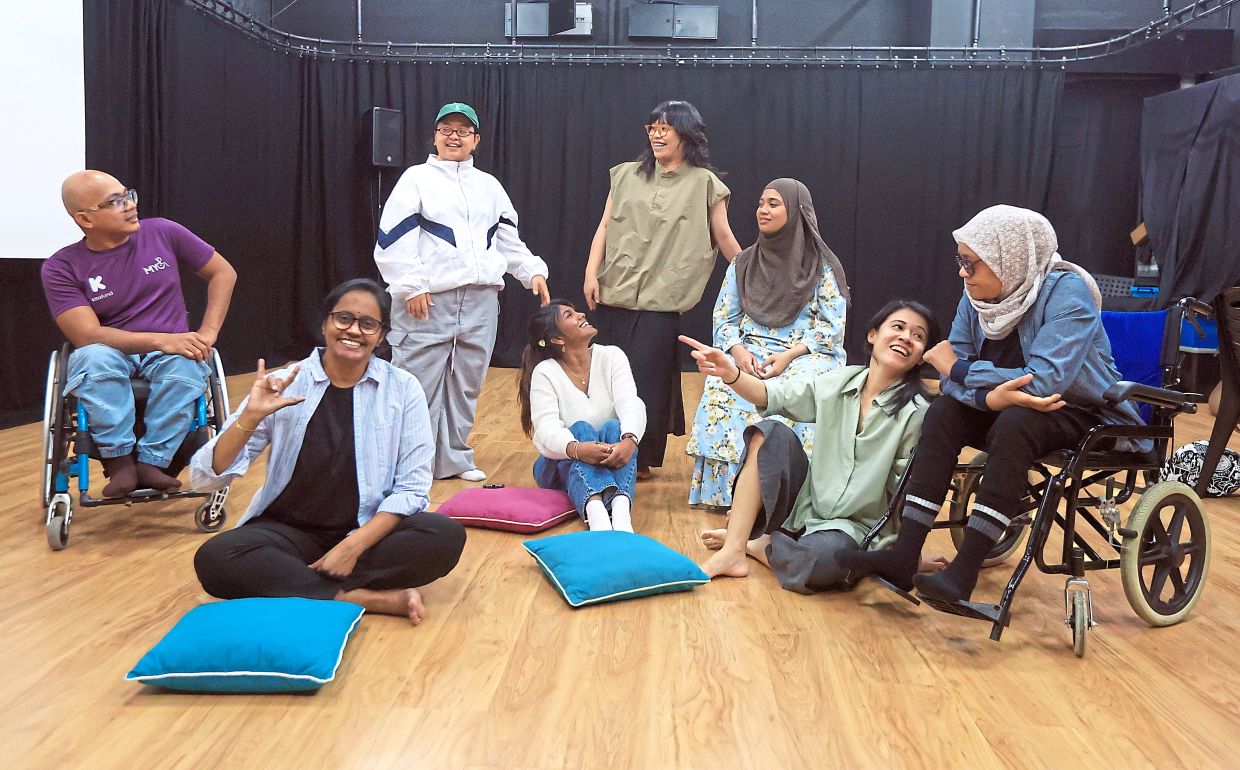
Through a series of scenes and monologues written and performed by the ensemble – which includes deaf, blind, wheelchair-using, and neurodivergent artistes – they share moments of humour, resistance, and reflection on agency, time, and belonging.
The show is co-directed by Ho Lee Ching and Jazzie Lee Jin Jye, and features eight disabled performers: Ameera Ramlee, Dino N. Hassan, Fndrocka Notapurba, Gejaletchumi Murugaya, Lavinia Abirami, Nuna Wan, Nur Aisyah Shahimee, and Sharifah Nur Jahan.
Theatre for everyone
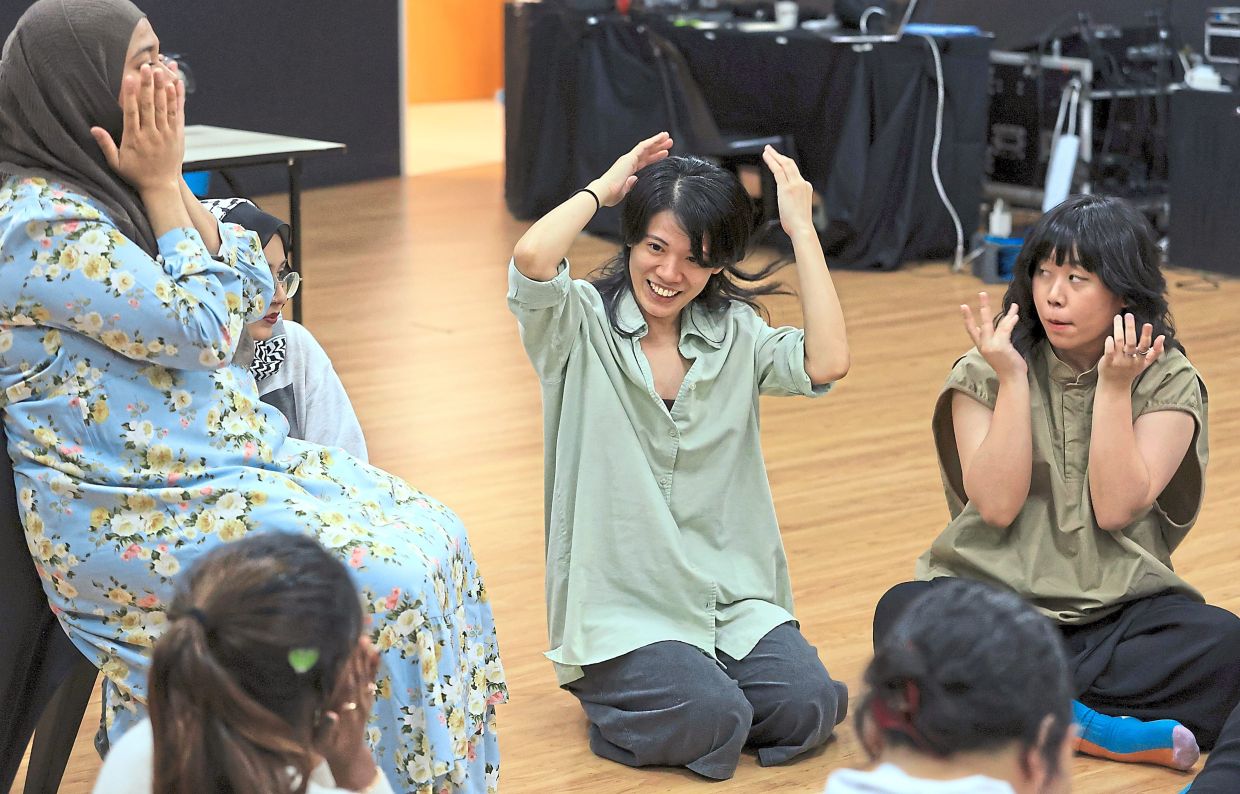
Siapa Cacat? continues Teater Untuk Semua’s training programme last year, which guided 12 disabled participants through 12 weeks of basic voice, movement, text, and performance training.
With nearly two years of research and preparation, Teater Untuk Semua, formed in 2024, is ready to take the next step.
“I’ve been doing theatre for about a decade now, and during this time, I realised that the theatre scene in Malaysia is largely inaccessible – often rigid and rarely accommodating,” says Ho, who has Tourette syndrome (a neurodevelopmental disorder that causes involuntary movements or vocalisations) and Obsessive-Compulsive Disorder.
“So I wanted to start a research and documentation project on making theatre training more accessible, and that became Teater Untuk Semua.”
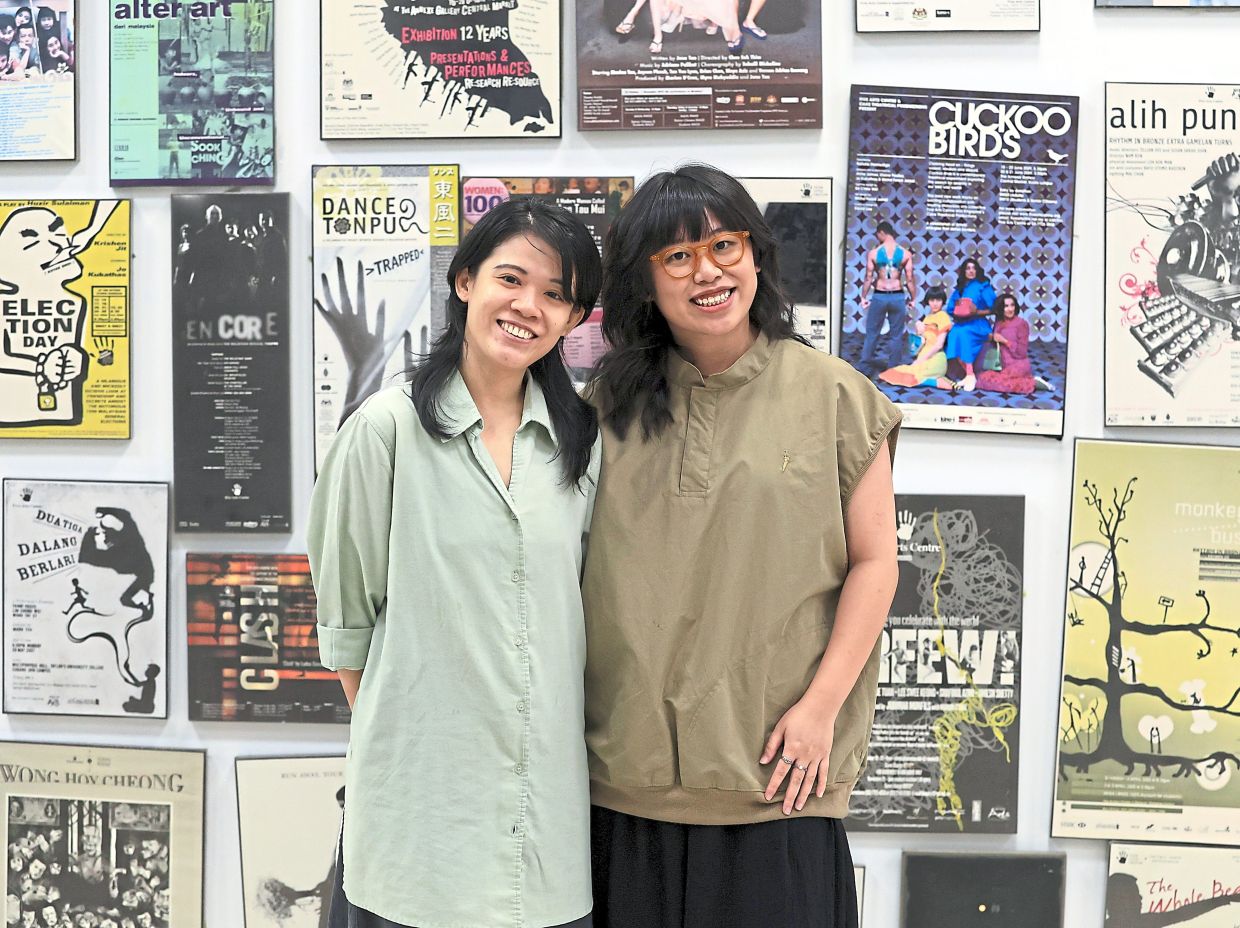
Ho adds that many applicants said they usually dismiss theatre or dance workshop calls, thinking they’re “not for them”.
“I’m neurotypical-passing, in the sense that my disability is not visible from the get-go. So for those who cannot hide their disability, where are the spaces for them? That’s why we decided to create Teater Untuk Semua,” says Ho, 34, a theatre director and actor, who made her directorial debut with OCD at Kuala Lumpur Performing Arts Centre in 2018.
Lee, a multidisciplinary theatre-maker and co-founder of lowercase laboratories, views the stage as a platform for awareness and change. Like Ho, she says she was immediately drawn to Teater Untuk Semua’s focus on community-building.
“In the past, there have been performances by or about disabled people, but they’re always one-off productions. We wanted to create a safe space to share our stories with wider audiences,” says Lee, 25, who is on the autism spectrum.
Telling their own stories
The politically-correct may wonder about the show’s title, but for the group members, they chose to use the word “cacat” to be provocative, to meet the awkward side-stepping around their reality head on and urge audiences to rethink who belongs on stage.
“We don’t want to use other names anymore. For me, it really lies in the intention when they use the word, which in itself is not inherently bad or wrong. Growing up, I never felt like it was such a harmful word, because in my household, it’s used very lovingly, in a teasing way.
“It was only when I was older and encountered those who used the word differently that I realised the difference,” says Lavinia, 24, who is deaf and has bilateral cochlear implants.
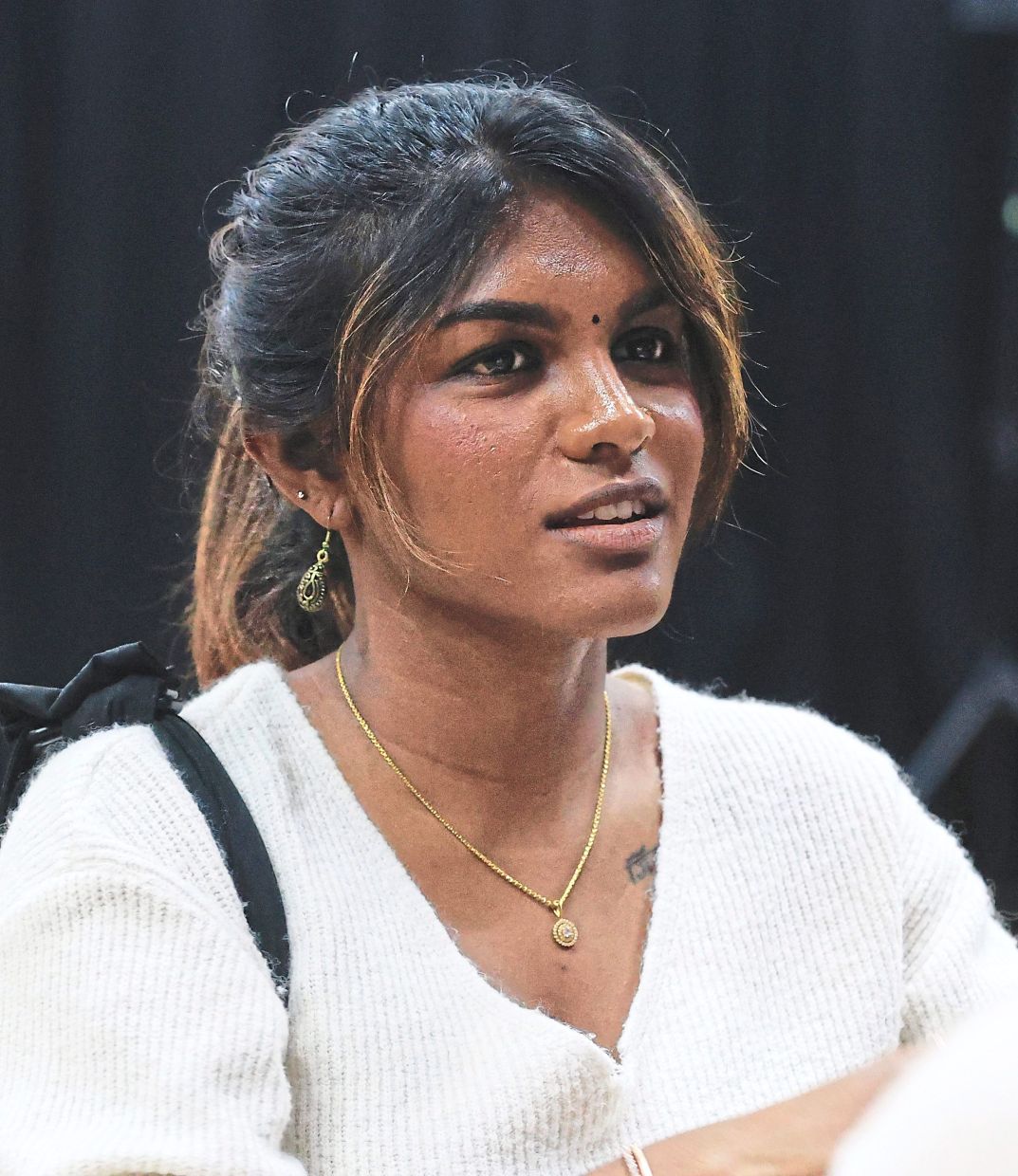
As a cross-disability group, Teater Untuk Semua brings people of different abilities together through a shared love of the performing arts.
Sharifah, 28, tells us that the blind community already supports the development of skills in the arts, such as busking and voice acting.
“Since Teater Untuk Semua is about making theatre more accessible, I thought it was important to have someone representing the blind community,” she says.
Wan Effendi Sodikin, also known by his pen name Fndrocka Notapurba, says he joined to improve his public speaking skills – and was glad to make new friends within the disabled community.
“All this while I’ve been in a wheelchair, facing my own challenges, but I didn’t know how people with other types of disabilities lived. So this is something new for me, and I think it has helped inspire fresh perspectives in all of us,” Effendi, 38, says.
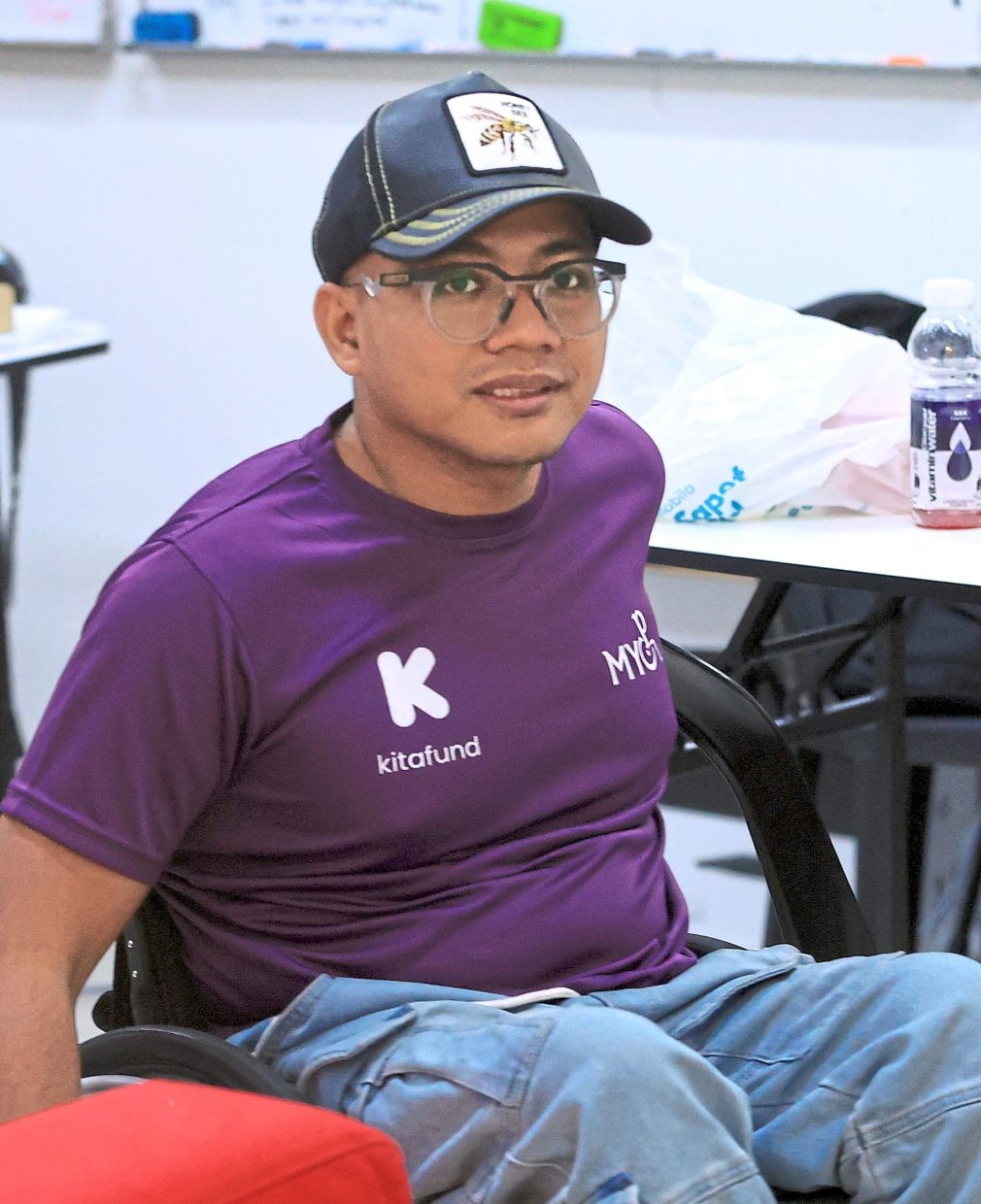
Lavinia says that as the only disabled person among her family and friends, it has sometimes been difficult to advocate for her needs.
“When I was younger, my mother signed me up for a (theatre) class at KLPac, but I couldn’t keep up because I couldn’t hear, so I quit. For this workshop, however, they had Creative Support Persons (CSPs), and it felt like life on ‘easy mode’ – I didn’t have to struggle to hear or ask people to repeat themselves.
“The biggest takeaway for me is that being inclusive isn’t that hard. Even something as simple as adding surtitles can make a show far more accessible,” she says.
Finding a way forward
Ho says that Teater Untuk Semua created the CSP role because it wanted to open up the group to non-disabled people in the arts.
“We wanted to let anyone else who feels this work is important to come on board and become a peer support person,” she says.
CSPs are partnered with the performers to help them fully participate in the creative process, providing support through communication assistance, sight guiding, note-taking, task adaptation, or other creative facilitation. There are currently two CSPs in the Teater Untuk Semua group: Luqman Suni and Putrina Rafie.
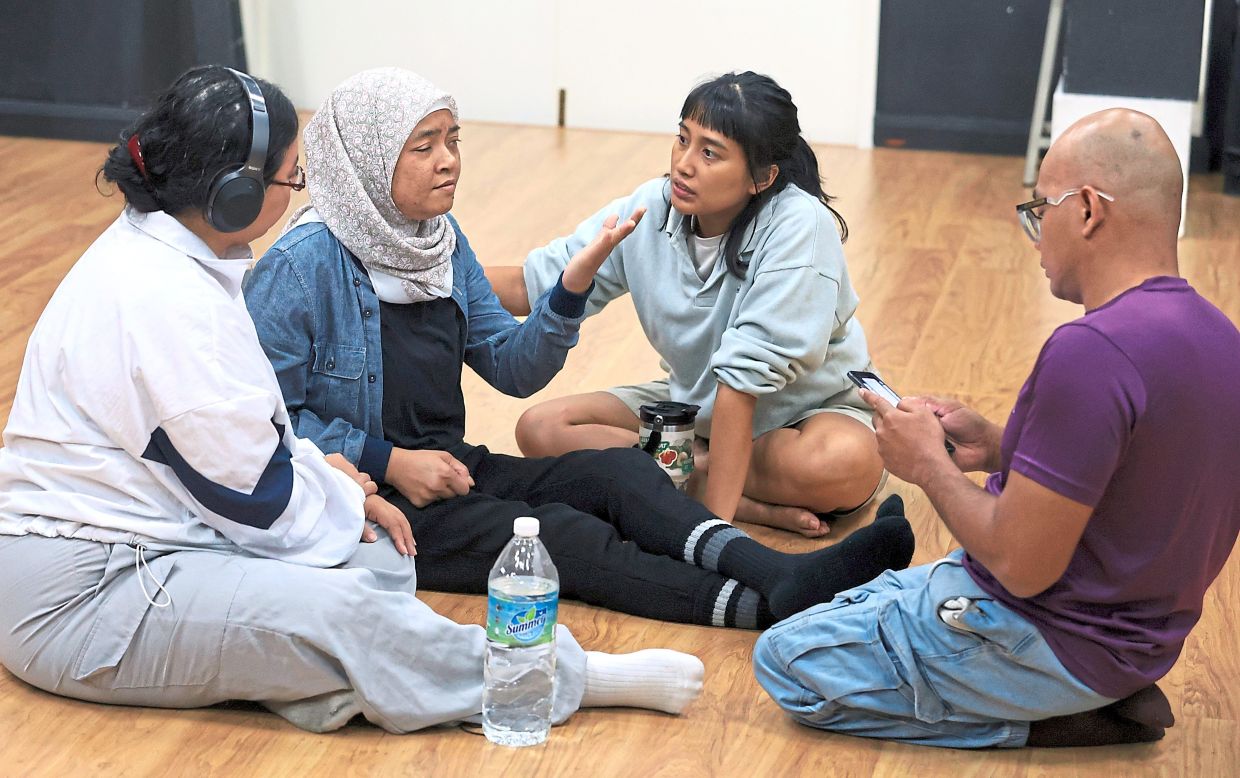
June Tan of Five Arts Centre, executive producer of Siapa Cacat?, emphasises that the disabled community needs a platform of their own – a space to be seen, heard, and celebrated.
“When I was invited to the workshop last year, I was struck by how their work could be easily turned into an actual public show. And I wondered why not?” says Tan.
“Why is there a lack of visibility of the disabled community in our society? Part of this is due to something Ho has spoken about – the nuanced difference between integration and being inclusive,” she adds.
The veteran theatre producer explains that while integrating suggests an openness where the disabled community could join in, being inclusive means the abled community makes time and space to adjust things to ensure that they can do so.
“We should learn from the disabled community about what they need to produce and perform a show: for themselves, and for their audiences, who consist of both the abled and disabled community. When I told Teater Untuk Semua that Five Arts Centre would be happy to support them to produce the show, the group hesitated on whether they could do it,” she says.
Finally, Effendi spoke up, recalls Tan, insisting they should create the show – because they had never seen one that reflected their own experiences.
“This made me sad, for anyone to feel they have never seen themselves in their own society, or to not feel this space is also theirs. To make that happen, it really doesn’t take a lot from the rest of us, so we should do more of it,” says Tan.
Producing any theatre show also requires significant resources, and Siapa Cacat? faces similar challenges – not just to support its disabled cast and crew, but to make the performance accessible to audiences through surtitles, Bahasa Isyarat Malaysia (BIM) interpretation, and audio description.
Teater Untuk Semua has launched a crowdfunding campaign to cover these costs, ensuring fair pay for all involved, providing accessibility support, and keeping ticket prices affordable.
“We’ve applied for grants but haven’t heard back yet, so we’re turning to the community through this campaign,” says Ho. The campaign runs until Nov 23.
Siapa Cacat? plays at Five Arts Centre, GMBB in Kuala Lumpur on Nov 22 and 23. The crowdfunding campaign ends on Nov 23. More info: cloudjoi.com. Instagram: @teateruntuksemua.