French author Flore Berlingen takes an in-depth look at issues surrounding recycling


By AGENCY
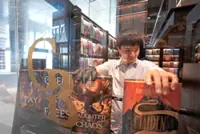
Recycling is now so rooted in our daily lives that it can sometimes be a bit of a smokescreen, potentially leading us to consume more throwaway items. Photo: AFP

While it may be indispensable, recycling is now so rooted in our daily lives that it can sometimes be a bit of a smokescreen, potentially leading us to consume more throwaway items.

From greenwashing to the myth of the infinitely recyclable, and biased consumer information, French author Flore Berlingen takes an in-depth look at the issue in her book Recyclage le grand enfumage (Recycling:The Smokescreen Of Waste).

Each year, Global Recycling Day (March 18), which started in the US in the 1990s, provides an opportunity for brands and companies to present the initiatives they have developed for recycling their products and protecting the environment.

But, over time, the term "recycling" has taken on a catch-all dimension, underpinned with hope, leading us to believe that our waste can be infinitely processed for reuse.

It's precisely this "all-too-perfect" aspect of recycling that Berlingen, the former head of Zéro Waste France, explores in her book Recyclage, surrounding how the circular economy became the ally of throwaway consumption. Her book was published in France in June 2020 by Éditions Rue de l'échiquier.

Berlingen notably alerts readers to the ecological limits of recycling and the counterproductive nature that recycling has taken on over the years.

'The recycling process in its current form isn't virtuous or non-virtuous, but rather depends on the way in which it is applied,' says Berlingen.

Recycling is often presented as a cure-all for the planet. But, in reality, it's a different story...

There is indeed an imbalance in the discourse around recycling, because it is often presented as a positive method, with no mention of its limits, from an environmental point of view, whether they are technical, economic, scientific or operational.

In reality, the recyclable nature of a product remains purely theoretical. Product packaging can, for example, be considered recyclable if it's made from a recyclable material, but there still needs to be an operational collection network in the region or the country, which isn't always the case.

Recycling has, moreover, become a sales argument, because it fulfills an environmental expectation that's increasingly important for the consumer. Yet American scientists have shown, in a study, that this "promise" subconsciously incites us to stop feeling guilty about our consumption behaviour. A bit like if we said to ourselves: "It's recycled, so I can throw it out." This way of thinking could be counterproductive and makes us waste time in our ecological transition, which is nevertheless urgent.

Besides, certain recycled products are lower quality. Sometimes this is called "downcycling." It's notably the problem with food packaging: if we recycle a plastic product using worn out or lower-grade material, this will simply deteriorate progressively. And, above all, it won't be infinitely recyclable.

Still, products that contain recycled materials, even in low quantities, must still be preferable to 100% new items?

The recycling process in its current form isn't virtuous or non-virtuous, but rather depends on the way in which it is applied. To take again the example of a single-use packaging item, to me, it seems difficult to consider recycling as a solution, since its disposable nature will in any case cause resources to be wasted.

Because, bear in mind that the production of products - even if made partly from recycled materials - requires substantial expenditure of water and energy, as well as virgin raw materials. It therefore seems more relevant to ask yourself whether such an object is of real use to society and to try to see if you can do things differently by looking for alternatives.

Do these underlying problems with recycling also apply to upcycling and buying secondhand?

Here too, you have to ask yourself if the object made using waste has a sustainable function. If that's the case, you should next ask yourself if the product you're buying has been made from a potentially avoidable waste item. A water bottle or a plastic bag are, for example, avoidable waste items. The important thing is, therefore, to not lose sight of the fact that this type of waste shouldn't even exist in the first place. Especially since, just like recycling, upcycling can also become a sales argument.

As for buying secondhand, we sometimes tend to confuse this notion with recycling, which has become a generic term. While recycling means destroying an object, re-use extends an object's lifespan by maximising its use. This proves beneficial in as much as it favours the circular economy. On the condition, of course, that the act replaces the purchase of a new item.

How can the public be made aware of the limits of recycling without discouraging them from continuing to sort their trash for recycling?

We can start by giving orders of magnitude: for example cutting our clothing consumption fourfold. While at the same time focusing on the fact, with so many alternatives and solutions out there, this doesn't have to impact our comfort. I'm thinking, for example, about the sharing or renting solutions that exist for clothes, but also for furniture and other household equipment.

For food, it's harder, because certain products aren't sold without packaging. It can therefore still be a real battle for consumers. But I nevertheless remain optimistic, because things have been changing over the last 10 years: access to loose goods, the option of bringing your own containers... practices that seemed inapplicable four or five years ago. - AFP

Get 20% OFF The Star Digital Access

Monthly Plan

RM 13.90/month

RM 11.12/month

Billed as RM 11.12 for the 1st month, RM 13.90 thereafter.

Best Value

Annual Plan

RM 12.33/month

RM 9.87/month

Billed as RM 118.40 for the 1st year, RM 148 thereafter.

Follow us on our official WhatsApp channel for breaking news alerts and key updates!
France , author , book , recycling , smokescreen , Flore Berlingen

Next In Culture

Permit barriers, shortage of successors threaten Kelantan's wayang kulit
Young Japanese artists turn school blackboards into a hit medium for creativity
Unesco lists world heritage sites in Lebanon, West Bank as in danger
Penang State Museum reopens with free admission until Aug 31
New book offers rare glimpse into letters of prominent Malaysians
Weekend for the arts: Wayang Kulit Kelantan at TRX, Rimbun Dahan Open Day
Hundreds of miniature Mozarts bring a larger-than-life legacy into focus
Historical Terengganu Quran among Louvre-ACM exhibition highlights in Singapore
Silent reading clubs are attracting a growing following around the world
British-Malaysian disabled-led theatre production examines the weight of being

Others Also Read