From bone broth to mushroom rendang, these niche home businesses have become hugely popular


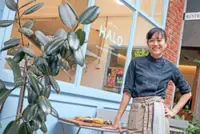
Asaad and Rahayu now make 120 jars of bone broth a day and still cannot keep up with demand! —TENGKU ASAAD

There is a fetid smell emanating from the bowels of Dexter Lim’s small family home. The aroma is at first faint and barely perceptible, but becomes gradually more powerful the further you walk into his house – its potency assaulting your olfactory glands in pregnant, laden waves.

“All the cheese that I make is kept in these chillers, ” says the affable Lim by way of explanation, smiling and gesturing in the direction of an array of large refrigerators directly behind his dining table.

Each fridge is bursting at the seams with a diverse panoply of cheese – from mozzarella to blue cheese to halloumi.

Lim sells over 100 kilos of cheese in a week and although he makes cheese every day and his refrigerator is packed to the brim, he has to move to a commercial space to keep up with demand. —  ART CHEN/The Star
Lim sells over 100 kilos of cheese in a week and although he makes cheese every day and his refrigerator is packed to the brim, he has to move to a commercial space to keep up with demand. — ART CHEN/The Star

It might seem like a strange endeavour, making cheese in a tropical country but Lim is one of a growing number of young people who have successfully transformed a niche passion, hobby, idea or favourite recipe into a home food business during the Covid-19 pandemic.

And in innovating and opting to do something so specific and so completely left field, these young entrepreneurs are discovering that their boldness and ingenuity are reaping rewards many times over.

The go-getters

Starting a brand new business during a global pandemic is certainly not an endeavour designed for the weak-hearted. But starting a business that no one/very few have ventured into at the height of a pandemic? Now that’s the domain of the truly adventurous.

Aisya Jabaruddin, 29, and Akmal Hakim Ali, 32, for instance, are a husband-and-wife team who started their home-based business Mushroom Lah together. The business focuses solely on one product: mushroom rendang.

“I am a vegan and have been making my version of mushroom rendang for years now, because I wanted something that was similar to the rendang tok that my family makes and I couldn’t find anything vegan that was to my liking, ” says Aisya.

Mushroom Lah’s mushroom rendang is only made once a week, but all 52kg are sold out by mid-week. — AISYA JABARUDDIN

When Aisya lost her job during the pandemic and contemplated selling her mushroom rendang online as a source of income, it was Akmal who gave her the confidence to move forward with the business.“There are not a lot of people selling vegetarian rendang made with mushrooms. And I thought we would do well, because the very first Hari Raya that I went to Aisya’s house (when we were still dating), she cooked two kilos of her mushroom rendang and it was the first time I tried it and I ate one kilo in on sitting!” he says, laughing at the recollection.

For Ethan Wong, all the plans he had set in motion for another business idea quickly fell apart once the pandemic and the ensuing movement control order (MCO) struck. Wong had to quickly figure out how to make a living and fell back on an old idea he had previously had.

“Before the pandemic, I had spent a couple of months setting up a sourcing business. But when the pandemic hit, all the projects just died down and six months into the pandemic, I thought ‘I have to do something else.’

“So I went back to an idea I had to make my own fried tempeh chips, something I had experimented with in 2018. Even two years later in 2020, I hadn’t really seen anything like that in Malaysia. So I revived the project and fine-tuned the recipe for another six months. Then I did beta-testing at the end of last year and sent it to about 150 testers around Malaysia to get feedback, ” says the determined Wong, who launched Truly Gourmet, his brand of tempeh chips early this year.

Tengku Asaad, 35 and his wife Rahayu Permatasari, 38, meanwhile were inspired to start their “MCO baby” – a home-based bone broth business called The Daily Broth after successfully feeding it to their two-year-old son, a notoriously picky eater.

“Our child is such a picky eater, so we had to develop a recipe for him and we also have a family member who had gone through chemotherapy, so we came up with a bone broth recipe to fulfil the nutrition needs for both. And they loved it!

“I also have another friend whose son is about the same age and is a picky eater and I gave him some bone broth and he loved it. So we thought why not start selling it?” says Rahayu.

According to Rahayu, she and Asaad first started making bone broth to satiate the appetite of their two-year-old son, a picky eater who fell in love with bone broth. — TENGKU ASAAD

Lim on the other hand, decided to start selling cheese for more pragmatic reasons.

“I love cheese and when I discovered I could make it at home, I started doing it for my own consumption – this was a few years ago.

“But in May last year during the MCO, my milk supplier told me that business was really bad and he was only selling 30 litres of the 60 litres of milk his cows were producing daily. So I told him I might be able to do something about that, and after some encouragement from friends, I started my home cheese business, ” says Lim, who launched the brand D’ Artisan Cheese about a year ago.

Why niche businesses are doing well

Since the advent of the Covid-19 pandemic, the online market has been flooded with home-based food businesses. But being in a crowded space means it’s incredibly tough to be heard above all that noise. Which is why what you sell matters. If you’re one of 50 nasi goreng purveyors, chances are, you’re in for an uphill, highly competitive ride.

But on the other hand, if you’re the only one making a particular victual and you’re doing it well, demand can be very, very high.

All the niche home food business owners I spoke to have been overwhelmed with orders since they launched their brands and most have waiting lists up to 14 days long!

Aisya and Akmal for instance, only cook their signature rendang once a week, making a large 52 kilo batch every Saturday. They take weekly orders and say they are often sold out by mid-week.

“We normally have people waiting for the next batch, ” confirms Aisya.

Aisya and Akmal’s are considering implementing a new process that will help extend the shelf life of their rendang, so it can be delivered to other states in Malaysia. — AISYA  JABARUDDIN
Aisya and Akmal’s are considering implementing a new process that will help extend the shelf life of their rendang, so it can be delivered to other states in Malaysia. — AISYA JABARUDDIN

Lim meanwhile processes around 200 litres of milk a day and sells up to 100kg of cheese in a single week!

“Yeah, demand has been more than I expected and we have a waiting list now. Also for the cheese platters that we offer, we tailor it to the preferences of individual people, so that’s why it takes time to put together, ” says Lim.

Asaad and Rahayu have also been blown away by the local demand for bone broth since the inception of their brand. Even though they are now selling a whopping 120 jars a day, they still have waiting lists over two weeks long!

Business has been very good since Wong started selling his tempeh chips. He says he sells 60 packs every day. — ETHAN WONG

Since launching his tempeh chips in January 2021, Wong has sold over 2,000 packs of chips. He currently makes 60 packs a day and is sold out every single day. His waiting list is currently seven to 10 days long and there are always between 10 and 20 people on the list.

“Yeah, I sell out every day and I’ve only been posting my products on Facebook groups, I haven’t even done any marketing yet, ” he says.

So why are these businesses doing so well? To begin with, they have all dared to be different, which means being able to be truly seen as an individual amidst a sea of copycats. And going down the road less travelled has the added advantage of not having much – if any – competition to contend with.

“I think the main thing nowadays is if you want to do something, you have to be like a sniper and focus on something specific. In the old days, there was less competition, so you could do something broad, like Chinese meals or Indian food, but now people really have to understand who their products can target.

“So to me, the question is do you want to make a living or do you want to run a business? If I just want to make a living, I can open a stall or home business selling nasi lemak and earn enough to get by, but if I want to build a brand, then I have to be very specific and start from there – otherwise, it’s very difficult to grow, ” says Wong.

Asaad and Rahayu also feel that niche home food businesses have an edge, because often they are the only players addressing an existing gap in the market.

“Bone broth is not new in other countries; it is quite big in the United States and the United Kingdom. But when we tried buying bone broth locally from what was available in the market, it was not to our liking. So we realised there was a gap in the market that no one was tapping into, in terms of making and selling high quality bone broth, ” says Rahayu.

Quality is also evidently on many consumers’ minds when they purchase from niche home businesses, because although many of these businesses charge a premium for their products. People are willing to fork out, as they realise that the ingredients used are much, much better.

“I think nowadays a lot of people are very health-conscious and particular about ingredients. So people have the mindset that anything that is commercialised uses preservatives and additives and if they are buying homemade products from small producers, then the ingredients used are definitely better and healthier, ” explains Wong.

The future is bright

Because business has been so good from the get-go, most niche food businesses are already thinking about the future. For many, enhancing their supply is paramount because they can barely keep up with demand as it is.

“For me, the next step would be to set up a semi-automatic production line to increase volume, so that would include a machine to slice the tempeh and another machine to do the packaging. With these additions, I can improve the shelf life of my products and also add more flavours, ” says Wong.

After the pandemic wreaked havoc on his previous business idea, Wong spent six months developing the recipe for his tempeh chips and collecting feedback from over 150 testers. — ETHAN WONG

Asaad and Rahayu meanwhile are working hard to simultaneously reduce wait times for their products as well as expand into other bone broth-related product categories.

“We want to expand so we are looking at working with a family member in Singapore to introduce the broth to the Singapore market. We have also been in touch with niche organic supermarkets in the Klang Valley to place our products there.

“Recipe-wise, our bone broth right now is meant to be consumed on a daily basis for nutrition, but we get a lot of people using it to cook, so we are looking at potentially introducing a cooking range, ” says Asaad.

Aisya and Akmal on the other hand, have been getting so many orders from people in other states, that they are contemplating exploring a new process that will extend the shelf life of their rendang, which will then facilitate the possibility of it being transported outside the Klang Valley.

“We found a way to pack it in aluminium packaging so that it can be stored at room temperature for up to one year. If we do this, it will open up our market to the whole of Malaysia and even across international borders, ” says Akmal.

Lim (right) and his wife Chiang started a home cheese business during the MCO last year and have been hugely popular since. Photo: ART CHEN/The Star

The enterprising Lim meanwhile has decided that in order to expand his business, he has to move to a larger commercial space, as his house is progressively becoming too small to handle the volume of orders he has been getting.

“We have plans to create a production facility that will double as a space to sell cheese. Right now, some retail outlets and restaurants are looking to purchase from us or are already purchasing from us and I see that there is more and more demand but I simply cannot handle this volume at home.

“And since people won’t be traveling for the next one or two years, I have a lot of time to expand the business and let everyone enjoy Malaysian-made cheese, ” says Lim.

Get 20% OFF The Star Digital Access

Monthly Plan

RM 13.90/month

RM 11.12/month

Billed as RM 11.12 for the 1st month, RM 13.90 thereafter.

Best Value

Annual Plan

RM 12.33/month

RM 9.87/month

Billed as RM 118.40 for the 1st year, RM 148 thereafter.

Follow us on our official WhatsApp channel for breaking news alerts and key updates!

Next In Food News

Crisp, tangy irresistible acar hu
French classics reimagined with local flavour
Premium tuna stars in Japanese-Peruvian dining
Chicken on barbecue throne
Meaningful city dining experiences for beloved fathers
Feasts for kings
Savoury, sweet parcels of tradition
Deeply flavoured glutinous rice
Drinking guava juice could help improve anaemia
Hidden liver danger with this common artificial sweetener�

Others Also Read