
When you spend enough time moving between the air-conditioned boardrooms of Kuala Lumpur and the deep interiors of Sabah, you develop a distinct appreciation for contrasts.
In the capital, climate change is often debated as a matter of ESG compliance, carbon pricing models and international trade tariffs. But when I return to my constituency in Pensiangan or my state seat in Sook, the conversation is far less theoretical.
Down on the ground, climate change is not a PowerPoint slide. It is the blistering heat baking the soil, the changing rainfall patterns disrupting indigenous planting cycles and the very real anxiety of rural smallholders watching their livelihoods dry up.
We are currently grappling with an El Nino phenomenon that is expected to persist into early 2027, bringing with it a potential 40% to 60% drop in rainfall in certain areas.
This is not a distant, abstract threat. We are looking at a scenario where 2026 or 2027 could easily surpass 2024 as the warmest year on record. You can see the stress lines in our critical infrastructure. Reservoir levels at the Muda Dam are plunging and key agricultural sectors, particularly palm oil and rice paddies, are staring down the barrel of a 10% to 18% yield reduction due to heat stress and prolonged droughts.
Add the compounding risks of heatstroke, forest fires and haze, and it becomes terrifyingly clear that this is a threefold emergency of climate instability, biodiversity decline and pollution.
As the Natural Resources and Environmental Sustainability Minister, this is the stark reality I face every morning. It is an immense political and administrative tightrope. On one hand, we have a national crisis demanding immediate, radical action. On the other, we have an economy to run, industries to protect and the everyday rakyat to feed.
Let us confront an uncomfortable truth right away. According to 2024 data from Our World In Data, each Malaysian produces an average of 8.16 tonnes of carbon dioxide emissions annually from burning fossil fuels. That places us well above the global average of 4.73 tonnes and ranks us third highest in Asean, trailing only Brunei and Singapore.
When confronted with these figures, the knee-jerk reaction is often defensive. But as a policymaker, you have to look at the structural DNA of the nation. We are an upper-middle-income economy built on a strong industrial and manufacturing base.
Historically, our electricity generation has relied heavily on fossil fuels to drive that very industrial expansion and our urban development has heavily favoured private vehicle ownership.
But understanding our history does not mean we are bound to repeat it.
The mandate of this unity government is clear. We must permanently decouple our economic growth from greenhouse gas emissions. Through Malaysia’s updated Nationally Determined Contribution, submitted in October 2025, we have committed to peaking our greenhouse gas emissions between 2029 and 2034.
Following that, we are aiming for an absolute emissions reduction of 15 to 30 million tonnes of carbon dioxide equivalent (CO2e) by 2035. That breaks down to an unconditional 20 million tonnes of CO2e domestic reduction and a conditional 10 million tonnes of CO2e supported by international carbon markets and climate finance.
Regulated framework
Lofty targets, however, mean very little without the ironclad structure to enforce them. This brings us to the two most consequential instruments of my tenure. These are the Rang Undang-Undang Perubahan Iklim Negara (RUUPIN) or the Climate Change Bill and the Dasar Pasaran Karbon Kebangsaan (DPKK) or the National Carbon Market Policy.
For years, climate action in Malaysia and much of the developing world has relied on voluntary corporate goodwill. RUUPIN is about to change the rules of the game.
Currently undergoing final legal review by the Attorney General’s Chambers, this legislation will fundamentally shift our climate targets from abstract policy goals into binding statutory obligations.

Once passed, RUUPIN will provide the government with the legal teeth to enforce accountability. It formalises the role of the National Climate Change Action Council, chaired by the prime minister, as the highest decision-making body. This ensures federal and state governments are legally aligned.
For the private sector, it establishes a specialised Regulatory Entity that will act as the technical backbone for a domestic Emissions Trading Scheme.
This authority will set sector-specific emission thresholds, manage a central registry and enforce rigorous reporting standards. We are transitioning from a culture of voluntary compliance to a regulated framework where major emitters will be legally bound to measure, report and eventually cap their carbon output.
Carbon market
But the government cannot simply wield a stick. We must also provide the market with a viable carrot. The transition to a green economy is notoriously expensive, especially for the hard-to-abate sectors where mitigation technologies are costly.
This is where the DPKK, officially launched on April 21, 2026, comes into play.
The DPKK serves as our strategic bridge. It evolves Malaysia’s carbon landscape from a purely voluntary ecosystem, pioneered by the Bursa Carbon Exchange, into a unified, high-integrity framework.
It provides the architecture to operationalise international compliance trading under Article 6 of the Paris Agreement. This allows Malaysia to strategically use carbon credits to hit our international commitments while monetising our natural assets.
I am often asked by the media why we have delayed the rollout of a widespread carbon tax. The reality of governance is that you cannot simply shock the system without risking severe domestic inflation and hurting the rakyat.
The government, in close consultation with the Finance Ministry, treats carbon pricing as a critical tool, but we must first build the prerequisite foundations.
By introducing the carbon market framework first, we allow industries like iron, steel and energy to explore cost-effective decarbonisation and understand their emission baselines. When the carbon tax is eventually implemented via phased roadmaps announced in upcoming national budgets, industries will have the option to use high-integrity carbon credits to offset their tax liabilities.
This turns a financial penalty into an investment in domestic green solutions.
Implementing this at a national level, however, is a masterclass in political navigation. Anyone familiar with Malaysian politics knows that federal and state dynamics can be notoriously complex. This is particularly true concerning land, forestry and water resources, which fall under absolute state jurisdiction.
Both Sabah and Sarawak have been highly proactive in enacting their own sub-national carbon legislations. As a Sabahan and Sabah Barisan Nasional chairman, I acutely understand the fierce desire of the states to protect their sovereign resources and chart their own green economies.
Yet, to attract international investors and prevent regulatory friction, Malaysia must speak to the global market with one unified, bankable voice.
Diplomatic tool
To resolve this, we have established a new special joint committee designed to move beyond jurisdictional squabbles and focus on the unified national interest.
The committee’s role is to ensure that while Sabah and Sarawak exercise their legislative rights, their carbon projects are seamlessly harmonised through a central federal authorisation framework that adheres to stringent Article 6 standards.
We view state-level successes, like early forestry projects in Sabah dating back to the 1990s, as wins for the entire nation. Federal oversight under RUUPIN is not there to add bureaucracy. It is there to safeguard the integrity of the credits, ensuring they are free from double-counting and possess the global credibility that premium investors demand.
This diplomatic narrative extends globally. We are increasingly leveraging Malaysia’s megadiverse status as a diplomatic tool.
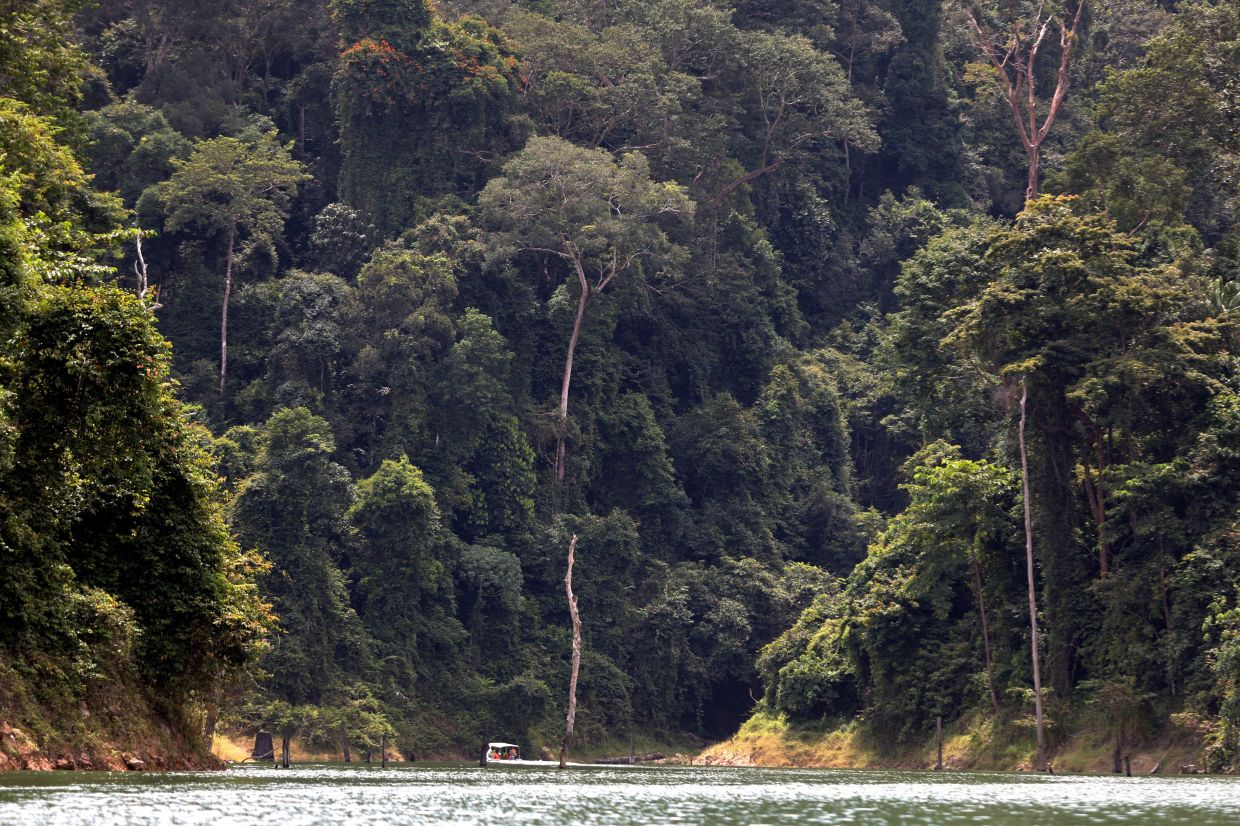
Our tropical rainforests are not just carbon sinks. They are critical global infrastructure that regulates watersheds, stabilises rainfall and safeguards clean water supplies.
We are advancing mechanisms like the Forest Conservation Certificate (FCC) and the Forest Carbon Offset (FCO) programme under the Malaysia Forest Fund (MFF) to monetise this forest-water nexus. We are telling the developed world that protecting Malaysia’s ecosystems delivers global benefits and climate financing must evolve to reflect the full value of these interconnected services.
But diplomatic posturing and international climate financing mean very little if they do not translate into tangible, everyday benefits for the rakyat.
This is the crux of the Just Transition we hear so much about. As we aggressively rewire the engine of our economy, we are deeply conscious that we cannot leave our vulnerable communities, rural populations or everyday wage earners behind.
A transition that only benefits the urban elite and corporate conglomerates while burdening the working class with higher costs is neither just nor politically sustainable.
Fundamental culture shift
While the government does the heavy lifting at the macro level, such as rolling out the National Energy Transition Roadmap to push our renewable energy capacity to 70% by 2050, true climate resilience requires a fundamental cultural shift from all of us.
Climate action starts with the daily choices the rakyat make. This includes shifting to 5-star energy-efficient appliances to optimise consumption, reducing material waste, supporting locally sourced sustainable goods and utilising our expanding public transport networks as the electric vehicle (EV) ecosystem matures.
We are building the macro-infrastructure, but individual actions must compound into national resilience.
This integration of economic opportunity and climate action is particularly visible in our agriculture sector, which accounts for just 2.2% of our national greenhouse gas emissions.
Working closely with the Plantation and Commodities Ministry and agencies like the Federal Land Development Authority, we are pushing the boundaries of the circular bioeconomy. We are capturing methane from palm oil mill effluent and converting empty fruit bunches into biochar.
These initiatives offer immediate avenues for generating high-integrity carbon credits. This ensures that our smallholders and rural communities are not left behind but are instead active, profitable participants in the carbon market.
For corporate Malaysia, the writing is on the wall.
The ongoing geopolitical tensions in the Middle East and the volatility of the Strait of Hormuz have exposed the severe vulnerabilities of global fossil fuel supply chains.
Transitioning to green energy is no longer just an environmental mandate. It is a critical national security measure and a buffer against economic shocks.
We are facilitating this corporate transition heavily. Through the Green Investment Tax Allowance, we approved over 800 projects last year, generating RM2bil in green investments and creating over 1,100 green jobs.
We are aggressively encouraging the manufacturing sector to adopt Battery Energy Storage Systems (BESS). BESS allows companies to store renewable energy and utilise it for peak shaving, reducing grid reliance when electricity tariffs are highest.
This lowers operational overheads and creates financial buffers against volatile energy prices. The Green Technology Financing Scheme is also providing blended financing options to help SMEs secure their energy independence.
Ultimately, the journey toward net-zero is the ultimate test of our national resilience. It requires us to navigate entrenched political interests, harmonise complex federal and state jurisdictions and transform our industrial base without breaking the back of the working class.
This transition must be rooted in the Malaysia Madani values of Ihsan (Compassion) and Kemampanan (Sustainability). The policies we are enacting today, including RUUPIN, DPKK and National Policy on Climate Change 2.0, are the structural blueprints of our sovereign survival.
They ensure that climate action creates high-value jobs, stimulates green technologies and protects our vulnerable coastal and rural communities.
My vision for Malaysia
I envision a Malaysia where our economic output is robust, yet completely decoupled from our carbon footprint.
For decades we were told that industrial progress must always come at the expense of our environment. We are actively dismantling that outdated narrative.
I envision a Malaysia where our state governments and indigenous peoples are financially rewarded for being the frontline custodians of the world’s most vital natural infrastructure.
Through mechanisms like the FCC and the FCO programme under the MFF, we are finally turning conservation into a profitable economic pillar for the states that protect these green lungs.
The green frontier is ours to navigate. It is a journey that positions us at the absolute forefront of regional leadership.
Once the RUUPIN is officially enacted by Parliament, Malaysia will become only the second country in the Asean region to possess a dedicated climate change law.
This legislative milestone places us in an elite global group of approximately 60 nations that have formalised statutory frameworks specifically designed for climate governance.
We are no longer just participating in international climate summits. We are actively writing the regional rulebook.
It will undoubtedly be a challenging tightrope to walk.
True systemic change requires us to push past comfortable political rhetoric. It demands tough conversations with legacy industries and it requires immense financial recalibration across the board.
The transition certainly cannot happen overnight. However, I am entirely confident that with political will, corporate accountability and the resilience of the rakyat, Malaysia will not only survive the climate crisis. We will emerge as the undisputed green powerhouse of Asean.