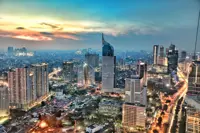
GLOBAL benchmarks published by the United Nations Environment Programme (UNEP) and the World Bank highlight that about 60% of the buildings and urban infrastructure that will exist globally by 2050 have yet to be built.
Coupled with UN projections indicating that nearly 90% of the world’s urban population expansion will be concentrated across Asia and Africa, South-East Asia stands at the epicentre of a historic built-environment expansion.
Reflecting on this domestic reality, Sime Darby Property (SDP) general manager of Sustainability Dr Yasmin Rasyid noted that 90% of Malaysians will live in cities by 2050 as rural-to-urban migration continues to accelerate – a shift she personally experienced after moving from Ipoh to Kuala Lumpur to begin her career.
This ongoing influx means that 60% of the future homes and settlements needed for migrating Malaysians over the coming decades are yet to be built.
Because decisions made on drawing boards today will dictate the nation’s built environment and resource footprint well into the 2080s, property developers face a tight, non-negotiable window to get master planning right.
Addressing this trajectory, Yasmin warned that the industry has to move past superficial compliance.
Pointing out that SDP’s sustainability strategy is anchored on four core pillars, namely energy and carbon, biodiversity, climate resilience as well as community experience, she said: “We view sustainable development as a blueprint for shaping the future.”
Speaking at the Asia ESG Summit 2026 on “Beyond ESG Reporting: Turning Sustainability Ambitions into Real-World Impact”, Yasmin outlined how developers must pivot from simply reporting emissions to driving concrete, long-term outcomes.
On decarbonisation, she shared that SDP is exploring off-grid townships while collaborating with the government on the Community Renewable Energy Aggregation Mechanism (CREAM) project.
The initiative pools residential rooftop solar energy into centralised storage systems to power entire communities alongside regional solar farms.
Restoring degraded land remains a central challenge for the developer, whose landbank consists largely of former oil palm plantations devoid of natural soil health and nutrients.
“It brings us great pride to work with our team to start thinking of ways to improve the soil condition, because our philosophy is: healthy soil, healthy people, healthier environment,” Yasmin said.
To turn this philosophy into practice, SDP is actively quantifying the socio-economic returns of urban green spaces through active soil rehabilitation, living nurseries operated in partnership with indigenous communities as well as strict conservation at KL East Park and Hamilton Biodiversity Park.
Beyond internal ecological efforts, Yasmin noted that it is encouraging to see climate resilience increasingly driven by market dynamics and external stakeholders.
“Often time, the first question financial institutions will ask us is, ‘Have you done a physical climate risk assessment of your project?’” she noted, prompting SDP to embed mitigation strategies into all master planning to address rising urban heat, water scarcity, and extreme weather risks.
However, operationalising these ambitions forces complex financial and energy trade-offs. Yasmin highlighted this pragmatic tension through a recent incident at SDP’s Kuala Lumpur Golf and Country Club, where agronomists had to deploy industrial-scale drying fans to clear greens flooded by record rainfall – an operational necessity that inadvertently drove up energy consumption.
Yasmin stressed that sustainability cannot remain isolated within a single department.
“In my utopia, the sustainability department does not even have to exist if sustainability is done well in the company,” she said, describing her goal as working towards an intentional “obsolescence” of her role by embedding capability across the entire business.
Closing her address, Yasmin reiterated it is crucial to turn commitments into collective execution to leave a lasting impact on the nation’s built environment.
“Our vision is to build a more resilient country, one that demonstrates true sustainability while continuing to provide economic opportunities for generations to come,” she said.