
WHO are you wearing? This is a question often tossed around on red carpets and glitzy events. But pause for a moment—who are we really wearing? Whose hands made our favourite pieces, where did they come from, what did they cost the planet?
Fashion is fast, fun and endlessly expressive. Trends appear overnight on social media, new collections drop constantly and prices may stay temptingly low or reasonable. But there is a growing reality—the cost of fashion’s speed is being felt in our environment and wardrobes.
Even Hollywood has touched on this tension between style and responsibility. Captured perfectly in the 2006 film The Devil Wears Prada, a fashion editor portrayed by Meryl Streep famously explains to her intern how the colour of her simple blue jumper originated from a high-end designer collection years earlier.
Her point was clear—even the most ordinary outfit we throw on without a thought has a story that begins on a runway and ripples through the entire industry.
Nearly two decades later, that message feels more relevant than ever. Every fabric, dye and stitch carries a footprint made up of carbon, fibres, water and labour that stretches across continents. And it leaves us asking, how sustainable is style?
Cost of fashion’s speed
The term “fast fashion” is likely familiar to many by now, but its implications are still being uncovered. According to the European Environment Agency (EEA), the average consumption of textiles in the EU rose from 17kg per person in 2019 to 19kg in 2022, which is “enough to fill a large suitcase” of new textiles each year.
At the same time, in 2022 production and consumption of textiles generated around 355 kg of CO2 equivalent per person across the EU. To put that into context: 355kg of CO2 is roughly the same as driving a typical petrol‑car about 1,800 kilometres.
Water and land usage are also substantial. According to data from the European Parliament, it is estimated that creating a single cotton T‑shirt requires about 2,700 litres of fresh water, which is enough to meet one person’s drinking needs for approximately two and a half years.
And although less frequently cited, textile consumption is placing high pressure on land too. The EEA states the sector ranks among the highest consumption categories for raw material, water and land use.
When it comes to waste, EU member states generated approximately 16kgs of textile waste per person, totalling about 6.94 million tonnes, in 2022. Only around 15% of that household‑textile waste was separately collected for reuse or recycling, which means about 85% ended up in mixed household waste streams.
Spotlight on Malaysia
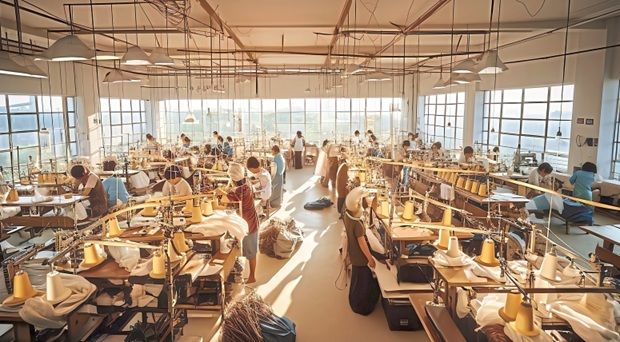
The global dynamics of fast fashion are mirrored in Malaysia’s domestic industry and the country is grappling with its own set of environmental and social challenges. According to the Investment, Trade and Industry Malaysia Ministry’s (Miti) New Industrial Master Plan 2030 (NIMP) Sectoral Plan for Textile, Apparel and Footwear Industry, the nation currently produces two million kilogrammes in textile wastes daily.
The problem is compounded by apparel made from synthetic fibres, which can take decades and in some cases up to 200 years to decompose. As they break down, these materials can release microplastics and residual chemicals into soil and waterways.
Malaysia is also a major player in the global used‑textile market. According to the United Nations Unwaste Trendspotting Alert report, the country ranked fourth in the world for imports of used and waste textiles. From 2017 to 2024, Malaysia imported 1.92 million tonnes of used and waste textiles worth US$1.09bil. This contributed to landfill pressures.
On the production side, the industry is important for the Malaysian economy. The Malaysian Investment Development Authority (Mida) notes that the textile and apparel market of the nation is projected to grow from US$3.49bil in 2025 to US$4.47bil by 2030 (CAGR of 5.1%).
The Malaysian textile‑and‑apparel sector continues to face labour, productivity and sustainability challenges. According to recent academic research citing Malaysia Statistics Department (DOSM) data, there are approximately 1,473 textile factories across Malaysia, and stakeholders emphasise the need to improve efficiency and workplace conditions.
However, Miti lists around 970 registered garment and textile factories, of which over 400 produce ready‑made garments.
Materials matter
One key question everyone is asking now: what are the clothes made of? That may sound obvious, but the material thread, or better known as the fibre, is the backbone to both impact and opportunity.
A recent report by Boston Consulting Group (BCG) and the innovation firm Fashion for Good found that materials account for some 91 % of the fashion industry’s total emissions through extraction, processing and production.
This means that if fashion is serious about cutting carbon, water and land impacts, it must start first with what fibres it uses, how they are sourced and how they’re processed.
The BCG report forecasts that next-generation materials such as recycled fibres, lower-impact synthetics or plant-based innovations, could make up about 8% of the total fibre market by 2030 that is around 13 million tonnes, up from approximately 1% today.
It is also estimated that the transition could lead to roughly 4% savings in cost-of-goods sold over five years if brands act now. This means that there will be new fabrics, better sourcing and fewer virgin resources, which gives consumers the chance to buy garments that look good and do good.
Land, fibres and the hidden footprint
Carbon and water aside, land and soil should be taken into consideration as well. The United Nations Convention to Combat Desertification (UNCCD)’s report titled Fashion and Land: Unravelling the Environmental Impact of Fibres highlights a
lesser-known, yet substantial part of the fashion footprint.
The UNCCD report points out that each fibre choice carries unique environmental and social consequences across land-use, soil health and biodiversity.
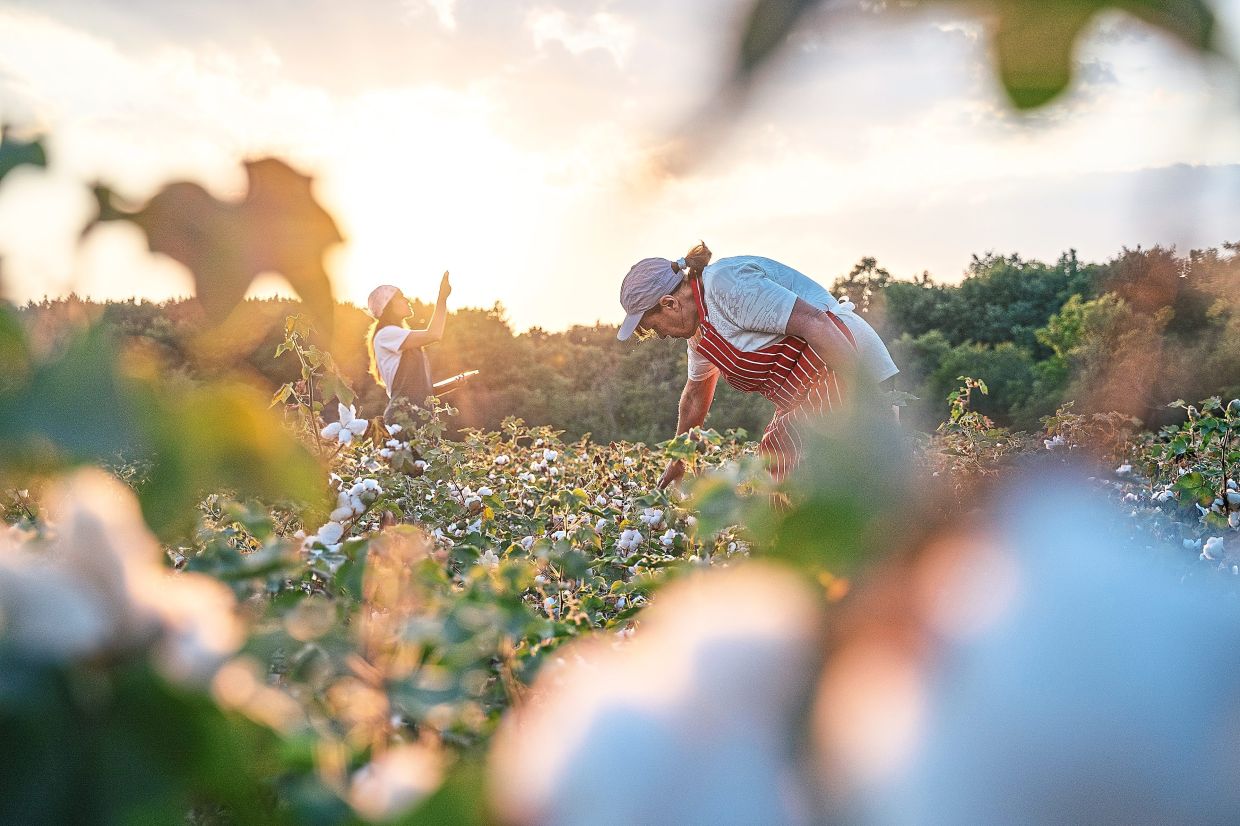
Cotton, for instance, requires vast resources and can be a significant contributor to soil and freshwater depletion, while wool production such as cashmere is linked to overgrazing and desertification. Wood-based textiles could inadvertently result in deforestation, while synthetic fibres represent a major source of microplastic pollution.
Meanwhile, manufacturing, transport, consumption and disposal all play a part. Take manufacturing for example, low-cost materials and rapid production often mean corners can be cut from worker safety, environmental controls, production quality and more.
On consumption, fast-fashion models encourage us to buy more, wear less, discard sooner. Finally on disposal, textile waste is mounting. Because recycling at scale is still limited, many garments end up in landfills or incinerators.
The European Parliament notes that somewhere between 4% and 9% of all textiles put on the EU market are destroyed without ever being used. Luxury brands, for instance, have admitted to burning unsold inventory to prevent discounting and protect brand prestige.
According to CNBC, luxury British fashion house Burberry came under fire for destroying millions of dollars’ worth of unsold clothing and perfume. In its annual report, the brand revealed it had disposed of £28.6 mil (US$37.1mil) in products during the fiscal year ending March 31, 2018—up from £26.9mil the previous year.
Burberry wasn’t alone in this practice. Richemont, the parent company behind high-end labels such as Cartier, reportedly destroyed €481mil (US$557.2mil) worth of watches and jewelry in the same year to keep them from being sold at discounted prices on the secondary, or “grey,” market, which can dilute their exclusivity.
Weaving up the pressure
The EU is moving rapidly. The European Parliament’s report on Fast fashion: EU laws for sustainable textile consumption outlines how Brussels is pushing for textiles to be longer-lasting, repairable, reusable and recyclable for a circular economy by 2050.
Among the proposed rules are extended producer-responsibility schemes (where producers cover the cost of collecting, sorting and recycling textiles), eco-design regulation (minimum standards for durability, reparability and recyclability), and bans on generic green-claims (green-washing). For brands that don’t act, the future may hold fines, restrictions or loss of market access.
While global fashion grapples with sustainability, Malaysia is quietly stitching its own story of change. Miti’s New Industrial Master Plan 2030 (NIMP) Sectoral Plan for Textile, Apparel and Footwear Industry outlines a roadmap for a more responsible and circular sector.
At its core, the plan calls for integrating ESG practices, including waste reduction and sustainability, across the textile value chain. Key strategies include mandating the collection, sorting and reuse of textile waste, promoting sustainable manufacturing through technology adoption, process optimisation and circular‑economy principles.
The plan also highlights advanced technologies, digitalisation, and automation to improve efficiency and reduce resource use. To support these efforts, it targets up‑skilling, talent development, collaboration with academia and strengthening institutional frameworks.
Meanwhile, the sector is encouraged to shift from low‑value, high‑waste manufacturing toward higher‑value, advanced materials and products to reduce waste intensity while increasing resource productivity.
The Star also recently reported that a systemic approach to reducing textile waste in Malaysia is being developed through the Malaysian Extended Producer Responsibility (EPR) framework.
Prepared by the Housing and Local Government Ministry (KPKT), the framework seeks to ensure that manufacturers, retailers, and all other parties in the textiles and clothing value chain take responsibility for the products they place on the market, including their end-of-life impacts.
It calls on retailers, brands, importers, manufacturers and recyclers to share responsibility for the collection, recycling and sustainable management of post-consumer textile waste.
A central feature of the framework will be the establishment of a Producer Responsibility Organisation (PRO), which will coordinate compliance, logistics, reporting and public awareness efforts among stakeholders.
Safe to say the industry is starting to own the full lifecycle of its garments, from production and use to recycling and disposal. Every effort reminds us of a simple truth—our clothes come from the land, and in time, they return to it. Each fibre carries its mark.
So, the next time someone asks, ‘Who are you wearing?’, the answer is land.