
IN today’s economy, sustainability is no longer an option. It is a condition for survival. Investors, regulators and consumers alike now demand measurable ESG performance from businesses.
.Artificial Intelligence (AI) and data analytics are rapidly emerging as the most powerful tools to meet this demand. Yet adoption is neither automatic nor easy—especially for micro, small and medium enterprises (MSMEs), which make up more than 97% of Malaysia’s businesses.
This is where the Science, Technology and Innovation Ministry (MOSTI) plays a critical role. Through policies, funding and facilitation, is ensuring that Malaysia not only keeps pace with global technological shifts but also harnesses AI to advance national sustainability goals.
Aligning technology with ESG
MOSTI has developed the National Artificial Intelligence Roadmap 2021–2025, which outlines a comprehensive strategy to position Malaysia as a
competitive and responsible adopter of AI. In line with national priorities on sustainable development and responsible innovation, the ministry plays a central role in fostering industry-wide AI adoption with strong alignment to ESG principles. Through this roadmap, MOSTI promotes AI solutions that address ESG challenges such as optimising energy use, enhancing public health systems and expanding equitable access to technology.
These innovations are guided by national AI ethics guidelines and transparent governance frameworks, ensuring responsible deployment. Collaboration is central to this mission. By engaging industry players, academia, regulators and civil society, we ensure that AI adoption strengthens—not undermines—Malaysia’s long-term sustainability.
This involves funding research, building high-quality datasets, developing regulatory sandboxes and investing in talent pipelines that future-proof the nation’s workforce.
Reducing risks, building trust
Recognising these challenges, Malaysia is taking a deliberate and strategic approach. Testbeds and sandboxes—controlled real-world environments where innovations can be trialled safely—are being deployed to de-risk adoption and build confidence. They allow businesses to validate solutions before scaling them,
reducing costs and mistakes while ensuring compliance. For sustainable technologies, where credibility and trust are everything, this approach is indispensable.
Turning ideas into impact
Malaysia’s innovation ecosystem is anchored by Malaysian Research Accelerator for Technology and Innovation (MRANTI), which helps innovators turn ideas into market-ready solutions.
At MRANTI Park, the Intelligent Operations Centre (IOC) combines IoT, 5G and AI to monitor energy, mobility and the environment—allowing start-ups to test their solutions using real-time data without disrupting national systems.
The MakersLab, a 5,000 sq ft prototyping hub, provides shared tools and labs for robotics, drones and autonomous vehicles, lowering the cost and risk of experimentation.

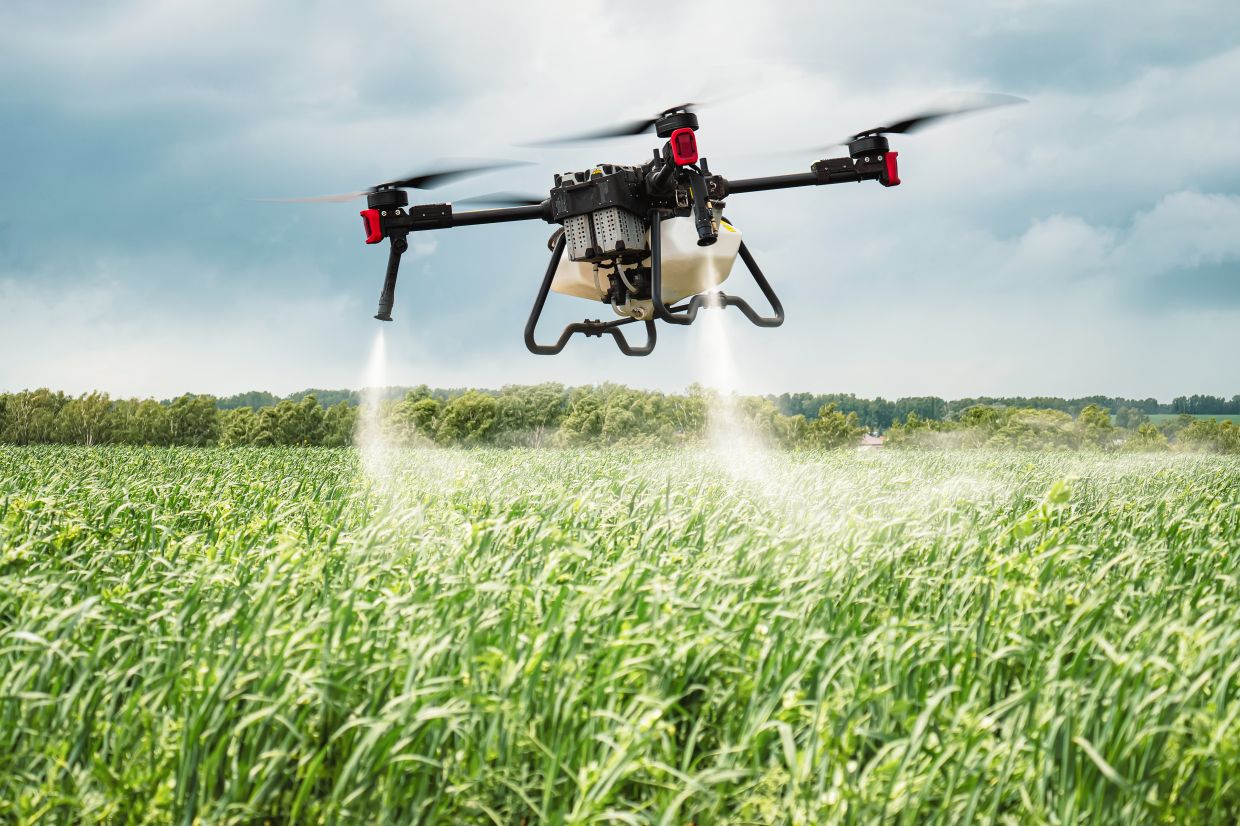
A 12-kilometre Autonomous Vehicle Test Route enables real-world trials of mobility solutions, while the Drone Technology Sandbox supports precision agriculture and environmental monitoring, giving farmers and agri-tech firms the ability to test and improve sustainable practices.
These facilities are more than showcases—they reduce risks, build trust and give innovators the confidence to scale AI-driven ESG solutions.
Contribution to global sustainability agenda
The impact goes beyond individual companies. By enabling more MSMEs to adopt AI for sustainability, Malaysia multiplies national outcomes. A logistics SME using AI to optimise delivery routes contributes directly to emissions reduction. A mid-sized manufacturer adopting predictive maintenance improves efficiency and reduces waste. When scaled across thousands of enterprises, the collective effect is transformative.
This collaborative model also aligns with global best practices. Countries such as Singapore and the United Kingdom have demonstrated the value of regulatory sandboxes in enabling innovation while maintaining safeguards. Malaysia is applying these lessons but tailoring them to our context, embedding ESG priorities and ensuring that smaller businesses can participate. This localisation is where Malaysia adds unique value to the global sustainability agenda.
Linking policy to tangible results
Importantly, these efforts are not happening in isolation. They connect directly with Malaysia’s broader policy frameworks—from Malaysia Madani to the National Energy Transition Roadmap (NETR), the New Industrial Master Plan 2030 (NIMP 2030) and MyDigital. Testbeds make these policies tangible by providing the infrastructure where strategies become measurable outcomes.
A validated pilot in energy management contributes to NETR’s emissions reduction goals. A logistics optimisation trial proven in a sandbox supports NIMP 2030’s push for productivity. By linking innovation to measurable results, Malaysia ensures that policy ambition translates into action.
Catalysts for the green economy
The green economy will define Malaysia’s next phase of growth—and AI will be its engine. But adoption cannot rely on aspiration alone. It requires evidence, trust and collaboration.
By placing testbeds and sandboxes at the centre of its strategy, Malaysia is lowering barriers, empowering businesses of all sizes and accelerating progress towards national sustainability goals. These platforms are more than places to test technology—they are catalysts for impact.
They allow Malaysia to show, not just tell, how AI can drive ESG performance. And in doing so, they position our businesses, from MSMEs to multinationals, to compete in a global economy where sustainability and innovation are inseparable.
Turning policy into impact
Finally, the National Technology Sovereignty Framework (NTSF) complements Malaysia’s ESG agenda by ensuring that technology adoption and investment are aligned with broader national priorities. Through the NTSF, MOSTI will collaborate with various agencies on industry policy, digital enablers and market incentives to create a more coherent environment to strengthen and develop technologies for Malaysia.
Importantly, NTSF encourages public–private partnerships and investment mobilisation. By guiding funding towards high-impact technologies—such as clean energy, sustainable manufacturing and digital compliance platforms—it supports businesses in accelerating ESG adoption in commercially viable ways.
In short, NTSF provides the strategic backbone that allows Malaysia’s ESG-tech initiatives to scale faster, with coordinated policies, aligned investments and stronger industry participation.