
From imagination to climate reality, video games can inspire AI to be Earth’s custodian
IN the spirit of embracing AI, this article was generated with AI and later verified and refined by a human. Note that it may contain spoilers for certain video games mentioned below.
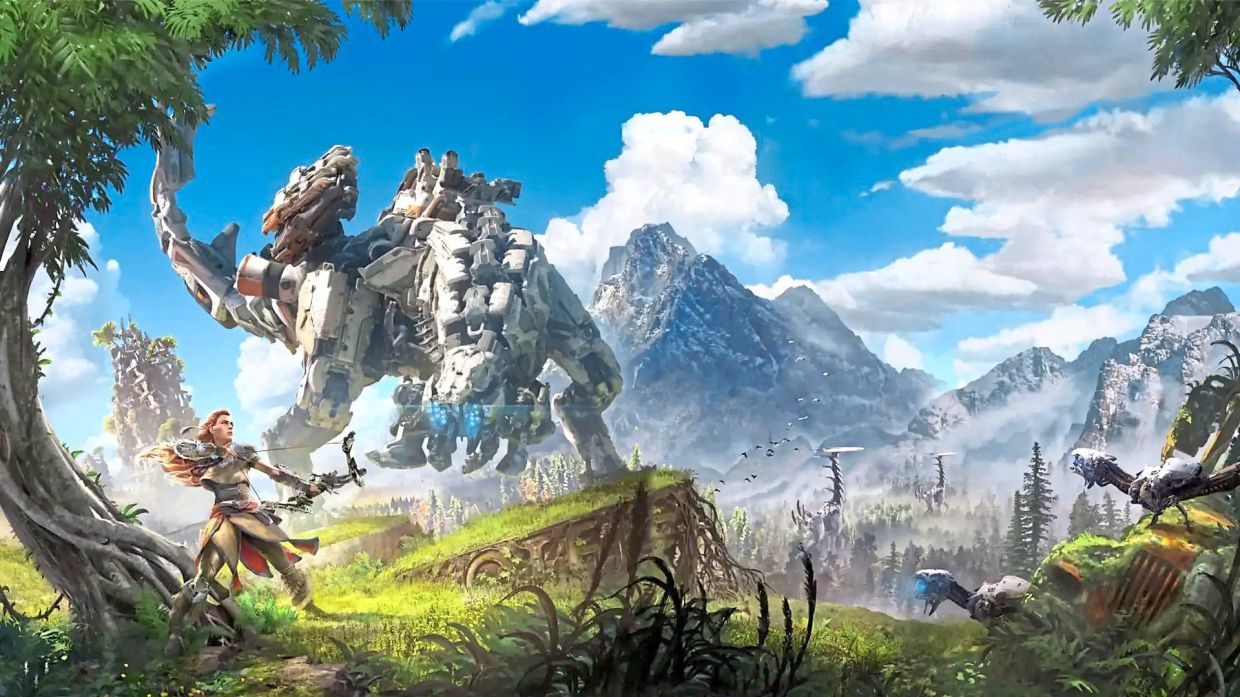
IN the video game Horizon Zero Dawn (2017) and its sequel Horizon Forbidden West (2023) by developers Guerilla Games, players are thrust into a post-apocalyptic world as a machine hunter Aloy, who is destined to discover why the Earth in the year 3040 resemble a prehistoric world but overrun with mechanical dinosaurs and animals.
It was then revealed that years before, the Old Ones—people of the 21st century, used artificial intelligence (AI) to heal the planet. However due to capitalism and greed, AI was also used to devastating effect, which wiped out all those with that knowledge, causing the ensuing generations to be deprived of any technological knowledge.
In the game, AI uses massive subroutines to re-green forests, rebalance the atmosphere, cleanse oceans and even regenerate species. While this premise remains firmly in the realm of science fiction, the idea of AI as a steward of Earth is not confined to fantasy.
In fact, in the real world, researchers and businesses are already exploring how AI can be harnessed to protect ecosystems, slow climate change and enable a more sustainable future.
Fiction as foreshadowing
The Horizon series is a compelling cultural example because it shows that AI can be used as an ecological custodian or be used for self-serving purposes that can potentially doom the planet.
The underlying message is that technology is just a tool that can be programmed to nurture rather than harm nature. This is a concept that echoes contemporary debates about the role of AI in addressing environmental crises.
Unlike the military-focused AIs of other dystopian narratives, video games such as the Horizon series imagines artificial intelligence as restorative, an idea increasingly mirrored in research labs and tech startups around the globe.
Other game titles also experiment with these themes. Eco (2018), a multiplayer world-building sim, requires players to create a civilisation without triggering ecological collapse and teaches systems thinking and resource management along the way.
Terra Nil (2023), often described as a “reverse city-builder,” challenges players to rewild barren wastelands into thriving ecosystems. Even titles like In Other Waters (2020) or Beyond Blue (2020) use AI assistants to help guide players through alien oceans or real-world marine environments, reframing technology as a companion in ecological care.
These fictional experiences resonate because they hint at a question that is very real: what would it mean if our most advanced technologies were programmed not just to serve human convenience, but to heal the Earth?
AI in today’s climate fight
The parallels between video game imagination and current innovation are striking. Today’s AI is already being applied to some of the very tasks those fictional AIs were built to perform.
> Restoring ecosystems: Conservationists are using machine learning to monitor biodiversity through sound. For instance, Cornell University’s BirdNET uses AI to analyse hours of rainforest audio to detect endangered bird calls and Rainforest Connection (RFCx) employ solar-powered “Guardian” devices to detect illegal logging activities in near-real time, enabling faster interventions.
> Cleaning oceans: Just as Horizon’s “Poseidon” sub-function was imagined to purify water systems, start-ups, like Clearbot, are deploying AI-driven robots to track, collect and even recycle ocean plastics.
> Balancing the atmosphere: In energy management, companies like DNV, Meteomatics, Capalo AI and Octopus Energy use AI to optimise renewable power grids by predicting fluctuations in wind and solar supply, reducing reliance on fossil fuels. Google’s DeepMind has famously applied AI to cut data centre cooling costs by up to 40%, significantly reducing carbon emissions.
> Managing agriculture: Much like Horizon’s subroutine for regenerating plant life, precision agriculture systems use AI to monitor soil health, predict crop yields and minimise pesticide use, allowing farmers to grow more with fewer resources. Companies doing that now are John Deere, Solinftec and Taranis.
Each of these applications echoes the narrative role AI plays in eco-themed games: a tool for observation, regeneration and balance.
The role of play in shaping perception
Why connect video games with real-world AI? Because storytelling, especially interactive storytelling, shapes how people imagine technology’s role in society.
Games like Eco and Terra Nil make players directly experience the consequences of poor resource management, driving home lessons that data charts cannot. Horizon takes this further, asking us to consider AI as not only a risk but also a potential guardian of life on Earth.
In a time when climate anxiety runs high, these games offer both warnings and possibilities. They caution against unchecked exploitation, but they also suggest that technology, guided by ethical intent, could help restore equilibrium.
This duality mirrors the present debate around AI itself: will it be harnessed to extract more profit from the planet, or programmed to preserve it?
From fiction to policy
The imaginative leap from fiction to reality is more than entertainment. Policy makers are increasingly turning to AI as part of national climate strategies. The European Union, for instance, is funding AI projects, such as the VCG.AI and the Darrow Project to enhance circular economy practices and resource efficiency.
Some Asean climate-tech startups, such as Greenie Web, which uses AI to reduce the carbon footprint of digital infrastructure, demonstrate how innovation can merge with sustainability agendas.
These initiatives reflect the same spirit found in eco-themed games: that sustainability is a systems problem and technology can help map, predict and rebalance those systems if applied responsibly.
A future of digital guardianship
As AI continues to evolve, the notion of “digital guardianship” will grow more relevant. The future may see AI models embedded not only in our phones and cities, but in forests, farms and oceans; quietly monitoring, restoring and protecting the delicate balance of life.
It’s an idea that science fiction has already articulated, but one that climate science increasingly demands.
Games like Horizon Zero Dawn, Eco and Terra Nil aren’t blueprints; they are provocations. They remind us that we have choices about the kinds of intelligence we design and the values we embed in them.
If we choose well, perhaps the most powerful machines of the 21st century won’t just mimic human intelligence; they may help us preserve the very planet that makes intelligence possible at all.