Grassroots green innovations are shaping a sustainable, high-value economy for the future
NEVER did this single mother of two imagine that her elder son—a young lad on the autism spectrum, once dismissed as “dependent”—would become the family’s lifeline. When the Covid-19 pandemic forced schools online, Angie (not her real name) feared her younger child would be left behind.
There was no computer at home, and no way to afford one. But her elder son, with the modest income he earned from social enterprise Seven Tea One, bought his brother a laptop—turning stigma into strength, and despair into dignity.
“For the first time, the mother said she felt a sense of relief and pride—that her son, once seen as a liability, had become the one to support the family during a crisis. This is the true meaning of empowerment. It’s not just about a pay cheque—it’s about dignity, independence and hope,” says Lai Chong Haur, Seven Tea One’s director.
A former human resource practitioner with over two decades of experience, Lai is part of a growing movement of changemakers proving that social enterprises are more than businesses. They are sustainable nation-builders, bridging the gap between charity and commerce.

Resilient change, lasting impact
Independence, to Lai, means freedom, dignity and identity. His philosophy is rooted in ensuring that no one is left behind: giving young people with special needs the chance to earn a living, to be recognised for their abilities, and to contribute meaningfully to society.
“Every Merdeka tells a story of independence. Seven Tea One was born out of a dream to create true independence for our neurodivergent youth and marginalised communities. Each pack of tea carries not only the flavour of Malaysia, but also the spirit of inclusion.
“My love for Malaysia is reflected in the belief that no one should be left behind—we all have a place in nation-building. That is the foundation of our business philosophy: Seven Tea One stands for ‘seven kinds of tea bring communities as one’,” he explains.
Witnessing the struggles of families raising children with special needs, Lai envisioned a sustainable ecosystem. Seven Tea One began with handcrafted herbal infusion teas—made from local ingredients, blended by youths with special needs.

Over time, the enterprise grew into cookies, handmade soaps, catering services and even a daycare centre in Kapar. Beyond products, Seven Tea One has also become a bridge between communities. Through workshops, training programmes and events, corporates, NGOs, families and the wider public are brought together in a shared cause.
“By giving our youths a platform to showcase their talents, we’ve amplified voices that are too often unheard, helping society to see ability instead of disability,” says Lai.
Accredited under Entrepreneur Development and Cooperatives Ministry (Kuskop), Seven Tea One has spent nine years scaling and sustaining both its beneficiaries and the wider community. Every purchase of a box of tea, a catered meal or a handcrafted soap, directly supports jobs, skills training and dignity for youths with special needs.
Angie’s story proves that true progress is both compassionate and sustainable. It shows that growth can walk with social good, and that Merdeka’s promise of independence must reach even those left behind. Nation-building does not end with independence—it endures through inclusion, innovation from communities and individuals with heart.
Rooted in heritage, growing futures
If Lai’s story is one of building futures through innovation with heart, Datuk Jacqueline Fong’s journey is about holding on to the past to sustain the present.
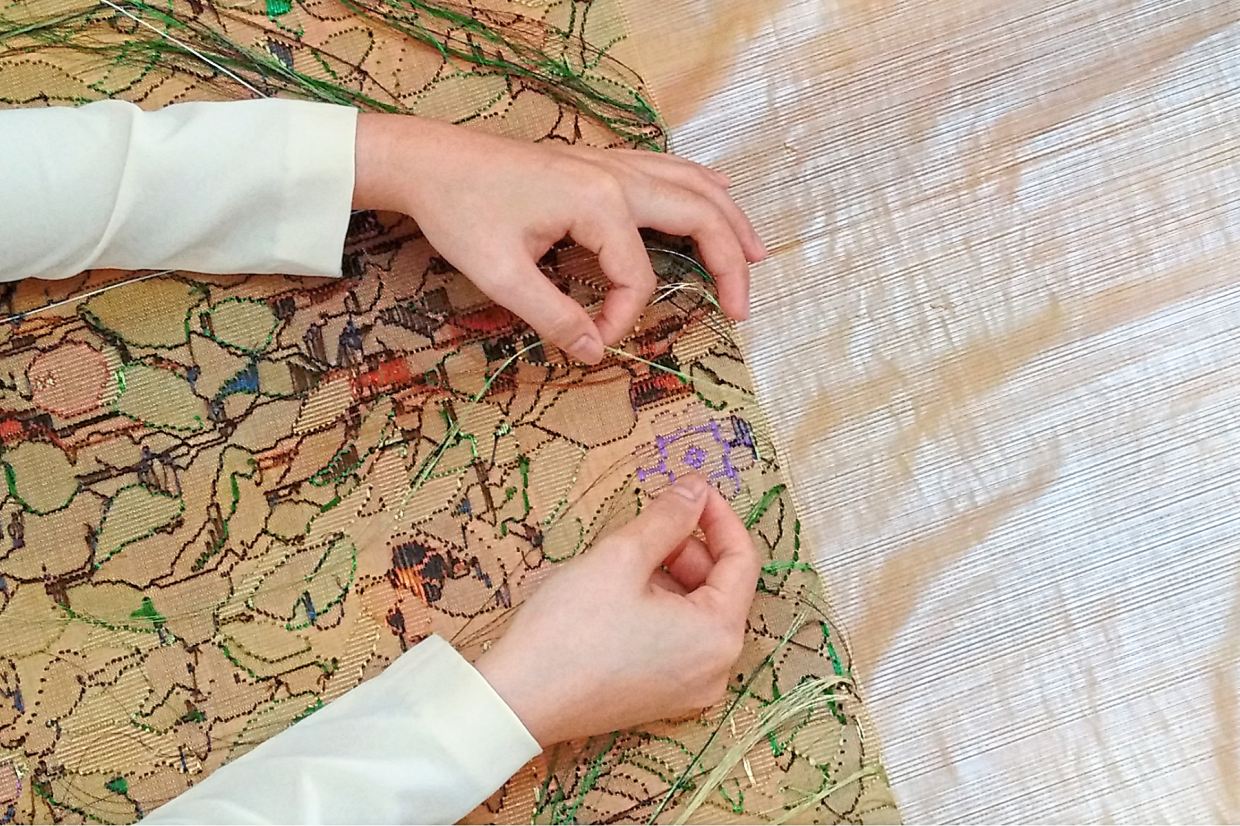
After 18 years in investment banking across Kuala Lumpur, Jakarta and East Malaysia, Fong retired to return to her home state of Sarawak. But it wasn’t retirement in the usual sense. In 2012, she founded Tanoti Crafts, an award-winning social enterprise dedicated to preserving heritage crafts and empowering rural artisans.
“Tanoti thrives on the essence of Malaysia: our many ethnicities, cultures, and traditions woven into one nation. We honour the craft techniques passed down from ancestor to descendant, celebrating them as living testaments to who we are and where we come from,” says Fong.
Beginning with only a handful of weavers, Tanoti Crafts has now grown into a network of 500 artisans spread across 25 rural and remote communities.

Noting that weaving and craft-making are no longer side pursuits but lifelines that sustain households, Fong says: “Our work is not just about preserving crafts, but about people. Behind every handcrafted item is a mother, a grandmother, a family, and a community striving for dignity and continuity. Our story is one of resilience-of Malaysians who, through their artistry, keep heritage alive while sustaining their families.
She adds that over time, she saw crafts not just as products, but as bridges between generations, communities and cultures.
“My big idea is to spotlight craft artisans—custodians of their heritage, mostly from rural and remote indigenous communities—by bringing them into the heart of the national economy and honouring their ancestral knowledge while creating dignified income opportunities.”

Tanoti’s mission has always been twofold: to preserve heritage techniques and to provide dignified income opportunities. In many ways, that is a form of independence too.
“My strong belief is that Sarawak, and to some extent Sabah, are the only places in the world that does not marginalise the indigenous communities. In these parts, communities have been marginalised purely by their lack of access, and by that I mean the lack of infrastructure available to them to communicate or to travel.
“By developing their crafts, Tanoti gave them enhanced economic power so that they can improve their access,” Fong explains.
It is work that she sees as inseparable from the spirit of Merdeka.
“In serving these communities, I serve Malaysia. With every stroke of fibre through our fingers, with every launch of thread across the loom, we are reminded that independence is not only political—it is also the freedom to create, to belong and to thrive,” she reflects.
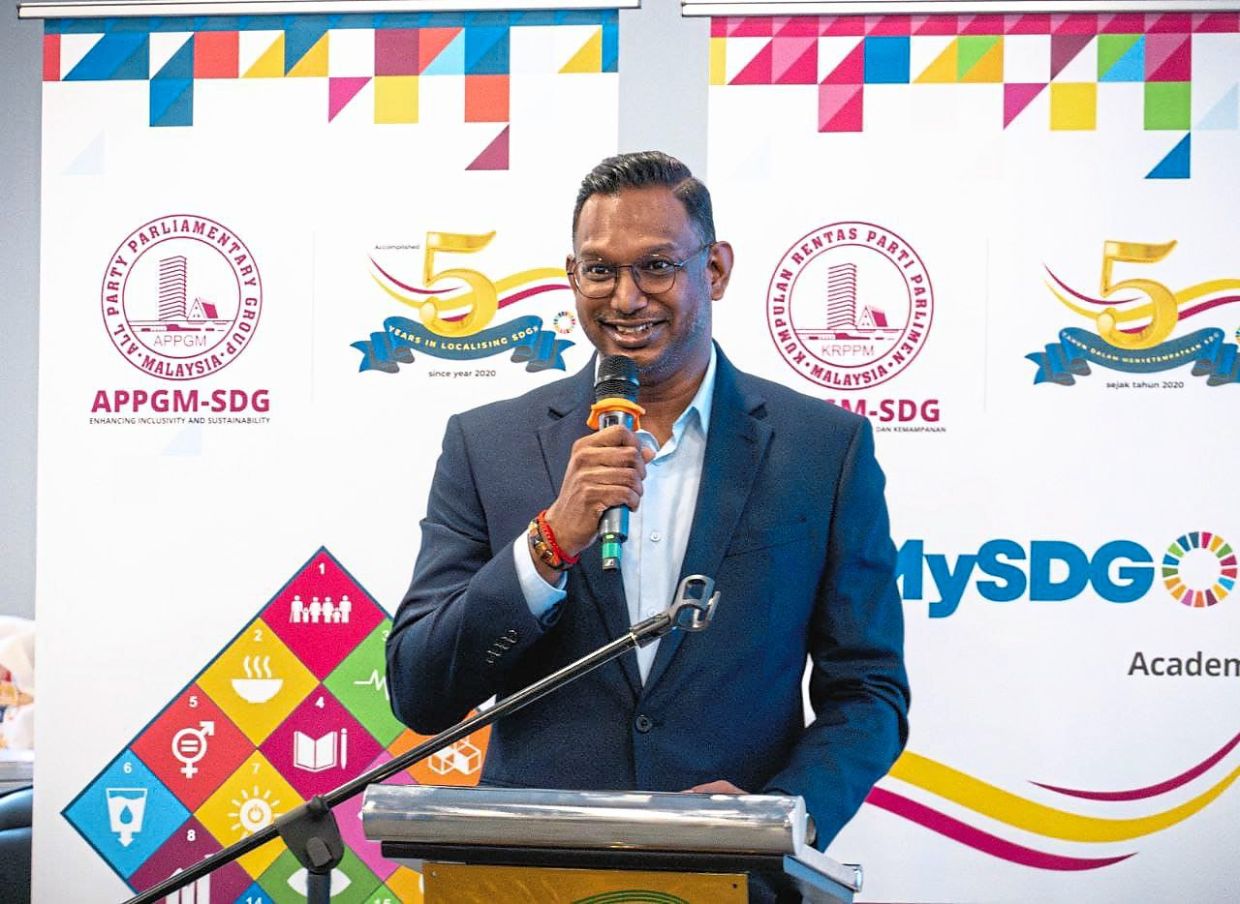
Turning struggle into sustainable strength
When Juraini Kulop first joined Pepper Labs’ Dapur Digital programme, she was terrified of technology. The idea of running an online business, handling digital orders, or even navigating basic apps was overwhelming. But with training, tools and encouragement, Juraini pushed past her fears. Today, she runs her food business with confidence—and even mentors other women to do the same.
Her journey, says Pepper Labs’ managing director Thanaselan Rajendran, captures the true spirit of Merdeka.
“Empowerment has never been about charity. It is about creating pathways to dignity and independence,” he reflects.
Pepper Labs began with Masala Wheels, Malaysia’s pioneering social enterprise food truck. What started as a way to help a single youth earn a livelihood soon grew into a movement that has touched more than 400,000 lives and reinvested over US$4mil into communities.
Its model of sustainability is simple: provide access, training and opportunities—then let people take ownership of their futures.
“Malaysia’s diversity is our strength, but it also exposes some deep inequalities. In many PPR flats, we met women already cooking and selling from their small kitchens—not because it was easy, but because it was the only way to support their families. They had the recipes and the grit, but what they lacked was space, safety and access,” Thanaselan explains.
That inspired the creation of Dapur Digital, a community cloud kitchen where women can cook in industry-standard facilities, receive accredited training and learn to use digital platforms. For many, the shift has been transformative.
“We’ve seen mothers who once earned RM500 a month quadruple their income. Women who doubted themselves now proudly call themselves entrepreneurs. Some even hold micro-credentials from a recognised university and run stable, legal businesses,” says Thanaselan.
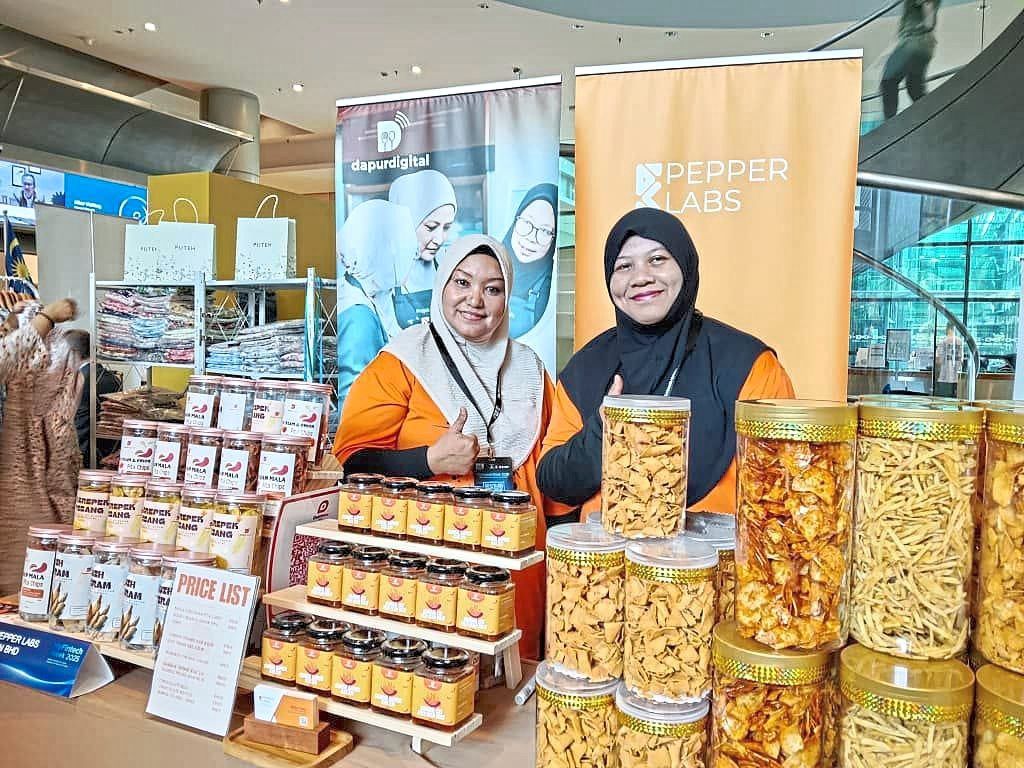
Juraini is one of them. Once paralysed by the thought of technology, she now stands as proof that confidence can be taught—and courage shared.
Reaching beyond kitchens, Pepper Labs has widened its impact through initiatives like the K-Youth Development Programme under Khazanah Nasional and Malaysia’s first Community AI Learning Centre.
“Our work has always been about making sure no one is left behind. Each initiative is designed to meet people where they are, rather than expecting them to fit into a one-size-fits-all model,” he says.
Still, challenges remain. Limited funding and short-term mindsets can hinder the kind of long-term impact communities need. But stories like Juraini’s keep the mission alive.
“Real success is when the communities we serve begin to shape their own future with confidence. Empowerment is contagious: when one life is changed, it sparks a chain reaction that can uplift families, neighbourhoods and ultimately, the nation,” says Thanaselan.

Local impact to national strategy
Juraini’s journey exemplifies how social enterprise can transform lives. But such breakthroughs need scaling—and that’s precisely what the Malaysia Social Entrepreneurship Blueprint 2030 (SEMy2030) is designed for. Launched by Kuskop in April 2022, this ten-year roadmap comes in two stages.
Phase 1 (2021–2025) lays the foundation by building awareness, capacity, networks, and support. Phase 2 (2026–2030) aims to mainstream social enterprises into the economy so that mission-driven businesses become the norm, not the exception.
Anchored on five strategic thrusts with 20 strategies and 45 initiatives, SEMy2030 aligns with national priorities like the Shared Prosperity Vision 2030 and the Sustainable Development Goals. It targets expansion to 10,000 social enterprises, 92,000 new jobs, and RM2.6bil in revenue by 2030.
Viewed through an ESG lens, SEMy2030 reinforces the “S” by promoting inclusivity and decent livelihoods, supports governance through robust frameworks, and advances environmental objectives by embedding social impact into mainstream practice. With enterprises like Seven Tea One, Tanoti Crafts, and Pepper Labs already demonstrating potential, SEMy2030 offers a structured way to transform local impact into national progress.