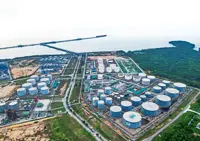
THE global artificial intelligence (AI) investment boom has created enormous opportunities for Malaysia, particularly in data centres (DCs), generating substantial business for local construction companies, banks, utilities and technology suppliers.
But as Wall Street grows increasingly nervous about the economics of AI infrastructure, Malaysian companies must confront an uncomfortable question: how much of today’s prosperity is built on expectations that may never materialise?
The trouble with financial bubbles is that almost everyone recognises them in hindsight, but very few can predict when they will burst.
AI may well transform the global economy, but the valuations, financing structures and expectations surrounding it could prove excessive.
What happens to Corporate Malaysia when the music slows, even if it does not stop completely?
There is also a political dimension.
In the United States, President Donald Trump’s enthusiasm for accelerating AI infrastructure development is encountering growing public resistance.
An August 2026 survey by the University of Pennsylvania’s Annenberg Public Policy Center found that 61% of Americans opposed new DCs in their communities, up from 49% just months earlier.
According to S&P Global, voters face 34 DC-related ballot measures this November, including proposals to restrict or prohibit developments.
A Pew Research Center survey found that 50% of Americans believed data centres were mostly bad for household energy costs, while 54% considered them detrimental to the environment.
Meanwhile, the financial foundations of the AI boom are attracting greater scrutiny.
Anthropic’s latest disclosure showed US$16.96bil in the third quarter of this year’s revenue, up about 1,127% year-on-year, but its growth decelerated sharply and it swung back to an operating loss —reviving worries that AI revenue may not be growing fast enough to justify the industry’s enormous infrastructure spending.
Quarterly results from Microsoft, Alphabet and Amazon also intensified investors’ focus on capital spending and returns.
Higher borrowing costs, weaker-than-expected demand and the rapid technological obsolescence of expensive computing equipment could undermine the financial assumptions of DC operators.
How exposed are Malaysian banks?
In September, S&P Global Ratings estimated that DC financing represented approximately 1% of total Malaysian banking loans.
While this suggests direct exposure remains manageable, the figure does not reveal individual banks’ concentrations or undrawn financing commitments.
Nor does it capture indirect exposure through contractors, industrial-property developers, equipment suppliers and energy companies whose fortunes are increasingly tied to DC investments.
The scale of individual transactions is also striking. Last month, a seven-bank consortium, including Maybank and CIMB, arranged an additional RM15bil financing package for DayOne’s Johor data centre developments, bringing the overall financing platform to RM30bil.
Indeed, Singapore-headquartered DayOne, filed for a Nasdaq initial public offering in early October, but reports soon emerged that it was considering delaying the listing or cutting its fundraising target roughly in half amid a DC market selloff and investor scepticism.
S&P has warned that Malaysia’s DC and graphics-processing-unit financing requirements could exceed domestic banks’ lending limits within three years.
Perhaps Bank Negara Malaysia should consider publishing more granular information on direct and indirect DC exposures, including financing commitments and concentrations among major borrowers.
Beyond banking, the potential fallout could spread across a wide range of industries.
Construction companies are arguably among the biggest immediate beneficiaries of Malaysia’s DC boom.
Gamuda, Sunway Construction and IJM have been identified by investment analysts as major beneficiaries of hyperscale developments.
A sharp slowdown in new projects could bring their DC-related order book growth to an abrupt halt.
The effects would ripple through cement and building-material suppliers, electrical engineering contractors, cooling-system providers, and manufacturers of transformers, switchgear and power-distribution equipment.
Industrial-property developers and landowners could face valuation corrections if land acquired or priced on expectations of continuing hyperscaler expansion suddenly loses its appeal.
Utilities are not immune. Tenaga Nasional and other electricity-sector participants have benefited from expectations of substantial new power demand.
Renewable energy developers, water infrastructure companies and telecommunications providers have also anticipated growing business from DC operators.
Malaysia’s listed semiconductor companies could face another reckoning.
Some have recently enjoyed record quarterly profits, partly driven by the AI spending boom.
But if hyperscalers begin cancelling DC projects, cutting graphics processing unit orders or delaying infrastructure deployment, order books could weaken significantly, particularly among suppliers of semiconductor equipment, testing and advanced packaging solutions.
None of this means Malaysia should abandon its digital infrastructure ambitions.
DCs supporting cloud computing, financial services and enterprise digitalisation have legitimate long-term demand.
Established hyperscalers with strong balance sheets are also fundamentally different from speculative developers dependent on continuous refinancing and uncertain customers.
Nevertheless, DCs do not necessarily generate employment or domestic value added proportionate to their investment announcements.
Their lasting contribution depends on local supply-chain development, skills transfer and the digital businesses they enable.
The danger is that Corporate Malaysia mistakes a temporary investment supercycle for a permanent structural transformation.
Boards should be stress-testing their businesses against scenarios involving a 30% or 50% reduction in new DC investments, delayed project completions, tighter credit conditions and falling asset valuations.
Banks should examine correlated exposures across contractors, property developers and infrastructure suppliers rather than evaluating each borrower in isolation.
Policymakers, meanwhile, must ensure that electricity and water infrastructure costs are allocated fairly, and that public resources are not disproportionately committed to speculative private developments.
Ultimately, an AI bubble bursting would not mean artificial intelligence has failed.
The Internet survived the dot-com crash and became indispensable. What disappeared were many of the companies, valuations and business models built on unrealistic expectations.
Malaysia could experience something similar.
The companies best positioned to withstand a correction will be those with diversified earnings, disciplined financing and businesses capable of prospering even when DC construction slows.
The greatest risk for Corporate Malaysia is not that the AI revolution fails to arrive. It is that too many companies have already borrowed, invested and priced their futures as though its commercial success were guaranteed.
When expectations collide with economic reality, the consequences could extend far beyond the DCs themselves.
Already a subscriber? Log in
Get 20% OFF The Star Digital Access
Cancel anytime. Ad-free. Unlimited access with perks.