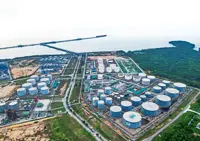
ONE after another, the Datuk Seri Najib Razak-era mega infrastructure projects are nearing completion, marking the culmination of investments initiated about a decade ago.
Successive prime ministers have largely kept the brakes on big-ticket infrastructure spending as they sought to rein in public debt and address the economic scars left by the Covid-19 pandemic.
The federal government debt has hit RM1.38 trillion by end-June 2026.
For construction players, the dearth of new large-scale projects creates a vacuum in job opportunities, compounded by a residential property glut that has weighed on the commencement of new developments.
The slowdown is stark. The commencement of new residential construction, technically known as “starts”, plunged 22.7% year-on-year (y-o-y) in 2025, with declines recorded across all states except Perak and Perlis.
Worse, the contraction deepened in the first half of 2026, when starts tumbled another 36.3% y-o-y, underscoring the persistent weakness in new residential development activity.
And the outlook remains subdued.
A survey by the Real Estate and Housing Developers’ Association Malaysia found that nearly two-thirds of developers had no plans to launch residential projects in the second half of 2026.
Providing a much-needed cushion against the residential slowdown has been the robust demand for industrial properties, particularly factories, warehouses and logistics facilities.
The surge in industrial development has opened up a fresh pipeline of construction jobs, helping to sustain activity in an otherwise challenging property market.
Then came the data centre boom, unleashing a wave of investments totalling a staggering RM385.7bil between 2021 and the first half of 2026.
The influx of investments, particularly from global technology giants, brought with it a new wave of large-scale construction contracts.
However, unlike mega infrastructure projects that can sustain construction activity over many years, individual data centre developments typically have shorter construction timelines, raising questions over how long the current wave of contracts can last.
With no comparable pipeline of mega infrastructure projects on the horizon, the industry faces an increasingly pressing question: What happens when the data centre construction boom begins to lose momentum?
End to data centre party?
A construction analyst, who declined to be named, tells StarBiz 7 that the data centre party is expected to last until 2028, judging from Tenaga Nasional Bhd ’s (TNB) electricity supply agreement (ESA) timeline extending to 2030.
An ESA is a formal contract between TNB and large electricity consumers, including data centres, governing the terms of electricity supply.
“We definitely need new mega infra projects to drive the construction sector. But does the government have enough funds for the projects?” the analyst asks.
MBSB Research analyst Ming San Soong, however, does not foresee a meaningful data centre demand slowdown over the next 12 to 24 months.
“It is too early to call a peak beyond that. An eventual slowdown would create a replenishment challenge, particularly for Sunway Construction Group Bhd (SunCon), given its data centre concentration.
“Gamuda Bhd has a sizeable overseas infrastructure buffer, while IJM Corp Bhd has a broader industrial and civil project mix.”
Nabil Zainoodin, construction analyst at BIMB Securities, sees signs of moderation emerging earlier, although he does not anticipate an abrupt slowdown.
He expects new data centre contract awards to fluctuate from 2027 as electricity and water supply constraints potentially limit the pace of new developments.
Crucially, he cautions against confusing a slowdown in new contract awards with an immediate decline in construction earnings.
“Contractors could continue recognising revenue from existing data centre projects even after new awards begin moderating.”
Like Ming, Nabil sees SunCon as more vulnerable to a slowdown in data centre contract awards, while Gamuda’s exposure to overseas construction, infrastructure, water and renewable energy provides greater diversification.
Nonetheless, Ming says the data centre wave has allowed early movers such as SunCon to expand their capabilities, deepen technical expertise and establish credentials with global clients.
“These can pave the way for repeat awards and overseas expansion, cushioning an eventual slowdown in domestic data centre jobs.”
But overseas expansion may not be an easy escape route for everyone.
Tradeview Capital chief executive officer Ng Zhu Hann says construction remains a highly localised industry, unlike fast-moving consumer goods, where companies can expand into overseas markets relatively easily.
Contractors must navigate unfamiliar regulations, supply chains, financing requirements and execution risks.
Nabil shares that assessment, noting that overseas diversification remains concentrated among larger, more established contractors.
Gamuda has successfully expanded into Australia and Taiwan, while most smaller contractors remain heavily reliant on the domestic market.
The implications extend beyond construction.
Data centre investments, coupled with surging global demand for chips and servers powering artificial intelligence (AI), have emerged as important drivers of Malaysia’s economic growth.
The momentum is reflected in the country’s 5.5% gross domestic product (GDP) expansion in the first nine months of 2026, according to advance estimates.
But the bigger question is whether the current investment boom can translate into sustainable economic growth and higher-value activities for Malaysian businesses.
Beyond construction and exports
Ernst & Young Consulting Sdn Bhd Business Consulting partner Nik Anira says while construction and exports can continue supporting economic expansion, sustaining that growth requires stronger productivity, greater domestic value creation and the development of local capabilities.
Construction investments, she argues, should not merely generate jobs during the development phase, but also support broader economic activity over the longer term.
Similarly, the benefits of export growth must extend beyond higher shipment volumes to strengthening the capabilities and competitiveness of Malaysian businesses.
For the electrical and electronics industry, Nik Anira believes Malaysia must build on its existing semiconductor strengths to move into higher-value activities, including developing homegrown technologies and products.
“Attracting investment is also important, but we should also consider how it develops local suppliers, supports knowledge transfer and creates higher-value jobs.”
She also calls for sustained investment in research, development, commercialisation and innovation, alongside closer collaboration between the government, industry and universities.
This includes funding for prototype development, pilot production and commercialisation to help Malaysian companies turn research into marketable products.
“Success should be measured by stronger Malaysian technological capabilities, greater domestic value creation and higher-value jobs that support higher income levels for Malaysians.”
Yet, Malaysia’s growing dependence on AI-related investments and demand also leaves the economy exposed to a potential reversal in the global technology spending cycle.
Center for Market Education chief executive officer Carmelo Ferlito says the construction boom is “largely” driven by data centres, although the risks are different from those associated with government-funded mega projects.
“These are mostly private investors using their own or borrowed capital, and they will absorb the losses if they’ve misjudged demand. That’s healthy.
“The worry is the parts of the boom that rest on underpriced electricity, water and land, or on incentives.
“Wherever prices don’t reflect true scarcity, investment signals get distorted and we may be overbuilding,” he says.
Should AI spending cool and some data centre capacity prove premature, Ferlito argues that taxpayers should not be called upon to rescue investors.
“That’s the market correcting, and it should be allowed to happen, not offset with public spending,” he says.
Socio Economic Research Centre executive director Lee Heng Guie similarly notes that the present construction boom “relies heavily” on data centres and related energy and utility infrastructure, unlike previous expansion cycles driven by government spending on highways, railways and ports.
Lee expects Malaysia’s economy to grow between 4.5% and 5% annually from 2027 to 2029, supported by domestic demand and electronics exports, although he identifies a potential AI boom-bust cycle as a risk to semiconductor exports.
Ferlito, meanwhile, cautions that growth driven by a concentrated investment wave and external demand for AI hardware remains vulnerable to shifts in the global cycle.
But does that mean Malaysia should revive its spending on mega infrastructure projects?
Lee points to the continuation of legacy projects such as the East Coast Rail Link and Johor Bahru-Singapore Rapid Transit System Link as evidence that mega projects remain part of the development agenda, albeit under a different funding approach.
Under what he describes as Public-Private Partnerships 3.0, private investors shoulder a greater share of the financing burden and commercial risks.
He also highlights projects such as the Penang LRT, Port Klang’s third terminal and the Bandar Malaysia-Seri Kembangan Expressway as examples of more targeted infrastructure development.
The question, however, is whether such projects will be sufficient to sustain the construction industry’s longer-term growth.
Nik Anira believes Malaysia must continue investing in major infrastructure, particularly beyond the Klang Valley, to unlock new economic growth centres and address regional development gaps.
“I would not say we have necessarily slowed infrastructure spending prematurely simply because many projects currently under way were conceived years ago. Mega projects have long development cycles.
“The more important question is whether we are building a sufficiently strong pipeline today to meet Malaysia’s needs over the next decade, particularly outside the Klang Valley.”
She argues that fiscal consolidation should not prevent the government from pursuing strategically important infrastructure projects, provided spending is prioritised and financing structures are appropriate.
“Fiscal consolidation does not necessarily mean infrastructure investment has to stop. It means being more selective about what we fund, how we fund it and when we deliver it.”
Among the priorities she identifies are transport and logistics connectivity, reliable electricity and water infrastructure, digital connectivity and flood mitigation.
Private financing, concession arrangements and public-private partnerships could help fund commercially viable projects, leaving public resources available for infrastructure with broader economic and social benefits.
Nabil also sees a continuing need for government-backed infrastructure investments, particularly because specialised data centre projects may not be accessible to every contractor.
Major infrastructure developments provide longer-term order book visibility and support a wider construction supply chain, including smaller civil engineering players.
He singles out water infrastructure as a potential growth segment, given the need to expand treatment capacity, replace ageing pipelines and reduce non-revenue water.
However, the government’s fiscal capacity remains a major constraint.
Ferlito sees “very little” room for additional spending, pointing to Budget 2027’s targeted fiscal deficit of 3.3% and federal debt of around 64% of GDP.
Lee warns that unbudgeted capital expenditure without corresponding offsets could invite negative credit-rating actions, while government financial guarantees are subject to statutory limits.
Ferlito also cautions against restarting mega infrastructure projects simply to sustain construction GDP, arguing that doing so risks repeating earlier policy mistakes.
For Ng, another major infrastructure spending spree appears “unlikely”, given the government’s commitment to fiscal consolidation.
He argues that infrastructure investments must deliver meaningful long-term benefits to the public rather than burden future generations with debt or create white elephants.
Meanwhile, the residential property market remains another source of concern.
Ng believes oversupply, partly stemming from excessive development approvals in certain locations, could weigh on the sector even as urbanisation continues.
If housing supply continues to outpace purchasing demand, developers may face mounting cashflow pressures, potentially resulting in stalled projects, collection problems and defaults on bank facilities.
“Contractors who are not careful may be dragged down as well,” he warns.
Nabil adds that the residential slowdown could intensify competition for available construction contracts and put pressure on tender margins, particularly for contractors heavily exposed to high-rise developments.
However, demand remains relatively resilient for well-located projects undertaken by established developers.
Compounding these challenges are rising labour, material and compliance costs.
Ng says inflationary pressures and tighter project completion schedules are already squeezing construction margins.
“It is not easy,” he says.
For Malaysia’s construction players, the data centre boom may have bought valuable time.
But as the current wave of projects progresses towards completion, the bigger challenge will be finding the next engine of growth capable of keeping order books replenished over the longer term.
Already a subscriber? Log in
Get 20% OFF The Star Digital Access
Cancel anytime. Ad-free. Unlimited access with perks.