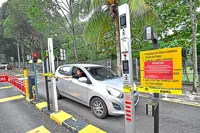
When drivers approach a boom gate to enter a gated and guarded neighbourhood, stopping at the guardhouse to explain who they are visiting is normal. Naturally, residents want to keep their homes private and safe while visitors simply want to get through.
But what if the road beyond the barrier is public? How much control can a residents association actually have over who comes and goes?
The issue came to a head in Taman Desa Phase 1, Kuala Lumpur, in September 2026. Kuala Lumpur City Hall (DBKL) gave the residents association a final seven-day notice to remove barriers and facial-recognition equipment from public roads because the installations had not been approved.
At the time, DBKL is also reviewing guarded neighbourhood schemes across the city.
For residents who have contributed to security fees and grown accustomed to having guards at the entrance, removing the barriers might sound like a step backwards. Yet, wanting a safer neighbourhood does not automatically give an association permission to restrict access to public roads.
Gated and guarded mix-ups
Gated and guarded might sound like the same thing but it all boils down to who controls the roads. In a strata development, the roads within the property and facilities shared by residents generally fall under common property.
The management body looks after these areas, although installing gates and controlling entry still have to comply with the relevant laws and approvals.
On the other hand, some guarded neighbourhoods are conventional housing estates where the roads remain public.
Residents may pool together to hire their own security services. But, as it was reported, installing infrastructure like boom gates or guardhouses requires approval from the local authority.
Additionally, collecting security fees and securing residents’ support do not make the installations lawful either.
The consent requirements also depend on the local authority.
In the Taman Desa report, DBKL said a guarded neighbourhood scheme requires at least 81% consent from residents while an automatic boom gate using facial recognition required 100%. But even then, meeting the consent threshold does not replace the need for official approval.
A previous case
In the distinctive court case of Au Kean Hoe versus Persatuan Penduduk D’Villa Equestrian, the Federal Court considered a dispute involving council-approved guardhouse and boom-gate structures, alongside a requirement for a non-paying resident to operate the gates himself.
The court ended up upholding the arrangement, distinguishing the inconvenience of opening a gate from being prevented from entering altogether. This clearly shows why the details of each scheme count because a council-approved security arrangement and an unauthorised road closure cannot simply be treated as the same thing.
What if emergency services need access?
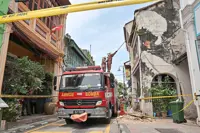
Then there is the question of what happens during an emergency. Waiting at a boom gate might be frustrating for a visitor but for an ambulance crew trying to reach someone inside, the stakes are considerably higher.
An earlier StarBiz 7 article entitled “Built for security, not emergencies” highlighted a case involving a woman who suffered a cardiac arrest at a strata development. Emergency responders were reportedly delayed for about 45 minutes while security personnel waited for management approval to allow entry. The woman died.
Although that case involved a strata development, it raises a question for guarded neighbourhoods too. Can the guards immediately let emergency responders through or must they first wait for someone else to give the green light?
Residents want to feel safe behind their gates but that protection should also mean help can reach them when they need it most.
Keeping the neighbourhood on board
There is also the practical side of running a guarded neighbourhood. Hiring guards costs money and residents who contribute may feel frustrated when others benefit without paying. For an association trying to keep the service going, disagreements over fees can become another headache.
That helps explain why these arrangements can divide a neighbourhood. Some residents may see the boom gate as money well spent while others question the charges, the entry procedures or the inconvenience of taking a longer route home. An arrangement that suits one street might create problems for the next.
Before collecting money or installing equipment, an association needs to establish what the local authority will allow. Residents should also understand what they are agreeing to, from the monthly cost to how the gates will operate.
Getting enough signatures is one part of the process. Working out how the scheme will function every day deserves just as much attention.
There are other questions too. Who opens the gate if the system fails? What happens during a power cut? How will visitors enter and what should a guard do when an ambulance arrives?
These details need to be worked out. For buyers considering a home in a guarded neighbourhood, the guardhouse is worth a more detailed look.
Ask whether the scheme has the necessary approval, what the fees cover and how access is managed. A boom gate at the entrance tells only part of the story.
For residents who have put time and money into a security scheme, a boom gate can bring some peace of mind. But its value also depends on what happens when someone needs to get through.
Clear procedures, the necessary approvals and guards who know how to respond all matter. Whether someone is returning home, visiting family or arriving in an ambulance, the arrangements at the entrance should help the neighbourhood function safely. That is worth getting right before the next disagreement or emergency puts the system to the test.
Already a subscriber? Log in
Get 20% OFF The Star Digital Access
Cancel anytime. Ad-free. Unlimited access with perks.