SINGAPORE: For most people, the term data centre (DC) brings to mind endless rows of cabinets filled with black boxes and blinking lights, housed inside a vault-like windowless building with few humans.
It sounds like a mundane and soulless real estate business.
But there is so much more to a DC operator than just keeping the servers on 24 hours a day, seven days a week.
Managing a portfolio of these buildings as a successful and profitable real estate investment trust (REIT) means operators have to look beyond simply offering real estate space and sustainable energy solutions to attract customers, as most DCs are already offering them as table stakes.
But as the global artificial intelligence (AI) boom sends tech stocks soaring, DC-REITs are also facing tougher questions from investors about their yields and risk-adjusted returns.
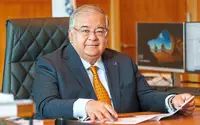
For Keppel DC-REIT, the answer lies in strategising the right mix of tenants to ensure sustainable long-term growth, Loh Hwee Long, chief executive of the manager of the REIT, said.
Securing contracts with hyperscalers, tech giants that operate large-scale cloud networks, may seem like a stable source of income, but it may not be the most lucrative.
This is as such single-tenant contracts are usually locked in for as long as 15 years at the minimum, he pointed out.
To ensure its portfolio continues to benefit from the growing demand for DCs, Keppel DC-REIT leases only around 30% of its assets on long contracts.
The rest of its tenants are on shorter leases, renting the space and facilities from the operator for their own server hardware, a practice known as co-location.
Loh likens this hybrid model of hyperscaler contracts and co-location to the anchor tenant model of a shopping mall.
“Actually, it’s just like VivoCity,” Loh said, pointing to the shopping centre down the road from Keppel’s office at HarbourFront.
“The 30% is basically your anchor tenant, like a supermarket or department store, where the rates are a bit lower and not too interesting from a growth perspective,” he said.
“Then you’ve got the smaller pop-up stores that you can really drive up the yield with much higher rents.”
However, unlike a sprawling mall like VivoCity, Keppel DC-REIT’s data centres do not house a highly diverse mix of tenants.
Instead, Keppel DC-REIT complements its mix of hyperscalers primarily with larger customers such as financial institutions and government bodies.
The focus on this unique sub-segment gives the DC operator more levers to drive organic growth, Loh said.
“It’s no longer about 1% to 2% annual growth, it can be more.
“And that becomes our differentiator.”
Hyperscalers accounted for half the group’s top 10 clients, according to its results for the first half of 2026 ended June 30. The top unnamed client was a hyperscaler contributing 43.5% of the portfolio’s total rental income of S$210.4mil.
Meanwhile, the biggest non-hyperscaler tenants contributed about 15%.
This strategy is also more suited for the markets that Keppel DC-REIT is primarily operating in.
While its portfolio includes DCs in Europe and Australia, it sees Singapore, Japan and South Korea as the key tier-one markets.
Keppel DC-REIT announced on Sept 1 its acquisition of two freehold colocation DCs in the Greater Tokyo area for around S$1.4bil.
This took the number of its assets in the country to four.
Loh noted that market conditions in Japan, Singapore and South Korea allow the REIT manager to capitalise on strong demand and act as a price-setter for higher rents.
These are mature markets that have not only deep fibre connectivity and established hyperscaler clusters, but also high barriers to entry for new DC operators, due to supply constraints arising from a lack of land and power.
According to Loh, building a new DC in Japan could take five to seven years.
This is because the suspension of nuclear power has compounded energy constraints in the country, while challenges in the construction sector could cause further delays.
While Malaysia’s regional prominence is growing, with 34 providers reportedly established in Johor, this market is not a current priority for Keppel DC-REIT, as DCs there handle different workloads than those in the REIT’s portfolio, Loh said.
In contrast, hyperscalers are more likely to house sensitive, business-critical workloads in Singapore.
While the market may not be the biggest in terms of scale, these clients are willing to pay a premium for reliability and peace of mind, he said.
Still, Keppel DC-REIT will keep an eye out for the right investment opportunity in Malaysia, provided it is appropriately priced.
Loh conceded that Johor’s DC market benefitted from a spillover effect after Singapore imposed a moratorium in 2019 to manage its strained land and energy resources.
DC operators were naturally drawn to Johor’s abundance of land and energy.
Regional demand remains strong, and the additional 200MW of new capacity to be dispensed by the government among four DC operators, including Keppel Data Centres, would likely still fall short of meeting Singapore’s growing needs, Loh said. — The Straits Times/ANN