The modern urban landscape is built on a complex grid of public infrastructure designed to keep cities safe, connected and functional.
Street lighting plays a critical role in this network, illuminating pathways, reducing crime and ensuring vehicular safety after dark. However, a walk through many Malaysian commercial and residential neighbourhoods reveals a widespread and overlooked issue.
The degradation of public lampposts has become a systematic problem.
Across many cities, towns and municipalities, lampposts have quietly served the community by illuminating roads at night, providing safer driving conditions as well as pedestrian safety. Unfortunately, these lampposts also serve as advertising tools, as untold numbers of buntings and temporary promotional signage are strung on them.
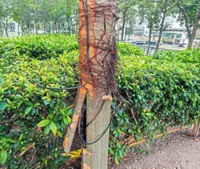
The most immediate threat comes from exposed electrical wiring at the base of these posts, a problem made worse by layers of rusting iron wire left behind from both legal and illegal commercial buntings.
This combination of exposed circuitry and degrading metal wraps creates a serious safety hazard, threatening public safety, increasing municipal liabilities and damaging urban infrastructure.
A danger to pedestrians
To understand the severity of this issue, one must look closely at how municipal lamp posts are constructed and maintained. The base of a standard steel utility post contains a built-in terminal box, often referred to as a cutout block or inspection chamber.
This internal compartment houses high-voltage lines, fuses and loop-in cables that deliver electrical current up to the luminaire. By design, these internal electrical components are supposed to be completely sealed behind secure, weatherproof inspection covers.
In practice, however, these protective base plates are frequently missing, broken or dislodged due to vandalism, scrap metal theft or poor maintenance.
This leaves live terminal blocks fully exposed to the elements.
The hazard becomes even more dangerous due to the sharp, rusting metal wires wrapped around the post, left behind by illegal advertisement syndicates and event organisers.
The trash left behind
The problem of illegal street advertisements or buntings extends far beyond visual clutter. When commercial entities, event organisers or unauthorised loan sharks, also known locally as alongs, hang promotional banners along public roads, they rarely use non-destructive mounting materials.
Instead, they secure these plastic sheets using cheap, heavy-gauge iron wire twisted tightly around the shaft of the lamp post. When municipal enforcement teams or competing advertisers tear down the banners, they almost always leave the securing wires behind.
These leftover wire stubs remain tightly coiled around the metal columns, where they are exposed to rain and humidity, leading to rapid oxidation.
A scratch from these rusty wires can result in tetanus, a deadly infection caused by a bacterium which releases a powerful toxin that attacks nerves, causing severe muscle spasms and breathing failure. Untreated, it can result in death.
Considering that thousands of banners and buntings are displayed every year, these are deathtraps waiting to happen.
Moreover, as the leftover iron wires rust, they trap moisture directly against the lamp post’s protective zinc or painted coating. This triggers localised galvanic corrosion, eating through the structural steel pillar and weakening its foundation.
To make matters worse, heavy winds cause these sharp, rusted wire coils to shift and grind against the post. If these metal fragments slip into an open inspection chamber, they can easily slice through the protective plastic insulation of the internal cables, electrifying the entire outer surface of the pole.
Fatal consequences
The combination of exposed live wiring and a rusted, conductive metal wrap creates an immediate risk of electrocution for pedestrians. A utility post experiencing an internal short circuit can channel high-voltage electricity across its entire outer surface, transforming the metal pole into a hidden threat.
This danger increases dramatically during Malaysia’s intense monsoon seasons.
When heavy downpours cause flash floods or temporary water pooling along roadsides, water can easily fill open, low-lying terminal chambers. Water serves as an excellent conductor, carrying the electrical current from the exposed internal fuse block out to the wet, rusting exterior wires wrapped around the post.
A pedestrian attempting to navigate a flooded sidewalk by holding onto a lamppost for balance could suffer a severe, potentially fatal electrical shock.
This risk is especially high for children, pets and visually impaired individuals who may not see the danger lurking at the base of the pole.
Municipal liabilities
Beyond the tragic human cost, leaving utility posts in a state of disrepair creates significant financial and legal challenges for local municipal councils.
Councils have a strict statutory duty of care to maintain public infrastructure in a safe, working condition.
When a member of the public suffers injury or property damage due to a poorly maintained, short-circuiting lamp post, the local council can face substantial public liability lawsuits.
Defending these legal actions and paying out court-ordered damages strains municipal budgets, diverting vital tax revenue away from community services, park upkeep and urban upgrades.
Furthermore, when electrical currents leak constantly through exposed terminal blocks and rusted exterior wires into the ground, it causes significant energy loss. This drives up municipal electricity bills and forces local authorities to spend excessive amounts on avoidable utility overheads.
The sight of exposed wiring and rusted bunting coils on city lamp posts is a clear warning sign of infrastructure neglect that requires immediate attention. Resolving this issue demands a dual approach, that is, stricter regulatory enforcement against illegal banner placement and proactive, preventative maintenance by municipal authorities.
Local councils must hold illegal advertisers accountable by issuing heavy fines to the entities listed on unauthorised banners, ensuring they pay for the physical damage caused to public property. Simultaneously, maintenance teams must replace missing terminal covers with secure, tamper-proof composite plates that have no resale value on the scrap metal market, preventing theft.
Public streetlights are built to protect communities, not endanger them. By clearing away leftover wire wraps and properly sealing exposed electrical bases, Malaysian cities can ensure their urban infrastructure remains safe, reliable and secure for everyone.
Already a subscriber? Log in
Get 20% OFF The Star Digital Access
Cancel anytime. Ad-free. Unlimited access with perks.