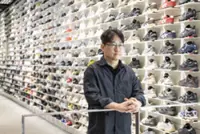
Musinsa Co., the KKR & Co.-backed South Korean fashion retailer, is rolling out an aggressive physical store expansion in China and Japan as it seeks to challenge Uniqlo and build momentum ahead of a closely watched initial public offering.
The company, which opened its first overseas outlet in Shanghai in December, will accelerate its footprint abroad targeting 100 stores in China by 2030 and flagship locations in Japan, Co-Chief Executive Officer Nam Cho said in an interview with Bloomberg. A Shibuya store is slated for mid-2027, followed by Osaka and Nagoya.
The push comes as Korean consumer culture continues to surge globally, stretching well beyond K-pop and K-beauty into fashion and lifestyle. Retailers like CJ Olive Young Corp. and APR Corp.’s viral Medicube skincare line are also tapping this momentum to accelerate overseas store openings.
Musinsa is banking on its private-label Musinsa Standard - which it sees as its answer to Uniqlo - to scale beyond Korea, where it has become the dominant fashion platform for young shoppers. International transaction volumes have tripled since the 2022 launch of its global mall, with first-quarter exports running at roughly 12 times last year’s levels, led by Japan and China, Cho said.
Founded in 2001 as an online sneaker community, Musinsa has since grown into one of South Korea’s most influential retail ecosystems. It now anchors what analysts call "Oldamoo,” a trio of next-generation retail destinations alongside Olive Young and Daiso that have become must-visit stops for foreign tourists. Travelers from more than 100 countries have visited Musinsa’s domestic stores, often registering as members and continuing to buy online after returning home, Cho said.
Musinsa currently serves 13 international markets through its global platform and plans to add storefronts in Malaysia, Vietnam and the Philippines this year, with the Middle East to follow through local partnerships, he said.
The multi-market push is designed to prove global scalability ahead of a US store debut and a planned IPO that may look beyond the local Seoul exchange. With a valuation of up to 10 trillion won (about $6.4 billion), Musinsa’s listing would be one of the largest IPOs in recent years. Cho said the company is gauging domestic and international exchanges, including Nasdaq.
"Korea is obviously a very attractive market right now,” Cho said. "But as a company that wants to go global, we want to make sure that we’re being evaluated at a fair price, and we believe the US market is one of the best markets to accomplish that.”
New Interest
While China and Japan "are the two markets that we’re mainly targeting in our current state,” the company, Cho said, is "seeing trends and interest coming from Southeast Asia as well as US and the European countries.”
The US had previously been the top performer for Musinsa’s global app before tariff pressures weighed on demand. The company is optimizing supply chains and diversifying product lines to better serve American customers, he said.
Musinsa generated more than 5 trillion won in revenue last year and aims for 3 trillion won in overseas sales by 2030, with a third coming from China. Cho said the target could be reached early, noting that a recent global sales event produced 3.2 billion won in a single day.
While Musinsa has traditionally generated up to 80% of revenue online, Cho expects a 50-50 split between online and offline channels within a few years.
The company is also building a brand-incubation engine, providing up-and-coming designers and companies with investment, interest-free loans and logistics support. Its venture capital arm has invested nearly 100 billion won in some 80 brands and offered more than 400 billion won in loans to hundreds of companies.
Early bets on streetwear labels like Thisisneverthat and Covernat have since grown into highly profitable operations with standalone stores.
"We have a strong ambition to become a true brand house that fosters a vast, multifaceted ecosystem of labels by incubating a diverse array of independent designers,” Cho said. - Bloomberg