PETALING JAYA: The two-week truce between warring parties in the Gulf region has provided relief to global markets, but a reset in investor expectations will depend on clearer signals of an end to the conflict and the full reopening of the Strait of Hormuz.
Analysts remain cautious pending the outcome of diplomatic negotiations between Iran and the United States, but are confident Bursa Malaysia will remain resilient, with a bias for the local market to perform better should the war end.
The two-week detente, brokered by Pakistan, triggered a relief rally across global markets, as Brent crude prices for the June contract fell 13%, or US$14 a barrel, to US$94 at last look.
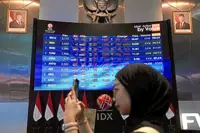
Major global equity benchmarks were up 3% to 5%, while the FBM KLCI rose 19.45 points, or 1.16%, yesterday to 1,696.3 points, slightly below its pre-war close of 1,716 in February.
Traders believe the two-week window could help improve investor sentiment, on the belief US President Donald Trump is seeking an off-ramp to exit the war, in line with his April 2 statement that he aims to end the war within two to three weeks.
However, any setback could quickly reintroduce a geopolitical risk premium.
‘War takes time to ease, but I’m optimistic talks will lead to some resolutions.
“At least Trump has the incentive to do so, given US mid-term elections are approaching and there’s pressures on the US economy amid higher commodity prices,” said Nixon Wong, chief investment officer at Tradeview Capital Sdn Bhd.
He added that this could support a market recovery, with Malaysia – which has outperformed since the Iran war began – likely to remain resilient.
Wong said war is a geopolitical risk factor that affects sentiment in the short term, and that Tradeview has taken positions in quality names on weakness, while also adopting a balancing strategy by adding high-yield stocks.
The FBM KLCI declined only marginally in March, compared with an 8% drop for the MSCI Asean Index and a 13% fall for the MSCI Emerging Markets Index, reinforcing Malaysia’s role as a low-beta hedge supported by its marginal energy surplus and strong domestic liquidity base, according to JP Morgan.
It added that, more importantly, this resilience has occurred despite limited foreign participation, with ownership still at historical lows of 18.9%.
The outlook for the local market may also be shifting among global investors.
UBS, in a March report, upgraded Malaysian equities from “neutral” to “attractive”, noting that if the ongoing conflict evolves into a global energy shock, Malaysia’s economy – as a net energy exporter – should be relatively resilient.
“We think Malaysia may be the next market to ‘value up’, with the recently released Capital Market Masterplan signalling a drive to improve capital efficiency,” it said.
The resilience of the local market is reflected in the sideways movement of the FBM KLCI, which has traded within a range of 1,664 to 1,737 points since the war began in late February.
A chartist from a local brokerage attributed this partly to the fact that, unlike during the Covid-19 pandemic – when the duration of lockdowns and the crisis itself was uncertain – the timeline outlined by Trump has given investors and traders a clearer horizon to position themselves in the market.
He told StarBiz that the trajectory of the local benchmark has been supported by Malaysia’s economic resilience, underpinned by its status as a net exporter of hydrocarbons and palm oil, both of which have rallied since hostilities began.
A resolution to the conflict, he added, would push the market higher, while a failure in negotiations and any closure of the Strait of Hormuz could see the market test lower levels.
CGS International (CGSI) Research said the outlook for Malaysian equities remains positive, maintaining its end-2026 FBM KLCI target of 1,810 points.
This optimistic projection is based on the premise that current geopolitical disruptions will be transitory rather than permanent.
The core investment thesis rests on a “base case” assumption that hostilities will conclude by end-April, and that immediate concerns over energy infrastructure disruptions and oil flows through the Strait of Hormuz will ease.
While industrial costs may remain elevated, they are expected to be mitigated by price adjustments and a stronger ringgit, which helps offset imported costs.
From a valuation perspective, CGSI Research said the FBM KLCI is currently in an attractive “buy” zone, trading at 13.7 times its 2026 price-to-earnings ratio and offering an earnings yield spread of 346 basis points over 10-year Malaysian Government Securities (MGS).
Historically, such elevated spreads have tended to revert to the mean, suggesting potential upside for the market.
The research house added that local corporate earnings are also showing strong potential, with its 2026 FBM KLCI earnings-per-share growth estimate revised upward to 21.5%, largely driven by upgrades in the petrochemical sector, particularly Petronas Chemicals Group Bhd .
.
To navigate the current environment, CGSI Research recommends a shift towards large-cap stocks and sectors that stand to benefit, such as energy and plantation counters.