IT came as a surprise when Genting Bhd (Genting) and Genting Malaysia Bhd (GenM) reported their first quarterly loss in two years and cut their dividend payment in the financial year ended Dec 31, 2024 (FY24).
And the jitters were aplenty.
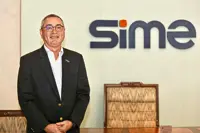
However, Genting may have now bet on a winner. The decision to pick Datuk Seri Tan Kong Han (pic, left) to steer the direction of the family-owned conglomerate may pay off in the long run.
On Feb 27, Genting announced the appointment of Tan, the current president, chief operating officer (COO) and executive director (ED) of Genting, as its chief executive officer (CEO), effective March 1.
The 59-year-old Tan has been president and COO since July 1, 2007. He was redesignated as president and COO and ED in 2020. Tan takes over from Tan Sri Lim Kok Thay (pic, right), 73, who relinquished his role as CEO but will continue to serve as Genting executive chairman. He had held the chairman and chief executive positions since 2007.
All eyes will be on how Tan navigates Genting, which is struggling financially with operational and regulatory challenges at Genting Malaysia, towards recovery and growth.
Genting had a net loss of RM169.4mil in the fourth quarter of FY24, mainly due to the recognition of unrealised foreign-exchange translation losses from its 49.3%-held Genting Malaysia’s US dollar-denominated borrowings.
Analysts view the leadership transition to a non-family member positively, saying this will improve corporate governance, separating the role of chairman and CEO.
“Any improvements are likely to be incremental, given that Tan has been with the group for nearly two decades.
“His appointment suggests continuity rather than a fundamental shift in direction,” Nixon Wong, chief investment officer at Tradeview Capital tells StarBiz 7.
Meanwhile, UOB Kay Hian Securities Research analyst Jack Goh says Tan’s appointment is positive given that he has over 18 years of experience in the group as president and COO.
“(He) is also the group’s first non-family CEO, which could instill confidence in investors that the group will continue to be run professionally by key management figures familiar with the in-and-outs of daily operations,” he tells StarBiz 7.
“The new CEO is the right person to navigate the group through the current challenges, mainly due to Tan’s extensive experience within the group. He has also been involved in multiple expansions and greenfield/brownfield projects across key operating regions,” he adds.
Tan was also Genting Plantations Bhd’s deputy CEO from Dec 2010 until assuming the CEO and ED position in 2019. He stepped down as CEO of Genting Plantations to focus on his new role in Genting, but remains as its ED.
Tan, who read economics and law, has more than 13 years of experience in investment banking prior to joining Tanjong Public Ltd Co as the group COO in 2003. He left Tanjong Plc in 2007 to join Genting Bhd.
RPT concerns
The investing community is not expecting a drastic change in direction but rather a move to merely allay concerns of corporate governance, especially on the back of previous unpopular related-party deals.
“We view the leadership transition as a positive step, particularly in addressing long-standing corporate governance concerns. Ideally, this change will lead to improved transparency in investor communications and reduction in related-party transactions (RPTs),” Wong says.
GenM poured in a total of RM1.5bil cash into the beleaguered Empire Resorts Inc, taking it off the hands of Kok Thay.
This has been a drag on its books. GenM’s share price took a beating in August 2019 when it bought a 49% stake in the cash-strapped Empire Resorts, which owns a casino-resort in Sullivan County.
It bought the stake from its controlling shareholder Kok Thay for US$128mil cash and subsequently pumped in an additional US$35.8mil to take it private.
Such deals do not sit well with investors but will the new CEO do things differently and have free rein to run the group, given that Kok Thay is still the executive chairman and controlling shareholder with a 44% stake in Genting?
“We do not expect the new CEO to have full autonomy, at least in the near term. The founding family’s significant shareholding and active involvement in leadership positions indicate that strategic decisions will likely remain closely overseen by Kok Thay and the family,” Tradeview’s Wong shares.
“While the Kok Thay family are still the major shareholder of the group, we deem that most of the key decisions are discussed throughout board meetings with key management and this shall continue to be the case,” Goh says.
Keong Hui moves up the ranks
Market observers also believe Tan’s appointment may be a move to keep the seat warm for Kok Thay’s son, Datuk Lim Keong Hui, 40, who will eventually take over the top position.
He holds a Bachelor of Science (Honours) in Computer Science from the Queen Mary University of London and a Master’s in International Marketing Management from Regent’s Business School London.
Keong Hui assumed the role of CEO of the plantations group effective March 1, moving up from his position as deputy CEO, which he held since Jan 1, 2019.
He also holds positions at Genting and GenM, both as deputy CEO and ED since 2019. Keong Hui was appointed as a director of the group in June 2012.
Tan, together with the Lim family, will need to step up efforts to return to winning ways as the group is undergoing challenges from rising labour costs, capex requirements and gearing to fund its expansion.
Tradeview Capital Sdn Bhd fund manager Neoh Jia Man believes that earnings visibility remains limited due to ongoing cost pressures, but anticipates a significant improvement in profitability for Genting and GenM this year.
Some of the key catalysts include a recovery in tourism flows to Singapore and Malaysia, while a major re-rating catalyst for Genting could come from its 20%-owned associate TauRx Pharmaceuticals securing the US Food and Drug Administration’s approval for its Alzheimer’s drug. This could unlock substantial value for the group.
Meanwhile, Goh believes there is plenty to watch out for from the group’s US portfolio.
This includes Resorts World New York City’s tender for a lucrative downstate casino licence and the potential revival of Mashpee tribe’s First Light Casino in Massachusetts, which will allow writeback of RM1.8bil worth of promissory notes.
Other catalysts are the land sale in Miami ,which can potentially fetch up to US$1.5bil in proceeds, and the resolution of RAV Bahamas lawsuit.
In addition, he expects Resorts World Genting (RWG), which is turning 60 in 2025, to roll out a plethora of exciting activities, promotions and giveaways which will attract visitors.
“This coincides with the government’s launch of the Visit Malaysia 2026 campaign. We are hopeful this will allow RWG’s gross gaming revenue and profitability to sustain above 2019 levels.” he says.
And there’s another winning card. Goh reckons that if the group gets a gaming licence in Thailand after tenders begin soon, it will spark confidence in the group’s earnings growth.
Already a subscriber? Log in
Get 20% OFF The Star Digital Access
Cancel anytime. Ad-free. Unlimited access with perks.