Going beyond compliance


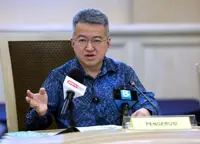
SDP has been committed to no deforestation since 2014. Hence, we are well-positioned to meet this (EU's) regulatory requirement, says Helmy.

FROM quickening the pace of mechanisation to meeting global sustainability standards, Sime Darby Plantation Bhd (SDP) is spearheading reforms in the age-old palm oil industry. Using robotics and other artificial intelligence technologies, SDP is gradually transforming the narrative in the palm oil space; from dangerous, dirty and difficult to a modernised industry that is keeping up with the times. The following are excerpts of an interview with chief executive officer Mohamad Helmy Othman Basha:

StarBizWeek: What is your view on the European Union’s (EU) deforestation-free policy and increasing scrutiny for transparency in its supply chain for palm oil-related imports? How will this impact the country in the long run?

Helmy: There are two perspectives here – from SDP’s point of view (or large growers) and the oil palm smallholders’ viewpoint.

SDP has been committed to no deforestation since 2014. Hence, we are well-positioned to meet this regulatory requirement. Under the new regulation, goods imported into the EU market must not come from land deforested after Dec 31, 2020.

Big players in the industry will not have a problem to comply with this regulation, as many are certified according to the Roundtable on Sustainable Palm Oil (RSPO) standards.

These companies have also aligned themselves with the “No Deforestation, No Peat and No Exploitation” (NDPE) commitment, even as legislations and regulations for the palm oil industry have become progressively restrictive and stringent.

To clarify, the proposed EU deforestation-free regulations have yet to be finalised and enforced by EU member countries.

Nevertheless, the issue is not only about new legislations, but is also a much broader one than many realise.

The Malaysian and Indonesian governments have long argued that the EU’s stance is discriminatory.

This is in spite of the great strides made by the palm oil industry to improve its sustainability standards and practices, compared with other agricultural commodities.

The expectations and standards imposed on the palm oil industry are not quite the same for other competing oils and other far more polluting businesses within the agriculture sector.

We are also cognisant of the fact that smallholders may not have the resources to gain sustainability certification and are at risk of non-compliance with the legislation.

When the legislation is enforced, they will be heavily impacted.

These smallholders may not be able to sell their oil to refineries, which are determined to ensure that their products are not contaminated with palm oil from deforestation-risk sources.

Hence, smallholders should not be put into the same basket as other players in the industry. They account for roughly 40% of the global supply of palm oil. The world needs their contribution, especially with ongoing concerns on food security.

Currently, many major players in the industry are helping to raise smallholders’ standards.

For example, SDP runs its own extensive smallholder programmes in Malaysia, Indonesia, Papua New Guinea and the Solomon Islands, helping 52,000 small and independent farmers get certified. Smallholders’ certification is an ongoing effort, and it does not help that our smallholders are burdened by legislation that can destroy their livelihoods.

SDP’s NDPE commitment, Crosscheck application, etc, are positive developments towards addressing sustainability and governance issues in the industry. Are these standards on par with the EU’s environmental, social and governance standards? Although the sustainability standards have become more stringent over the years, SDP has always kept abreast of these developments, and in many cases, gone beyond compliance.

There are other large players who have taken the same position as SDP. At present, NDPE commitments are a standard for responsible players in the global palm oil supply chain, as well as in RSPO certification.

Nevertheless, we must continue to be vigilant in our adherence to NDPE commitments across our supply chains. There must always be continuous improvements made in our approach to ensure compliance.

This was our rationale for launching Crosscheck and our supplier policy. Enforcement cannot be effective without traceability and a strict policy to address non-compliance.

Currently, the supply of palm oil in our supply chain comes largely from our own operations which are certified to be sustainable.

Our NDPE commitments extend to suppliers in our supply chain to ensure that they comply with our standards as well.

Crosscheck also helps us to identify smallholders in our supply chain. As such, we can engage with them and ensure their standards improve, whilst giving them access to markets that would not otherwise be within their reach.

RM50mil was allocated for automation of the plantation sector through the usage of robotics and artificial intelligence (AI) in Budget 2023. Is this sufficient to move the needle? Will such a move improve production costs in the long run, or will it incur higher labour and maintenance costs?

RM50mil is a good start but developing robotics and AI technology would require greater funding, as it is a continuous and expensive endeavour, involving multi-industry solutions adapted and tailored to the palm oil sector.

A very important part of building an ecosystem that encourages innovation in automation and digitalisation is the financial support provided to startups. Innovative solutions for the mechanisation of the plantation industry will take off in a big way when startup companies get access to funding and are given a platform by industry players and the Malaysian Palm Oil Board to flourish.

It is also important to note that the mechanisation process requires various phases of development – from innovation to proof of concept to field testing before a commercial rollout. Initially, as with other new technologies, the production cost is expected to spike, but in the medium to longer term, the overall cost of production will be lower.

Although the Mechanisation, Automation and Digitalisation (MAD) solution is an initiative to address the labour shortage, it will not totally eliminate the need for labour. Rather, it will completely change the type of work that is carried out, and the profile of workers needed will be very different.

What is SDP’s average land-to-man (LMR) ratio? How many foreign and local workers does the group have? What are the incentives that the group has rolled out and will be introducing to attract more local workers?SDP’s current average LMR is one worker for every 15.1ha (1:15.1 ha). SDP aims to achieve 1:17.5 ha by the end of 2024.

As of December 2022, the workforce in the group’s Malaysian plantation operations was made up of 60% foreign workers, while 40% were locals. Prior to the Covid-19 pandemic and SDP’s focus on MAD, foreign workers made up 75% of the workforce.

Other than the minimum wage and productivity-based incentives, SDP’s plantation workers enjoy many benefits that are not found in other industries like free housing, recreational facilities, school transport for children and crèches.

With our mechanisation initiative, our aim is to transform manual and menial work that has been done in plantations for over the past 100 years into more sophisticated tasks that are performed by a different type of employee – machine specialists, technicians and drone pilots.

These are skilled and qualified workers, with diplomas and degrees from recognised institutions.

These new skilled workers will command salaries that are commensurate with their qualifications – we are aiming at providing an average pay of RM3,000 a month.

We are already seeing Malaysians who are interested in these new skilled and higher-paying jobs, particularly since they come with so many benefits not seen in other industries.

The harvesting of oil palm fruits is a segment in the palm oil industry that still seems to require manual labour. How does SDP plan to resolve this?

We are working on several approaches to tackle this matter. Our breeding programmes are in the process of testing shorter palm trees on a large-scale basis, which will reduce the height of palm trees by up to 30% throughout their economic life.

Meanwhile, we have a mechanisation and robotics programme that is testing various prototypes of harvesting machines. Given that harvesting oil palm fruits is the hardest task to mechanise, it will be a longer-term programme.

However, we are making solid progress as we have completed the testing process for cutting machines, and vision-guided robotic arms in the field.

In what way does SDP envision GenomeSelect to change the palm oil and food production landscape in Malaysia?Our GenomeSelect (GS) seeds are delivering higher yields than our previous best planting materials, across various environments with different soil types.

The first commercial planting for our GS seedlings was in 2016. Since the first commercial harvesting in 2019, our GS-planted fields have recorded highest-ranked yields compared with other fields of the same age, for three consecutive years.

Beyond higher-yielding oil palms, GS technology will also allow SDP to develop seeds that are more resistant to diseases and also more climate-resilient.

Are there enough funds allocated for investment, research, and adoption in agricultural system technology? Given the many risks that accompany food production, should measures like crop insurance be given more attention to further strengthen the food security of the nation?SDP invests heavily in this area compared to the industry as a whole. We are looking at developing a range of interlinked technologies for the oil palms with the latest precision growing technologies, mechanised harvesting, and by digitalising our processes.

There is a pressing need to find solutions for emerging challenges like climate impact. This means that more needs to be done across the industry.

Going forward, where would fresh demand come from for the palm oil industry and what is the sector’s outlook in the quarters ahead?With the current low production, the domestic palm oil stockpiles are within manageable limits. The demand has shifted to Malaysia for crude palm oil after Indonesia froze two-thirds of its export quota until April 2023. After a slowdown in the last few months, the demand from China has rebounded.

Meanwhile, India had imported large amounts of palm oil until December 2022. The demand from India slowed in January and February 2023, but we are anticipating India to raise its purchases soon.

We have seen good demand for palm oil during the festival period in Africa and the Middle East, which has kept Malaysian stocks in check. The drop in spreads between palm oil and soybean oil will not have much of an impact on palm oil, as the regular demand from key importing countries is expected to continue.

Get 20% OFF The Star Digital Access

Monthly Plan

RM 13.90/month

RM 11.12/month

Billed as RM 11.12 for the 1st month, RM 13.90 thereafter.

Best Value

Annual Plan

RM 12.33/month

RM 9.87/month

Billed as RM 118.40 for the 1st year, RM 148 thereafter.

Follow us on our official WhatsApp channel for breaking news alerts and key updates!

Next In Business News

Zetrix AI inks blockchain MoU with Philippine gov't
Rhong Khen to acquire three industrial properties for RM47mil
Ge-Shen in new deal to dispose of JB properties for RM35.5mil
MCE Auto Hub to advance higher-value automotive manufacturing in Malaysia
Master Tec secures RM109.54mil TNB contract extension
Reservoir Link unit secures PETRONAS contract
Pixlr Group eyes ACE Market listing
Profit-taking, regional sell-off leave FBM KLCI little changed
China, Hong Kong stocks end lower as property shares drag
MASkargo, Qatar Airways Cargo expand partnership with new KL-Bengaluru-Doha freighter service

Others Also Read