Bonds come into favour as hedging tool


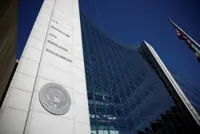
Stable hand: A jogger runs past the Federal Reserve building in Washington. Even though the central bank is set to keep raising interest rates, policy makers will be mindful of not derailing the economic recovery. — Reuters

WASHINGTON: Investors plagued by fear and shunning stocks are rediscovering a time-honuored antidote: United States government bonds.

That may seem surprising, given that the Treasury market has been battered by its worst losses on record this year.

But with yields holding at the highest in years, the Federal Reserve (Fed) on course to raise interest rates aggressively in the face of surging inflation, and growth sputtering overseas, cash is flowing back in as investors seek to protect against the risk that the economy will tumble into a recession – pulling the stock market further down with it.

In April, as the S&P 500 veered into its worst month since the March 2020 Covid crash, investors yanked US$27bil (RM117bil) from the largest exchange-traded funds focused on equities, according to data compiled by Bloomberg.

At the same time, they plowed US$6bil (RM26bil) into government bond peers. The gap between the two hasn’t tipped that far in favour of bonds since at least 2017.

“Fixed income has been unloved, but yields are at their most interesting levels for some time,” said Chris Iggo, chief investment officer of core investments at AXA Investment Managers. He advised clients to build up a “hedge against what could still be a more significant reaction in equity markets if growth does start to falter into 2023”.

The influx into government bond funds comes after bouts of selling caused yields to surge back toward more normal levels, giving investors a reason to buy again. The rate on the two-year Treasury note hit nearly 2.8% on April 22 and finished Friday not far below that level.

A year ago, when the Fed was still flooding the markets with cash, it was as low as 0.10%.

The scale and speed of that increase may mean that the worst of the market’s losses are behind it. Even though the US central bank is set to keep raising interest rates – including at its May 4 meeting – policy makers will be mindful of not derailing the economic recovery.

Traders by Friday were pricing in that the Fed’s target rate will peak at around 3.35% next year, well below where it ended every modern hiking cycle until 2018.

“In a scenario where the Fed does even more than that, then the market is likely to assume an even larger drag on growth, which means rates will not necessarily rise much more,” Morgan Stanley’s chief cross-asset strategist, Andrew Sheets, said in an interview.

That, effectively, may help to put a limit on how much further bond yields will go. On Friday, yields rose across the board after a surge in employment costs stoked concerns about inflation. But they remain below the peaks seen in April.

“There has been a strong repricing in bonds,” Pascal Blanque, chairman of the Amundi Institute, said in an interview. “It should remain paused or even retreat as the central bank delivers less than required, feared or priced into the market. This is making US fixed income appealing once again.”

Amundi is among those shifting to less bearish positioning on government bonds, along with Jefferies International and Morgan Stanley. While few are enthusiastic bulls, there’s less outright aversion to debt – in part because the higher yields have altered the calculus.

At nearly 3%, for example, the 10-year Treasury yield is exceeding the 12-month forward dividend of the S&P 500 by the most since 2011.

BlackRock Inc has been warning since December that bonds are headed to a second straight year of losses in 2022. But Laura Cooper, a senior investment strategist at BlackRock, said bonds may start to look more attractive as a safeguard from losses in other corners of the financial markets.

“We are asking the question, are bonds a hedge now for risk assets in portfolios?” Cooper said in an interview with Bloomberg TV this week.

“We haven’t really seen that be the case over the past couple of years through Covid. Are yields attractive enough at the current level? Maybe not yet. But it’s certainly something we’re watching for.”

The move into bonds and out of equities underscores rising doubts that the Fed will be able to avoid triggering a recession. In the 1980s, the last time inflation was as high as it is now, the Fed’s monetary policy tightening led to economic contractions. — Bloomberg

Get 20% OFF The Star Digital Access

Monthly Plan

RM 13.90/month

RM 11.12/month

Billed as RM 11.12 for the 1st month, RM 13.90 thereafter.

Best Value

Annual Plan

RM 12.33/month

RM 9.87/month

Billed as RM 118.40 for the 1st year, RM 148 thereafter.

Follow us on our official WhatsApp channel for breaking news alerts and key updates!
Bonds , US , hedging , tools ,

Next In Business News

The battle for relevance
Johor election won’t hurt property market
Decoupling AI from automation in real estate
The jury is still out
Too much of a good thing�
Singapore banks a steady dividend play
Looking beyond Europe’s chipmakers
Can Wall Street keep rally alive?
Backing the little businesses
Can My Value Up re-rate Bursa Malaysia?

Others Also Read