KUALA LUMPUR: Malaysia, which has become the dumping ground for the world's plastic waste, will send back non-recyclable plastic scrap to the developed countries that sent it there, its environment minister said on Tuesday.
Malaysia last year became the leading alternative destination for plastic scrap after China banned imports of such waste, disrupting the flow of more than 7 million tonnes of plastic scrap a year.
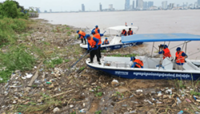
Dozens of recycling factories cropped up in Malaysia, many without an operating licence, and residents complained of environmental damage.
Most of the plastic scrap coming into the country is contaminated and low-quality plastic from developed countries that is non-recyclable.
Now Malaysia has begun sending back the waste to its country of origin, said Yeo Bee Yin, Malaysia's minister of energy, technology, science, climate change and environment.
"Developed countries must be responsible in what they send out," Yeo told Reuters.
She said some of the plastic scrap sent to Malaysia was in violation of the Basel Convention, a U.N. treaty on the trade of plastic waste and its disposal.
Malaysia has already sent five containers of contaminated plastic waste that was smuggled into the country back to its source, Spain, she said. The minister did not identify the smugglers but said an investigation was ongoing.
More non-recyclable plastic will be sent back to its source next week, she said.
Malaysia's imports of plastic waste from its 10 biggest source-countries jumped to 456,000 tonnes between January and July 2018, versus 316,600 tonnes purchased in all of 2017 and 168,500 tonnes in 2016. More recent data is not available.
The United States, Britain, Japan and Australia are among the top exporters of plastic waste to Malaysia.
Plastic unsuitable for recycling is burnt, which releases toxic chemicals into the atmosphere. Or it ends up in landfill, potentially contaminating soil and water sources.
Around 180 countries reached a deal on Friday to amend the Basel Convention to make global trade in plastic waste more transparent and better regulated, while also ensuring that its management is safer for human health and the environment.
The United States, the world's top exporter of plastic waste, has not ratified the 30-year-old pact.
The amendments to the treaty will further limit the flow of plastic scrap to developing countries, said Yeo, who said it was unfair of the developed world to dump their waste on developing countries such as Malaysia.
"The amendment of the Basel Convention is the first step in solving the global problem of unjust rubbish movement from developed to developing countries," Yeo said. - Reuters
Already a subscriber? Log in
Get 20% OFF The Star Digital Access
Cancel anytime. Ad-free. Unlimited access with perks.