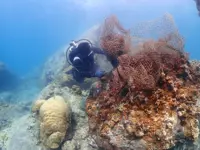
PETALING JAYA: The presence of microplastics in nearly two-thirds of coral samples collected around Pulau Redang is a warning about the wider health of Malaysia’s coral reefs and coastal ecosystems, says Sahabat Alam Malaysia.
Its honorary secretary Mageswari Sangaralingam said the finding was particularly concerning, as a Universiti Malaysia Terengganu study detected microplastics in 64% of 200 coral fragments collected from five sites around the island in Terengganu.
“This finding shows that Malaysia’s coral reefs, even in protected marine parks, are being infiltrated by plastic pollution from coastal development and single-use plastics.
ALSO READ: Cigarette butts top litter in Bayan Lepas beach clean-up
“As such, it should not be viewed as a local, isolated issue but as a warning sign about the wider health of our coral reefs,” she said.
The study, published in the Regional Studies in Marine Science journal, found 285 microplastic particles in the 200 coral samples, with the highest concentration recorded at Long Beach.
Long Beach recorded 1.31 microplastic particles per gramme of coral, followed by Pasir Akar (0.85), Kerengga Besar (0.72), Chagar Hutang (0.54) and Mak Simpan (0.47).
Mageswari said the problem could worsen as coral reefs face additional stress from rising sea temperatures and El Nino-related warming.
“These stressors will weaken the resilience of coral reefs. Bleaching will be more severe, their recovery slower, and the degradation will reduce coral reefs’ capacity to support and sustain marine life,” she said.
The effects would also extend beyond the reefs, particularly to fisheries, tourism and coastal communities that depend on healthy marine ecosystems.
She said many fish species relied on coral reefs for breeding, food and shelter, while healthy reefs also acted as natural breakwaters by absorbing wave energy and reducing coastal erosion.
“If our coral reefs continue to degrade due to plastic pollution and other stressors, our economy will be impacted and coastal communities dependent on reefs for their livelihoods will face economic instability and be more vulnerable to climate-related hazards,” she said.
She proposed a mandatory ban on single-use plastics, backed by stringent enforcement to prevent further plastic pollution from reaching marine ecosystems.
Mageswari also pointed to the Zero Waste Islands Framework developed by the Global Alliance for Incinerator Alternatives.
“The framework provides a roadmap for island communities to strengthen their defences against resource scarcity and climate change.
“It also outlines zero-waste principles to guide planning, implementation and scaling from the local village level, providing a step-by-step approach to support the transition from linear, disposal-based waste systems to circular, community-led and regenerative models.
“This goes beyond collection and recovery to include waste reduction and regeneration,” she added.