
The United States has proposed additional tariffs on 14 economies, including China, just a week after Chinese President Xi Jinping’s meeting with his US counterpart Donald Trump in the southern Chinese city of Shenzhen.
The new tariffs proposed on Wednesday over excess industrial capacity would add to existing 10 or 12.5 per cent duties imposed in July over forced labour, bringing total levies on targeted economies to between 15 and 20 per cent.
China faces tariffs of up to 20 per cent, while rates for the European Union, Japan and South Korea are capped at 15 per cent. Indonesia and Malaysia each face up to 18 per cent, while India would be hit with up to 25 per cent unless it finalises a bilateral trade agreement – which would lower its rate to 17 per cent.
US Trade Representative Jamieson Greer told CNBC that the new duties would exclude goods proposed for tariff cuts under the US-China Board of Trade and are part of the broader trade arrangement with Beijing.
“This is in line with what we have agreed with the Chinese,” Greer said. “If we were to go beyond the 20 per cent or something like that, they would view that as breaking our deal.”
In an email response to the South China Morning Post, the Chinese embassy in Washington said that the issue of industrial overcapacity “does not really exist and should not be used as a pretext for political manipulation”.
“Tariff wars and trade wars serve no one’s interests,” embassy spokesman Liu Chang said.
Officials from the USTR and China’s Ministry of Commerce also co-chaired the first meeting of the newly created Agricultural Working Group under the Board of Trade this week, the US trade office said in a statement.
“Through the Agricultural Working Group, the two sides agreed to continue to strengthen communication, work to address each other’s concerns in the agricultural sector, and contribute to stable US-China agricultural trade relations,” the statement added.
The tariff proposal comes weeks after a sweeping midterm defeat for the Republican Party, with the economic toll of tariffs and the ongoing US war in Iran weighing heavily on voters.
Democrats won both chambers of Congress, claiming 56 seats in the Senate and nearly 260 in the 435-member House of Representatives.
The latest measures, under Section 301 of the 1974 Trade Act, bring China’s additional tariff rate to 20 per cent.
This follows a 12.5 per cent tariff announced in July after another Section 301 investigation into forced labour allegations against China and more than 50 economies.
In August, China’s Ministry of Commerce said that Washington had committed that additional tariffs on Chinese goods would not exceed 20 per cent during their bilateral trade and economic consultations.
Analysts said China had factored the tariffs into its calculations even as it had diversified its trade away from the United States and seen trade diverted through third countries.
“China just isn’t fussed by the 301 tariffs – and is instead far more focused on ensuring that Trump keeps his military sales package to Taiwan on hold for the foreseeable future,” said Andrew Bishop, policy research head with Signum Global, an advisory firm.
“China likely decided long ago that, having to pick its battles, tariffs at their post-de-escalation levels would not be a priority.”
People familiar with the issue said the new tariffs would not adversely affect the next meeting between Xi and Trump on the sidelines of the Group of 20 summit in Miami next month.
Beijing is also unlikely to respond with countermeasures, repeating its response to the July tariffs of condemning the move without taking further action.
The US measures are also unlikely to threaten the Busan agreement reached in October last year after months of escalating tensions marked by high tariffs and China’s export restrictions on rare earths.
The deal was extended by two months during Xi’s visit in September and talks over a further extension are ongoing.
The two sides reached a one-year arrangement in the South Korean city, under which Washington agreed to lower certain tariffs and suspend additional export controls in exchange for continued flows of critical minerals from China and agricultural purchases from the US.
China currently faces an effective tariff rate of around 20-25 per cent, reflecting the temporary trade truce reached in November 2025, and the impact of the US Supreme Court’s ruling in February.
“I expect the ultimate tariff rate to land right at 20 per cent on China, so 7.5 per cent hits that mark,” said Henrietta Treyz, economic policy director with trade consultancy Veda Partners.
The Trump administration resorted to Section 301 probes as an alternative route to maintaining tariff pressure after the US Supreme Court ruled that Trump’s expansive tariffs imposed under the International Emergency Economic Powers Act were unconstitutional.
The move allowed Washington to pursue new tariffs through a separate legal authority while the administration sought to preserve its broader trade agenda.
After the court’s verdict, the administration also imposed a sweeping 10 per cent tariff under Section 122, which expired in July.
Treyz said that a decision has been rumoured for some time, but the administration found itself in a bit of a bind, the price of pursuing forceful policies on so many fronts against so many parties.
“The hold-up is obviously the simultaneous trial and tribulation of the quagmire the US finds itself in with Iran,” she said.
If US Treasury Secretary Scott Bessent is serious about his recent threat to impose sanctions on third parties under Operation Economic Outcast, which is designed to squeeze Iran economically, he would have to further sanction China, which has been buying most of Iran’s oil.
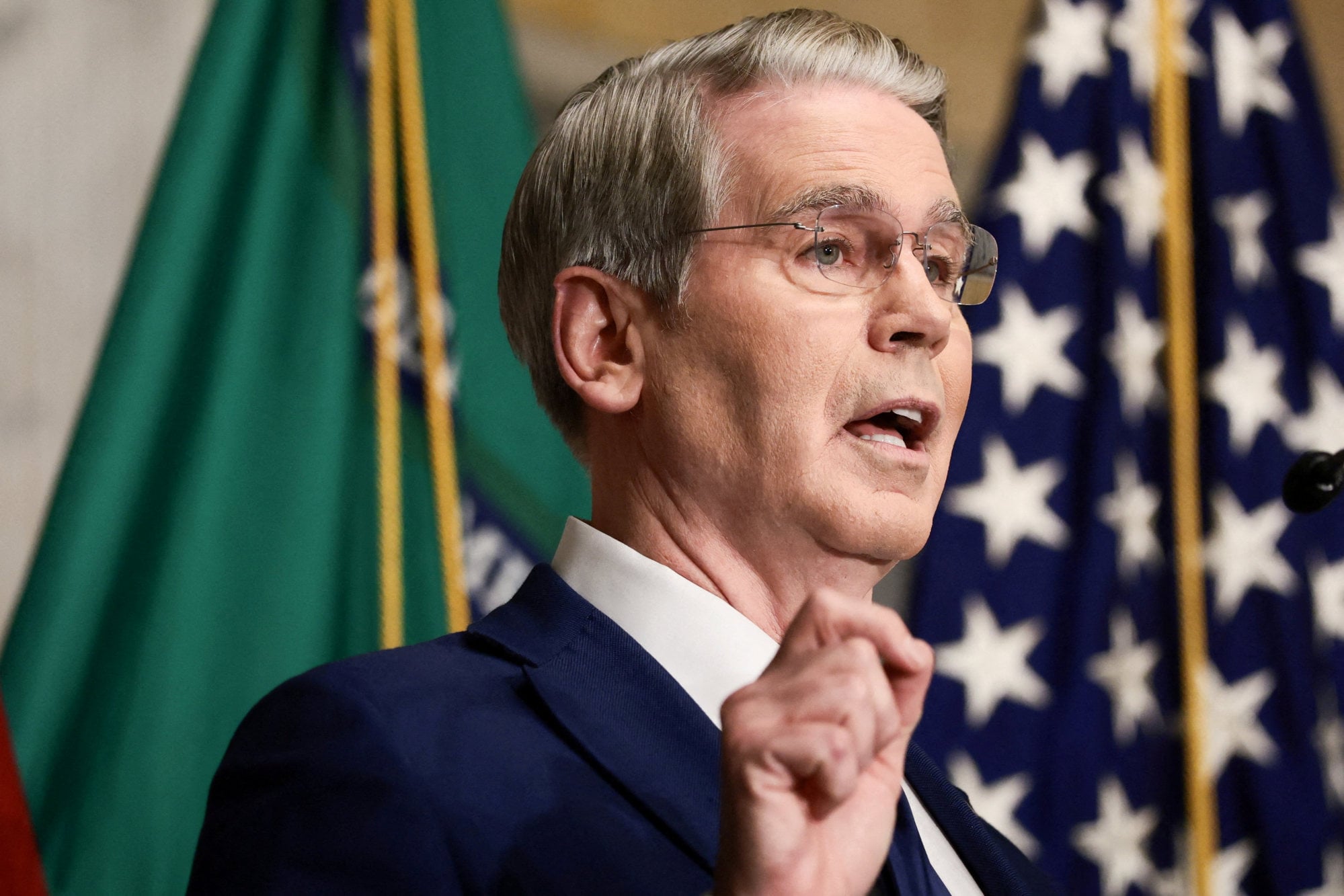
But heaping more pressure on China to comply would be difficult if the 7.5 per cent tariff is imposed under Section 301 and Washington still wants to keep within the 20 per cent ceiling negotiated in Busan.
Developing Section 301 trade war creating more uncertainty
Ashley Kalyn, an international trade analyst with Peacock Tariff Consulting, said the unfolding Section 301 trade war with Canada and the Iran war had left clients spinning with yet more uncertainty, a common pattern over the past 18 months.
Kalyn said the administration was testing various trade provisions, including Section 301 and Section 338, which have not been used since 1930, to determine which could withstand legal challenges before applying them more broadly.
Trump has proudly referred to himself as “tariff man”.
“This is a new tactic used just to see where the limits are, like what goes through, what works,” Kalyn said. “To see what sticks and then what sticks can be applied to other countries and other ongoing trade.”
The USTR’s actions aimed at China were the latest addition to a long list of steps, including tariffs, tit-for-tat export controls and the sanctioning and blacklisting of companies on both sides.
Despite the constant friction, the two sides have agreed to a trade mechanism to manage disputes and keep the confrontation below the threshold of escalation that could threaten the fragile truce.
Alongside the new tariffs, the newly created Board of Trade was launched in September, with both sides announcing lists of non-sensitive products worth up to US$30 billion each that would be eligible for tariff reductions.
The White House released tariff-reduction lists covering 77 categories of Chinese imports into the US and 1,619 US products headed for China.
The US import list covered a range of consumer goods, including microwave ovens, electric irons, Christmas ornaments and toys. China’s list focused mainly on agricultural products such as beef and vegetables, as well as coal, timber and medical devices including hearing aids and pacemakers. -- SOUTH CHINA MORNING POST