
The United States is quietly transforming Subic Bay in the Philippines back into an “unbranded military base” that could support US operations in both the South China Sea and the Taiwan Strait, according to a Chinese think tank.
In a report released on Wednesday, researchers from the National Institute for South China Sea Studies said the US was rebuilding a network of facilities at the strategic port, ranging from military logistics, fuel storage and ship repair to weapons stockpiles and unmanned systems.
The researchers said Washington was using commercial leases, infrastructure investments, military assistance and rotational deployments to deepen its presence at Subic Bay while avoiding the political and legal obstacles associated with establishing a formal foreign military base in the Philippines.
It comes more than three decades after US forces withdrew from Subic Bay – one of America’s largest overseas bases during the Cold War – in 1992.
Subic Bay, on the southwestern coast of Luzon, is positioned at a strategic junction of the “first island chain” between the South China Sea and the Bashi Channel leading to Taiwan.
“Washington aims to establish this site as a forward hub underpinning the strategic linkage between the Taiwan Strait and the South China Sea,” the report said.
“In peacetime, it serves as an observation post for monitoring the South China Sea; in wartime, it functions as a logistics depot for force projection towards the Taiwan Strait.”
The warning comes amid heightened military tensions in the area. On Saturday, a Chinese H-6 bomber flew within 45 nautical miles (83km) of the western coast of Luzon, according to the Philippine military.
The H-6’s flight path, provided by an open-source aircraft tracking site, placed it directly off the approaches to Subic Bay and nearby air facilities.
In the report, the researchers warned that the growing American presence at Subic Bay could integrate Philippine forces into the US military’s regional operational framework. They said the development reflected a broader shift by the Philippines towards external defence, including the expansion of its missile and unmanned systems capabilities and closer military reliance on the US.
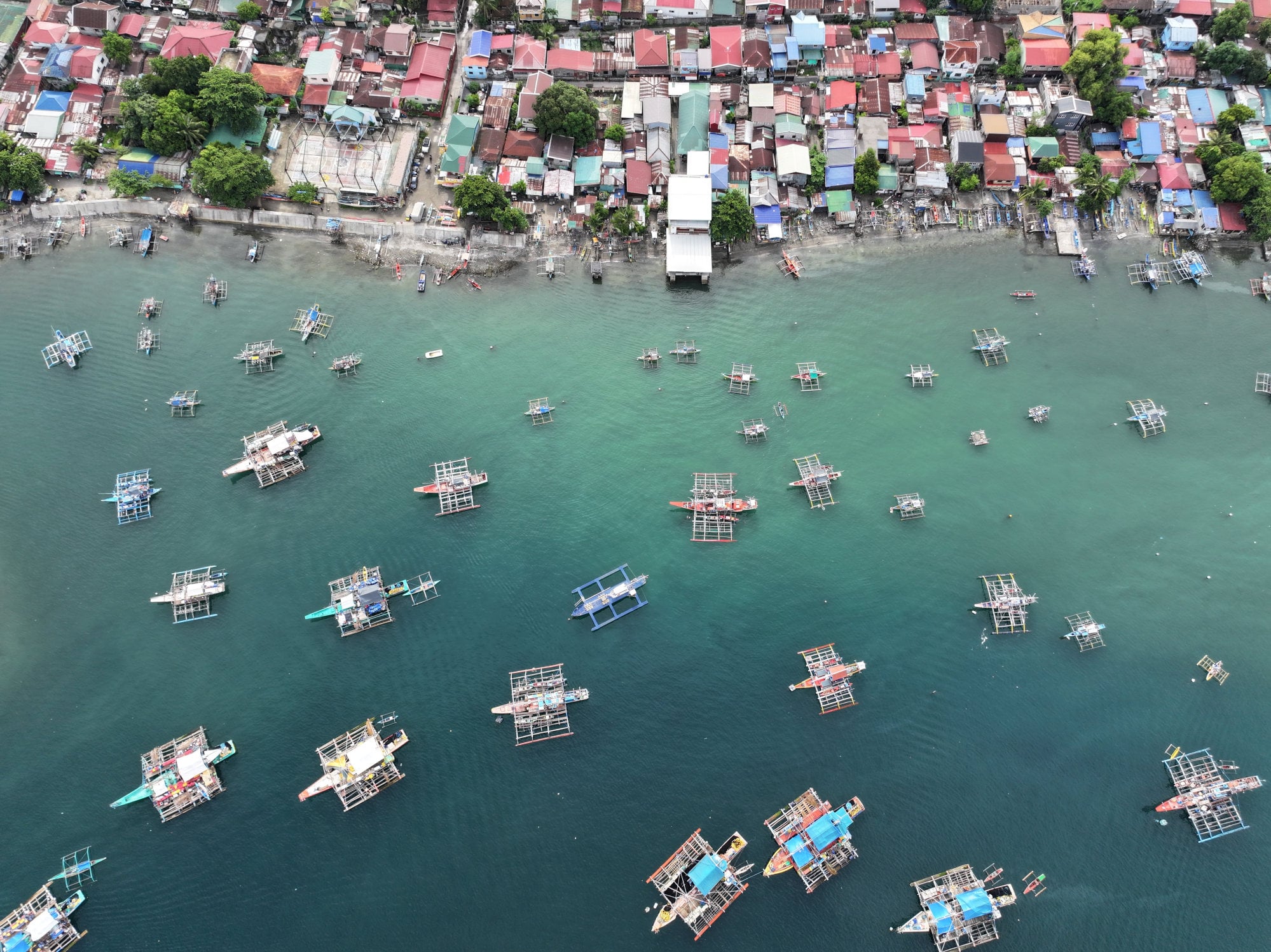
The researchers tracked a series of US-related military and logistics activities in Subic Bay in the second half of 2026.
The most recent development was a US$40 million dual-use fuel storage depot at Subic Bay to be constructed by a US firm, which was announced by the White House last week during President Donald Trump’s visit to Manila. That followed his proposal to establish what he described as the “world’s largest” munitions production and storage facility at the site.
In July, US Secretary of State Marco Rubio announced more than US$100 million to support upgrades of port infrastructure and fuel facilities at Subic Bay during a visit to Manila. The US Trade and Development Agency has also supported efforts to expand ship repair capacity, including additional berths and dry-dock facilities.
Noticeable US military deployments include the rotation of six US Coast Guard Sentinel-class patrol vessels to Subic Bay in July and the transfers of US-made unmanned vessels to the Philippine military – four in June and two T38s earlier this month.
The researchers noted the US would face constitutional restrictions and potentially public opposition if it tried to set up a permanent foreign military base in the Philippines.
But they said this approach used commercial leases, private equity acquisitions, executive agreements and dual-use infrastructure aid to sidestep these obstacles.
They concluded that the US was seeking to revive the facility’s wartime functions.
“Legally, everything appears temporary and civilian; functionally, it is indistinguishable from a military base,” according to the report. -- SOUTH CHINA MORNING POST