
Contractors, subcontractors, consultants and professionals linked to a scandal involving defective lifts at Queen Mary Hospital may have committed illegal acts, Hong Kong authorities have said, while also acknowledging shortcomings in two government departments.
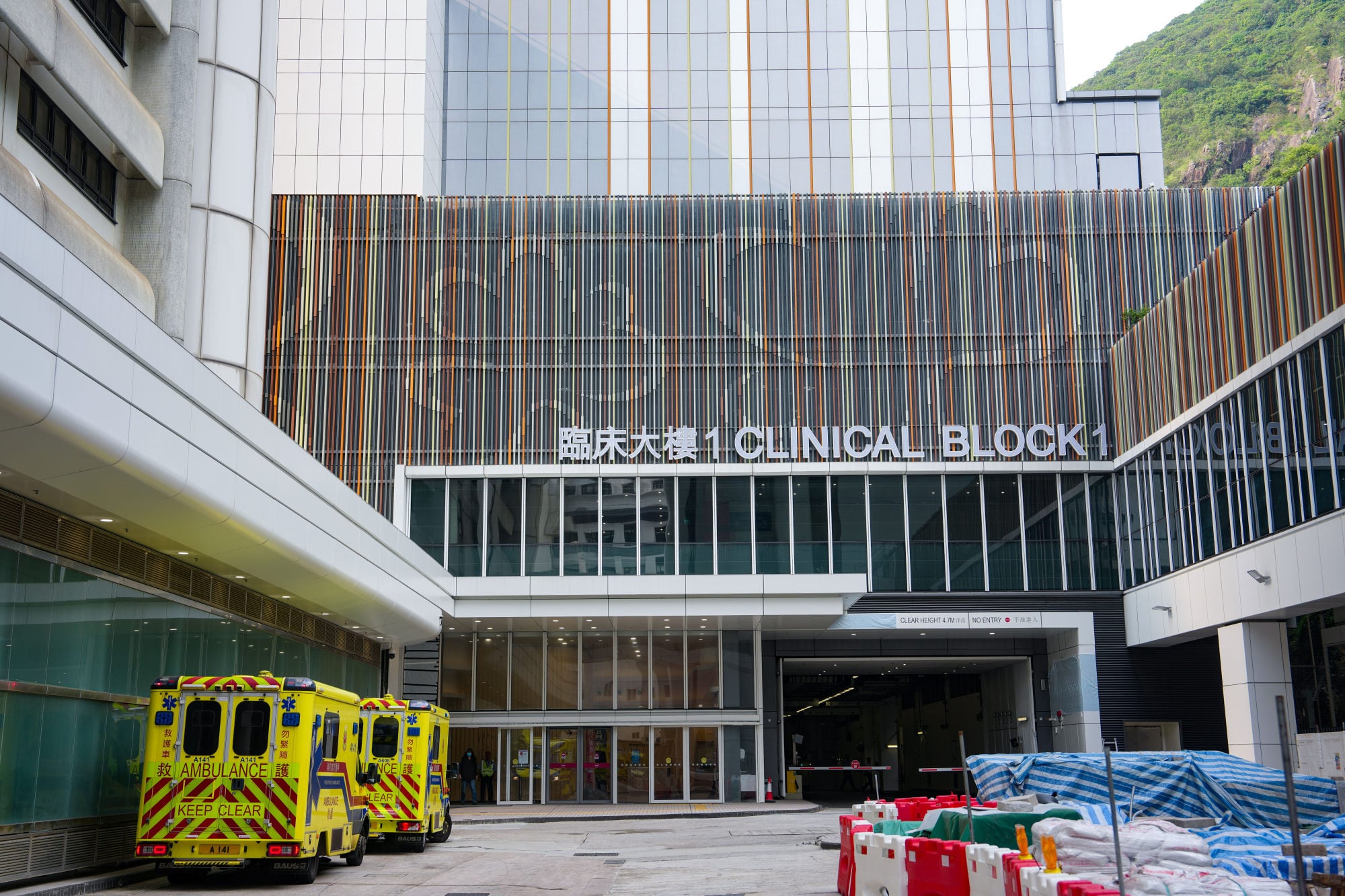
The Development Bureau on Thursday released the findings of an investigation into the installation of lifts in a new clinical block at the public hospital in Pok Fu Lam.
The probe identified shortcomings in the Architectural Services Department (ASD) and the Electrical and Mechanical Services Department, including a failure to thoroughly investigate and follow up on irregularities.
The findings also highlighted the need to reform the departments’ systems for the issuance of lift permits.
“It was discovered during the investigation that the incident may involve other illegal acts. We have referred the matter to the relevant law enforcement agencies for further investigation,” the bureau said in a paper submitted to the Legislative Council.
“The ASD failed to strictly check against the mandatory works checklist in accordance with internal guidelines and issued the certificate of completion while some lifts had yet to obtain the use permit.
“The performance of the relevant Architectural Services Department staff was unsatisfactory.”
The report singled out the lift subcontractor, Anlev Elex Elevator, which failed to install guide rails and lift cars in accordance with the design specifications. Unsatisfactory workmanship affected the stability of the lift cars while operating, it said.
The registered lift engineer that Anlev had engaged also failed to conduct a thorough examination before issuing the safety certificate as stipulated by the Lifts and Escalators Ordinance.
The report also said that the inspection, testing and approval plan submitted by contractor Able Engineering for the lift installation works failed to cover the inspection of the dimensions and verticality of lift shafts as required.
The bureau said the Electrical and Mechanical Services Department’s vetting system was flawed and its operational procedures needed to be reviewed and reformed after it issued lift-use permits for firms embroiled in two scandals.
Meanwhile, the Architectural Services Department is liaising with the Civil Service Bureau to discuss arrangements for initiating disciplinary proceedings.
The Development Bureau said the Electrical and Mechanical Services Department should issue advisory letters to the relevant staff pointing out areas for improvement and reflect this appropriately in their performance appraisal reports.
In addition to the Queen Mary Hospital case, the other scandal involved the firm Taizoom Elevator, which is suspected of criminal misconduct in projects where fire- and smoke-resistant components were missing from lift door frames.
The Queen Mary Hospital debacle came to light in July, after 24 out of 28 lifts installed in its new HK$13.5 billion clinical block were found to be defective, delaying the launch of services.
The report said the main reasons for the lifts malfunctioning were deviations in the verticality of lift guide rails across different floors and the lift shaft walls, an unbalanced centre of gravity in the lift cars and unsatisfactory workmanship.
The South China Morning Post earlier reported that Tuesday Li Pak-yee, a chief project manager at the Architectural Services Department who oversaw the development at the hospital, left her directorate pay-level post in August.
Soon after the scandal broke, authorities found that lifts installed by contractor Taizoom in 186 buildings lacked crucial components to prevent flames and smoke from entering the lift shaft in the event of a fire.
Legco is due to discuss the Taizoom and the hospital scandals on Friday.
Former lawmaker Michael Tien Puk-sun said the greatest damage at Queen Mary Hospital was not merely financial, as no amount of money could compensate patients and members of the public who had waited a full year to use urgently needed facilities. The situation warranted suing for damages, he added.
“The government should also sue the contractors, subcontractors or consultants involved to recover the losses,” he said.
Tien added that it was also completely unreasonable for department heads to evade responsibility simply by claiming their subordinates failed to tell them about operational mistakes or regulatory lapses. -- SOUTH CHINA MORNING POST