




Hong Kong authorities have no plans to adjust talent-hunting schemes or cap the number of non-local graduates permitted to seek employment in the city, the labour chief has said, pointing to a rapidly ageing population and persistent manpower shortages across pillar industries.
But lawmakers representing workers said that local university graduates were finding it hard to secure jobs, particularly those without a background in innovation and technology (I&T), and faced keen competition from both Hongkongers and non-locals.
Secretary for Labour and Welfare Chris Sun Yuk-han told the legislature on Wednesday that the city’s policy of trawling for and retaining talent was driven by the peak in its working population in 2018 and an ageing demographic shrinking the workforce.
He argued that Hong Kong still needed to import talent.
“Of course, we understand that the implementation of these policies has room for improvement, and we take a look from time to time ... but at the moment we do not see that there is a need for drastic adjustment,” Sun said.
When the government launched a major drive to “trawl for talent”, starting with Chief Executive John Lee Ka-chiu’s 2022 policy address, Hong Kong was facing an emigration wave, pandemic-related restrictions and a rapidly ageing population.
Authorities rolled out new pathways and revamped existing schemes, including the launch of the Top Talent Pass Scheme, allowing eligible individuals to secure a visa without first having a job offer in the city. Most visa holders under the scheme came from mainland China.
Sun said that more than 320,000 talented people had moved to Hong Kong from across the world under the city’s talent admission schemes.
He argued that local graduates enjoyed a “natural advantage” when seeking jobs and remained the core of the city’s workforce.
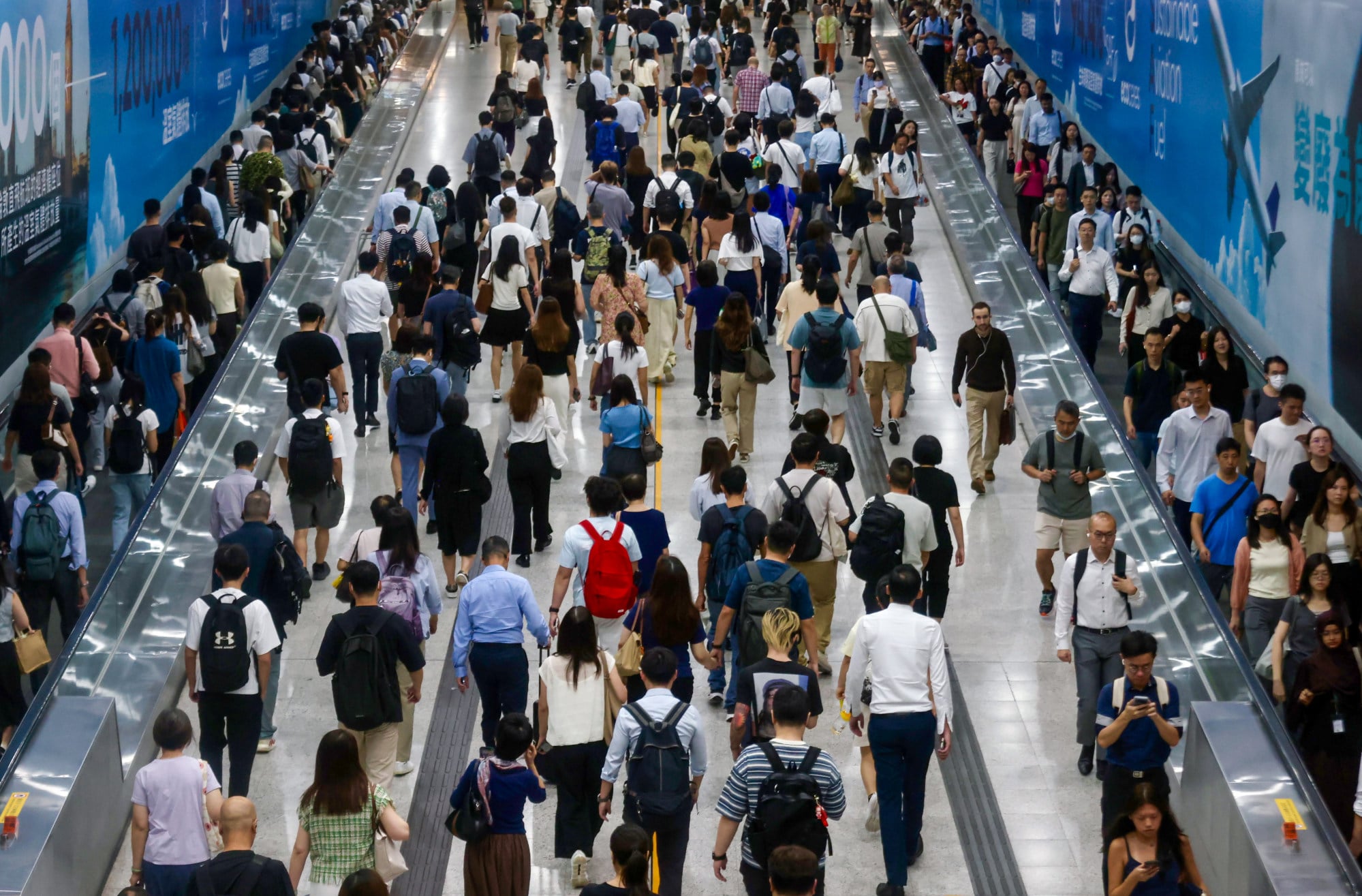
Lawmaker Lam Wai-kong, of the Hong Kong Federation of Trade Unions (FTU), questioned whether the government had any projections or strategic plans to cap admissions and prevent an over-importation of talent that could damage local employment priority.
Bill Tang Ka-piu, another FTU lawmaker, said that about 25,000 non-local graduates had come to Hong Kong to study and remained in the city to seek jobs under the Immigration Arrangements for Non-local Graduates (IANG) scheme.
Such a large number of graduates had created difficulties for their local counterparts, particularly those without I&T expertise, Tang added.
“These 25,000 non-local graduates do not all have a background in innovation and technology, and they will add more difficulties for local graduates to find jobs,” he said, questioning the authorities on whether there would be a cap on the scheme.
Sun said that the scheme gave non-local graduates two years to seek work in Hong Kong and that their visas would only be renewed if they were employed.
He argued that the largest part of the employment market in Hong Kong was not I&T, but business, commerce and professional services, which still required substantial manpower to drive the economy.
“If we only rely on our local graduates to work in these industries, our workforce is far from enough to support Hong Kong’s economic development,” he said.
The authorities also said that they were discussing manpower training with Hong Kong’s universities.
According to Sun, the government had started preparations for the 2028-29 to 2030-31 triennial planning exercise with public universities, with a keen focus on talent cultivation and manpower trends in technological and industrial development.
“It is to strengthen the alignment between the knowledge and skills of the younger generation and Hong Kong’s future economic and social development,” he said. -- SOUTH CHINA MORNING POST


