
China’s energy security, now buttressed by internal resilience, has withstood a difficult test from the protracted war in the Middle East, says the head of a global energy industry body.
“China has domestic production, it has developed a diversification policy and there is also the possibility to switch around different types of energy,” Andrea Stegher, president of the International Gas Union (IGU), told the South China Morning Post on Tuesday.
Stegher said the world’s second-largest economy had energy supply chains more complete than some others, with Beijing balancing a combination of domestic and overseas sources.
“China’s domestic [natural gas] production is more than double Norway’s, and we consider Norway from the European standpoint being very large ... China also has [natural gas] pipelines coming from Central Asia, like from Turkmenistan,” he explained.
The chief of the London-based IGU is in Hong Kong for a sustainability summit co-hosted by the city’s gas utility firm Hong Kong and China Gas Company (Towngas), an event set to bring policymakers and experts together to discuss, among other topics, geopolitics, energy price volatility and the natural gas market in China.
Stegher highlighted the headway China had made in promoting natural gas production and the capacity it had built, which helped cushion the effects of the upheavals in the Middle East.
“China has been developing underground gas storage capacity in recent years, which provides security and flexibility. That’s also adding to the picture [of stable supplies in the country],” he said, adding that it may serve as a model for other major economies.
In 2025, China added 6 billion cubic metres (212 billion cubic feet) of working gas storage capacity making it the 6th largest holder of gas storage globally. Still, it lagged the United States and Russia, according to IGU data.
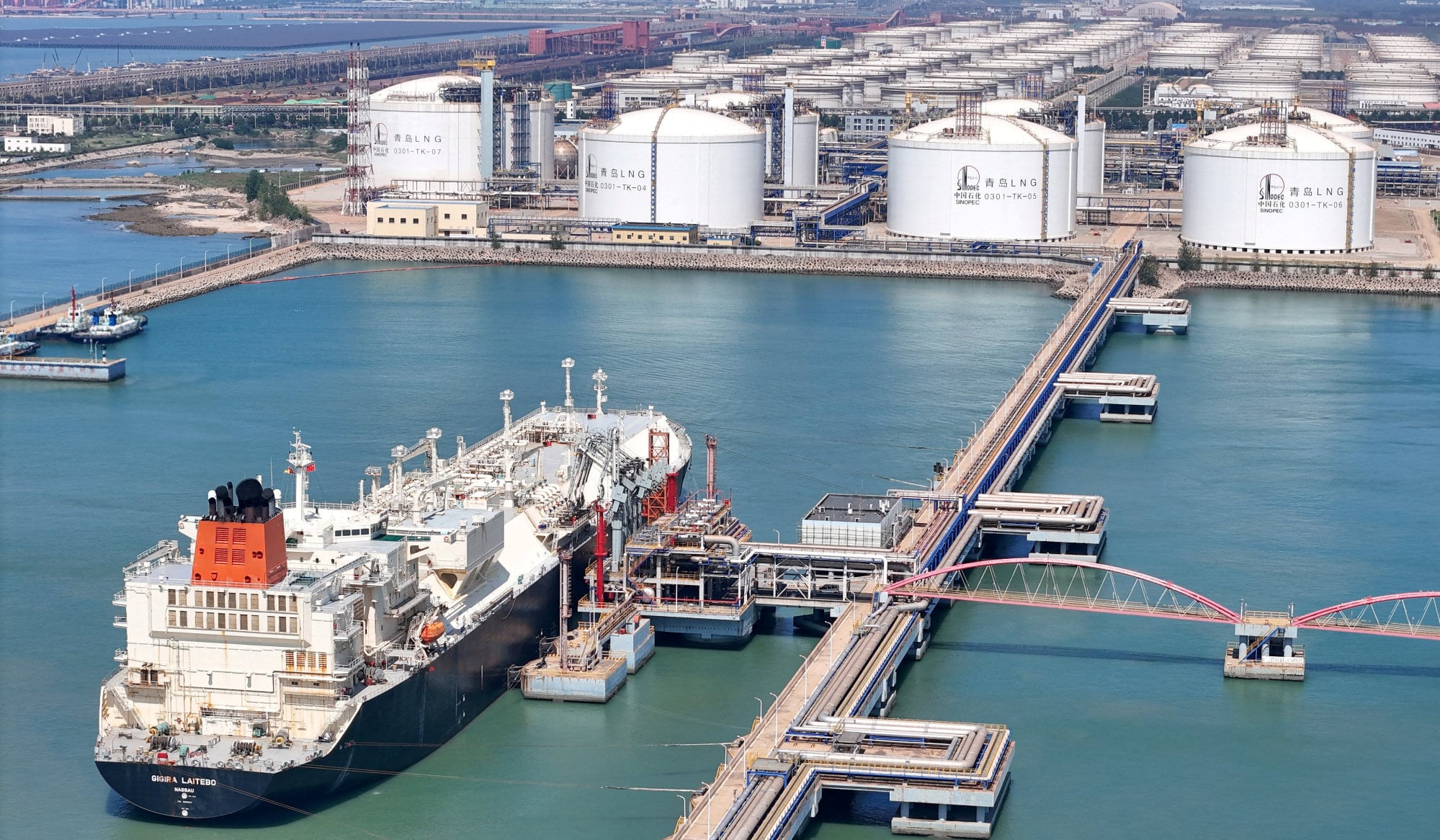
This year’s Global Gas Report by the IGU also said that when geopolitical disruptions and tight supply were persistent, increased domestic production in China – and the US – played a “vital stabilising role” in offsetting shortfalls elsewhere in the market.
The report noted that China was shifting from a major “demand variable” towards a stabiliser, and that stronger domestic production and pipeline imports, notably from Russia, displaced some imports and offset other supply pressures, like the Strait of Hormuz disruptions.
But Stegher urged China to accelerate decarbonisation amid the coal-to-gas paradigm shift.
“[In regard to China’s] energy mix, maybe there is something else to be done on reducing coal.”
China, still the world’s largest emitter of greenhouse gases, has set a goal to peak carbon emissions by 2030 as it aims to transition towards carbon neutrality by 2060.
At the same forum on Tuesday, Peter Wong Wai-yee, managing director of Towngas, also highlighted the expanding clusters of natural gas exploration, as well as LNG receiving and storage facilities in mainland China.
“China boasts three big gas reserves: Xinjiang, Inner Mongolia and Sichuan, each with [a] very large quantity [ensuring domestic production]. On top of these, long pipelines from Russia, Central Asia and even Myanmar keep extending.
“Then, if you look along China’s coast, LNG receiving terminals dot the coastline. We have natural gas coming from Indonesia, Australia and, of course, some from the Middle East,” Wong said. -- SOUTH CHINA MORNING POST