
A Chinese research team has proposed four types of equipment that could rapidly switch between wartime environments, including operating deep under water for long periods, as multi-domain combat is set to develop in the coming decades.
The “heterogeneous” equipment is designed to exceed conventional armoured vehicles by rapidly reconfiguring physical modules and functions within seconds for missions across land, water, air and electromagnetic contest grounds, according to the scientists.
The researchers said their designs had advanced towards engineering application and “combat-oriented validation” after prototypes and field tests proved their feasibility.
A paper written by researchers from the Inner Mongolia First Machinery Group – a company involved in China’s tank and armoured vehicle development – and the Beijing Institute of Technology, was published by the peer-reviewed Chinese journal Acta Armamentarii on August 6.
The study places the concept within the projected development of armoured vehicles between 2030 and 2050, when the researchers expect military operations will require closer coordination between platforms and systems across multiple domains.
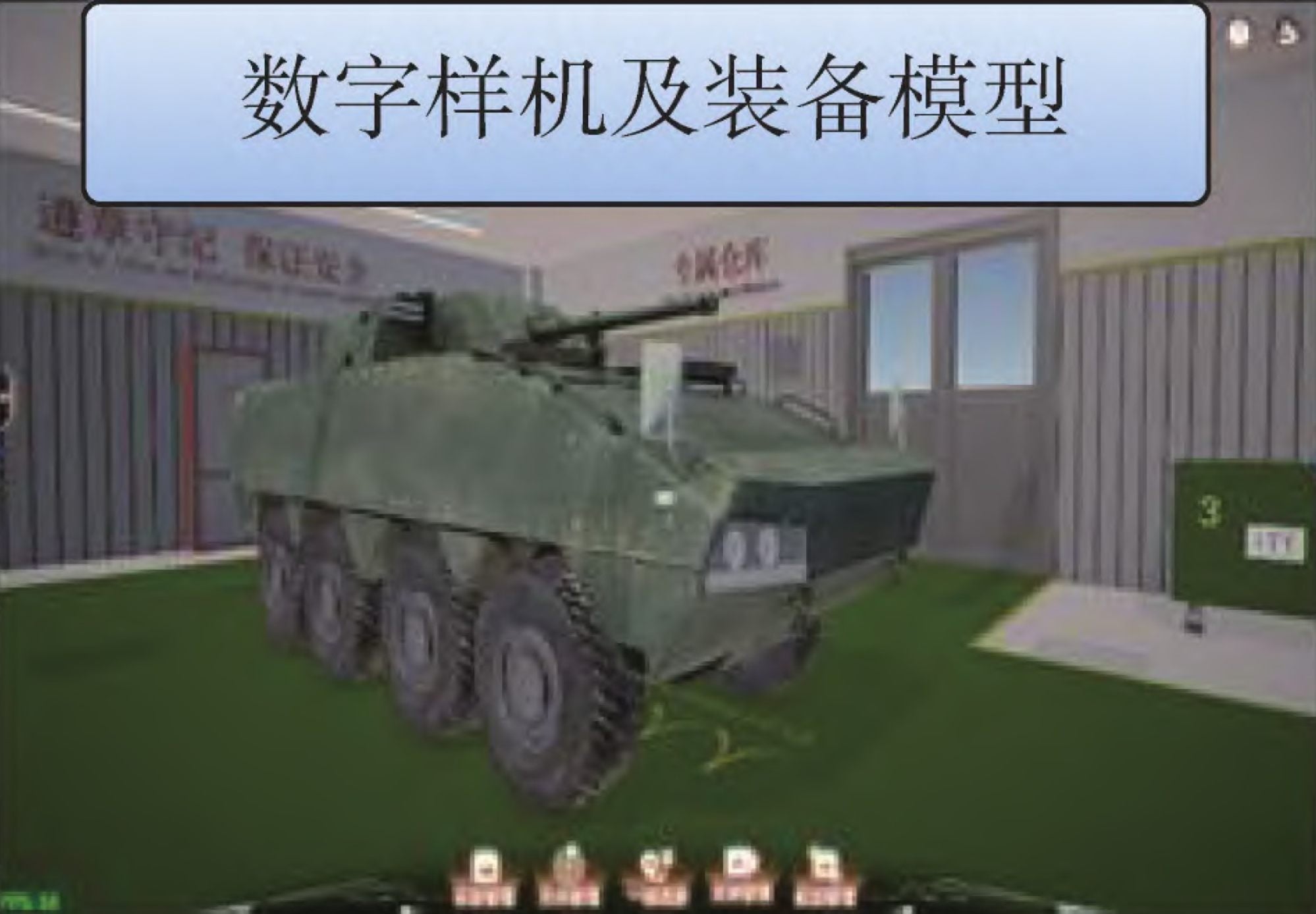
The research reflects a broader vision of future armoured warfare in which vehicles can adapt more quickly to changing threats and coordinate with systems such as drones.
The authors argue that conventional armoured vehicles, whose capabilities are tied to fixed physical modules, could take more than 45 seconds to transition from reconnaissance to striking a target.
They also said that conventional vehicles’ effectiveness in intercepting multiple targets could fall from 89 per cent to 38.6 per cent in a 10-second drone attack.
For vehicles built around their new approach, the researchers set a target of reducing the observe-orient-decide-act (OODA) decision cycle to 9 seconds, which they described as a fivefold improvement over current performance.
The design also aimed to keep fluctuations in the power supplied to high-energy payloads within plus or minus 3 per cent, while allowing different vehicle configurations to be tailored to specific missions.
In tests, the team reported an average module-connection time of 8.7 seconds and a success rate of 98.3 per cent across 1,000 trials conducted at temperatures ranging from 50 degrees Celsius to minus 20 (122 to minus 4 Fahrenheit) under strong electromagnetic interference and in muddy terrain.
Among the capabilities, the researchers proposed a dedicated water module capable of operating under water up to 50 metres (164 feet) deep for two hours, with the transition between operating environments designed to take as little as 12 minutes.
However, their tests did not establish underwater performance and the paper did not provide underwater speed or range figures.
The concept is intended to give armoured units greater flexibility in amphibious operations, allowing a vehicle to approach through water before switching to its land configuration for operations ashore.
The researchers proposed combining underwater manoeuvres with drone-assisted obstacle clearance, projecting that the system could clear 30 obstacles per minute and reduce the time required for a landing operation by 60 per cent.
The land-based core module could reach speeds of at least 70km/h (43mph) on roads and 40km/h off-road, with a range of at least 600km (373 miles) using hybrid power, according to the paper.
The authors said the concept could improve performance across five key areas compared with existing modular armoured vehicles, such as Germany’s Boxer, estimating it would cut whole-life costs by around 40 per cent.
The South China Morning Post has contacted corresponding author Ren Xuan for comment. -- SOUTH CHINA MORNING POST