




Washington’s policy towards Taiwan is increasingly tied to its relationship with Beijing, according to former American officials who also warn that the war on Iran is weakening US military readiness for a potential conflict in the Taiwan Strait.
During a fireside chat in an annual symposium hosted by the Global Taiwan Institute in Washington on Wednesday, Brent Christensen, former director of the Taipei Office of the American Institute in Taiwan (AIT), said Washington’s policy towards the self-ruled island had seen a “discontinuity”, becoming “less independent” from its China policy in the current administration.
Christensen said that while the security relationship between the US and Taiwan remained “very robust”, there was “a huge increase in US demands for burden sharing, or for Taiwan to do more of its own production of weapon systems and increase defence spending”.
He also said there was a big increase in demand for Taiwan’s hi-tech investment in the United States.
Building on Christensen’s argument, Laura Rosenberger, a prominent China hawk who served at the National Security Council in former president Joe Biden’s administration and was chairwoman of the AIT under Biden, said she was “concerned” about the characterisation of arms sales as a “negotiating chip” with Beijing, indicating a “fundamental departure” from traditional US policy framework on Taiwan.
“I think it’s a very problematic one, and particularly because it’s not just been a rhetorical one but one where we have seen a US$14 billion arms sale that was pre-notified to Congress not move forward,” Rosenberger said, adding there was no sign the sale would progress, which “is a deep concern”.
“It is a question of a broader range of support for the security relationship.”
The officials’ remarks contrasted with earlier remarks by Taiwan’s envoy to the US, Alexander Yui Tah-ray, who said Washington had made clear there was no change in its position on Taiwan and that US-Taiwan relations remained “robust”.
The remarks came after recent summits between US President Donald Trump and Chinese President Xi Jinping, where the issue of Taiwan remained a point of friction between the two leaders.
During the summit with Trump in Washington last month, Xi reiterated hopes that the US would oppose “Taiwan independence”, urging the US to handle the Taiwan issue with caution.
Beijing sees Taiwan as part of China to be reunited, by force if necessary. Most countries, including the US, do not recognise the self-ruled island as independent, but Washington is opposed to any use of force in the strait and it is committed to supplying it with arms.
Under the Six Assurances – six foreign policy guidelines given by the US to Taiwan in July 1982 – Washington has pledged not to consult Beijing before deciding on arms sales to Taipei.
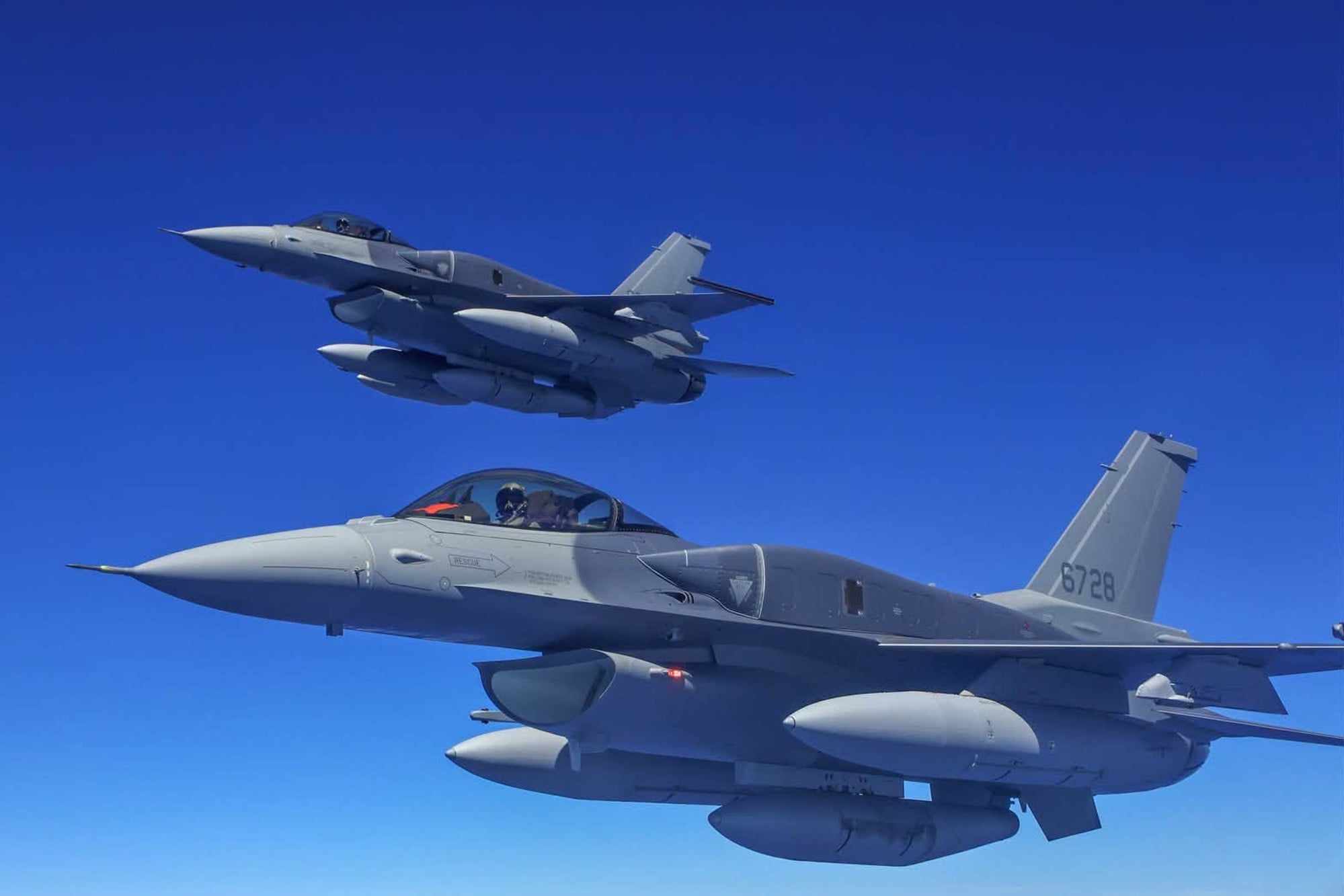
Even though Washington has reiterated that the broader US policy towards Taiwan remains unchanged and it transferred two F-16V fighter jets – approved during Trump’s first term – to the island after the September summit, the second Trump administration has indicated a highly transactional and leverage-focused approach to Taiwan compared with previous administrations.
In May, Trump cited the US$14 billion weapons package as a “very good negotiating chip” to help maintain a trade truce, holding up its approval.
The administration earlier announced a separate US$11 billion arms sale to Taiwan in December, which drew a strong reaction from Beijing.
Trump has also called on Taiwan and Indo-Pacific allies to share the defence burden in the region, pressuring them to increase their military spending in the face of potential armed conflict with Beijing in the Taiwan Strait.
Mark Montgomery, who served as commander of Carrier Strike Group 5 aboard the USS George Washington, whose homeport is in Japan, told the symposium session the US had “not been in a weaker position in the western Pacific” than now.
He said the US war in Iran created Beijing’s possible “illusions” of military action against Taiwan, as the US diverted its carrier strike groups from the Indo-Pacific to the Middle East.
According to Montgomery, there are no US destroyers or aircraft carriers actively operating in the western Pacific, as the USS Abraham Lincoln and USS George Washington – which were both scheduled to be deployed in the Indo-Pacific this year – had been sent to the Middle East.
He said it could eventually create a “readiness bathtub”, or steep decline in available combat forces, for 18 months and beyond, causing US Navy and Air Force readiness in the region to “fall off a cliff”.
“The longer we do this mission, the deeper the trough,” Montgomery said.
“If we’re there till next June, or between next March and next June, that’s my guess on this extra deployment, this is going to impact us through late 2028, through 2029, 2030. So that’s the first big problem.”
In addition to moving its carriers, the US has transferred critical munitions, missile defence systems and military assets from the Indo-Pacific theatre to the Middle East to support operations and replenish stockpiles amid the ongoing conflict with Iran, where Montgomery said the US had “grossly insufficient numbers”.
He said that beyond military implications, Taiwan remained significant for its production of the semiconductors needed for advanced US weapons, such as its fighter jets.
He said Beijing should learn from the ongoing wars in Iran and Ukraine that large-scale offensive operations were difficult, and that any armed confrontation harming Taiwan’s semiconductor industry could “destroy” the world economy and be a major loss for mainland China.
“This president [Trump] fundamentally does not understand the value of Taiwan,” Montgomery said.
“We absolutely want Taiwan to be successful. We need it to be successful, and we need it to not be coerced by China.” -- SOUTH CHINA MORNING POST



