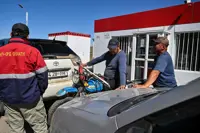
ULAANBAATAR: Motorists abandoned their cars and marched through central Ulaanbaatar to protest Mongolia’s worsening fuel shortage, as hours-long lines at filling stations add to public anger over rising prices.
The demonstrations near parliament underscore growing frustration over a supply crunch that has forced the landlocked nation to seek additional fuel from Russia, China and South Korea.
Mongolia is heavily reliant on energy imports from neighbouring Russia as disruptions at refineries contribute to short supply. In recent years, fuel shortages stemming from geopolitical tensions including Russia’s war with Ukraine have prompted the nation to turn to its other neighbouring giant, China, for assistance.
"The shortages and panic we’ve been witnessing are real, but the cause is more structural than a single supply shock,” said Telmen Altanshagai, an independent researcher based in Ulaanbaatar.
While fuel stations have lifted fuel rationing, wait times remain long at pumps in Ulaanbaatar.
Telmen said government statements show fuel demand rising about 14 per cent annually, with peak consumption in the summer due to activity related to agriculture, tourism and mining. The Naadam summer festival that sees Mongolians travel far and wide in a country roughly the size of Alaska to watch horse racing, archery and wrestling has also contributed to the added demand.
Fuel imports into Mongolia have steadily declined since April, according to data from the Bank of Mongolia, reaching a low for the year in July as they fell by a quarter from a year ago.
The central bank in August raised its benchmark policy rate by half a percentage point to 12.5 per cent, citing rising food and fuel prices. It noted that geopolitical tensions have heightened uncertainty for the East Asian country’s fuel supply. It held its settings steady last month.
Mongolia’s Ministry of Mining and Heavy Industry has promised more shipments of fuel to end the fuel crunch after the minister negotiated more imports from Russia, as well as China and South Korea.
Earlier this year, leaders signed agreements with nearby Kazakhstan to diversify its supply of fuel imports including diesel, which is used for the mining industry that drove about 21 per cent of GDP growth last year.
To ease citizens’ frustrations, Ulaanbaatar has made importing more AI-92 fuel for motorists a prime target. Russia has committed 25,000 tonnes of additional fuel while Mongolia has asked China to supply 71,000 tonnes of petroleum products a month.
"This was the hardest shortage” compared to previous years’ fuel rationing, said Galbadrakh Sosorbaram, who works as a driver in Ulaanbaatar. Fuel stations were limiting sales to 50,000 tugrik (US$13.92) per motorist.
At its worst this month, Galbadrakh said, wait times lasted up to eight hours. Some customers slept outside fuel stations overnight in their cars to be one of the first customers when they opened.
"As long as Russia has problems, we expect shortages,” he said. - Bloomberg