




The leadership change in Okinawa could deal a quiet blow to Beijing’s attempts to leverage local opposition to remilitarisation and the US-Japan military alliance, according to analysts.
They added that the shift would compel Chinese academics and state media to recalibrate their messaging and approach towards the strategically vital Japanese prefecture.
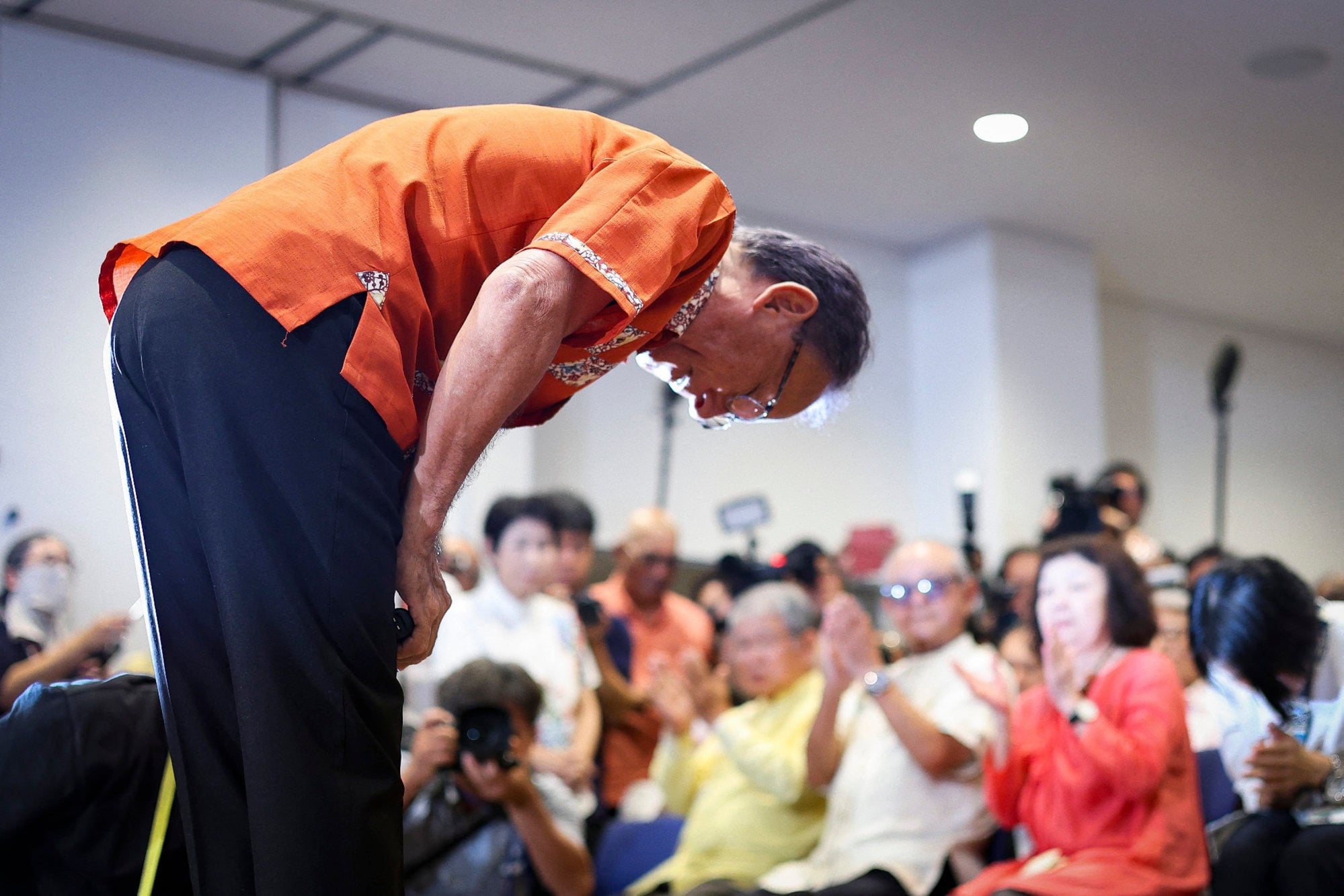
Genta Koja, the 42-year-old backed by Japan’s ruling Liberal Democratic Party to become Okinawa’s new governor, defeated incumbent Denny Tamaki on Sunday. This brought an end to eight years of Tamaki’s leadership, characterised by vocal pacifism and active regional diplomacy with Chinese cities that historically maintained ties with Okinawa.
For Beijing, which has long cultivated relationships with Okinawan leaders who challenge Tokyo’s defence policies, Koja’s win represents the loss of a sympathetic subnational partner.
Analysts said the election result served as a reality check for China’s external messaging, requiring it to adjust its approach towards Okinawan voters who were prioritising bread-and-butter issues over opposition to American military bases.
Okinawa prefecture is made up of around 40 inhabited islands and has a population of 1.5 million. It hosts roughly 70 per cent of all US military facilities in Japan despite accounting for less than 1 per cent of the country’s land area.
The United States seized Okinawa from Japan after World War II. Washington returned administrative control of the islands to Tokyo in 1972, but it has maintained a substantial military presence that serves as a crucial node in checking Beijing’s regional ambitions.
Before Japan annexed it in 1879, Okinawa was known as the Ryukyu Kingdom, an independent maritime kingdom that paid tribute to China during the Ming (1368-1644) and Qing (1644-1911) dynasties.
In July 2023, Tamaki visited Beijing as part of a Japanese trade delegation and paid respects at the historic Ryukyu Kingdom cemetery in Beijing’s Tongzhou district.
Concerns have grown in Japan that Beijing may play the “Ryukyu card” – invoking the islands’ history to question Japanese sovereignty over Okinawa and counter Tokyo’s position on Taiwan.
Positioned within the “first island chain”, which stretches along the East Asian coastline from the Kuril Islands down to Borneo, Okinawa acts as a barrier limiting the People’s Liberation Army’s access to the Pacific Ocean. It is expected to play a vital strategic role in the event of a Taiwan conflict.
In addition to the American presence, Japan’s Self-Defence Forces have been expanding their deployments in Okinawa as part of Tokyo’s “southwest shift” – a defence strategy that bolsters the region with new missile systems, radar installations and troop deployments.
Tamaki firmly opposed the construction of new American military facilities on Okinawa Island and also opposed a plan to relocate the US Marine Corps’ Futenma air station in southern Okinawa to the Henoko coastal area in the north. Koja supports this controversial plan but has also called on Tokyo to provide a clearer timeline on when the Futenma station will close.
For decades, local Okinawans have protested against the American military presence, with residents long complaining of noise pollution, security risks and recurring cases of sexual assault by US servicemen.
Xu Weijun, an associate research professor at the Institute of Public Policy at South China University of Technology in Guangzhou, said that with Tamaki’s exit, China would lose an important interlocutor who could speak on behalf of the prefectural government to “publicly emphasise dialogue and oppose the expansion of US military bases”.
“Koja’s victory could weaken the leverage Beijing has long relied on to constrain Tokyo through Okinawa’s local politics,” he said.
Xu noted that Koja would be far more mindful of Tokyo’s foreign policy stance and would be likely to scale back reciprocal visits to China that carried obvious political symbolism.
He is also expected to draw stricter boundaries on local matters that concern Beijing, such as the Ryukyu narrative, Taiwan and Japan-US military base arrangements, according to Xu.
In recent years, Chinese state media have played up the historical ties between China and the ancient Ryukyu Kingdom while emphasising tensions between Okinawa residents and the US military.
Chinese academics and state media have even suggested challenging Tokyo’s control of Okinawa. While Beijing has not openly done so, state media have increasingly called for more research into historical and legal claims over the islands.
Xu said that following Tamaki’s defeat, it would be difficult for Chinese media and intellectuals to continue using the narrative that Okinawans generally opposed US-Japan security arrangements. Koja’s victory at least showed that a candidate who did not oppose the air station’s relocation could still win, he added.
“This shift can weaken the credibility and factual foundation of China’s previous narrative, which relied on invoking Okinawan public opinion to criticise Japan-US military activities.”
Xu suggested that Beijing should shift from emphasising the divergence between the prefectural government and Tokyo to focusing on the social consequences of the military build-up.
“China’s focus should be on how these arrangements increase the local burden, exacerbate regional tensions and pose threats to the lives and property of Okinawan residents,” he said.
Wang Guangtao, deputy director of the Centre for Japanese Studies at Fudan University, cautioned against overstating the impact of the election on China’s approach.
“China does not have a formal Okinawa policy in official diplomatic terms, and the change in Okinawa’s leadership may not constitute a shock to existing policy from Chinese cities that have civilian exchanges with Okinawa,” he said.
“During Tamaki’s tenure, he maintained relatively friendly communication channels with China at both the central and local levels. How Okinawa now adjusts and develops its relationship with China will certainly be a test for the incoming governor.”
Yet Koja’s victory signals a recalibration of Okinawan priorities that may still offer Beijing room for regional engagement.
Exit polls conducted by Kyodo News showed that only 21 per cent of voters prioritised issues related to US military bases, while nearly 50 per cent chose economic revitalisation when deciding who to vote for. Over half of the respondents said they supported the Futenma relocation.
During the campaign, Koja pledged to double Okinawa’s average income – which remains among the lowest of all prefectures – expand the local government budget for childcare and increase tourist spending on the island.
According to Xu, Koja’s success stemmed from tapping into Okinawa residents’ economic anxieties.
“This suggests that his administration will still need to preserve commercial ties with China and remain open to advancing tourism, business and cultural cooperation,” he said. -- SOUTH CHINA MORNING POST


