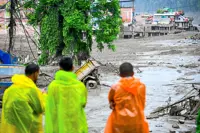
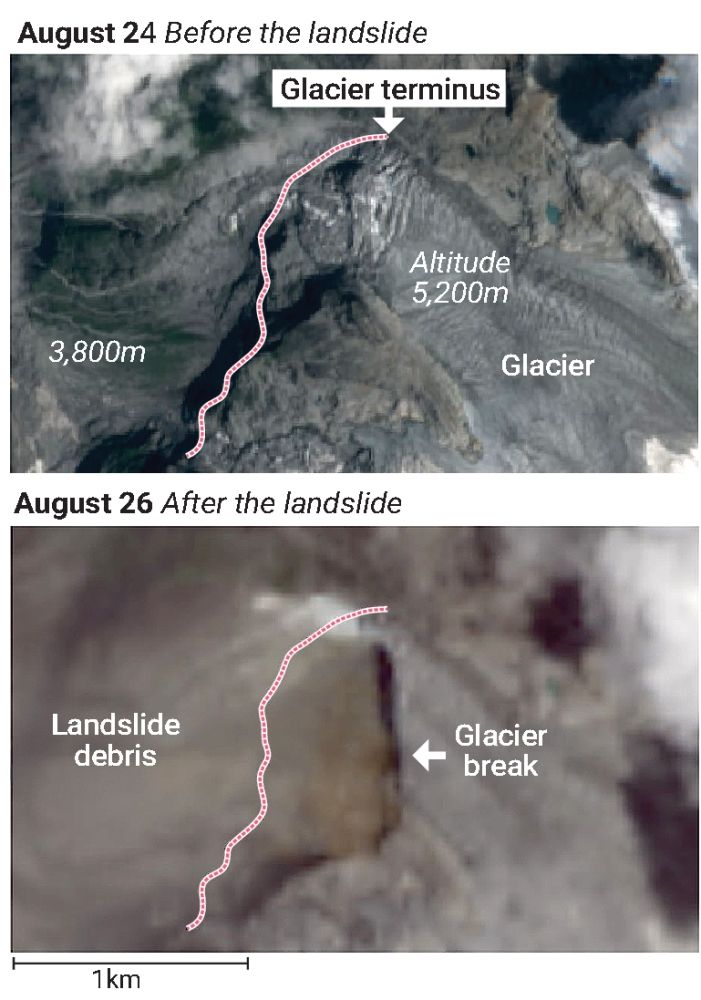
The rapid landslide of ice and rock and flash floods that killed hundreds in Nepal and China’s Tibet were triggered when the lower part of a glacier broke off and crashed on to the valley floor hundreds of metres below.
Satellite imagery shows a large part of a glacier near Langtang Lirung peak split off when compared with imagery taken a few days earlier.
An avalanche of ice and rock swept down the Lhende Khola river, which runs along the mountainous Nepal/Tibet border.
The mudslide slammed into Gyirong port in Tibet and into Nepal, creating high-speed flash floods that washed away entire roads and power projects and inundated villages.
Verified videos showed dozens of people swept away at the border.
Chinese government geologist Guo Zhaocheng said the ice-avalanche debris flow that caused the mudslide travelled at about 50m per second, leaving people little time to react, and extended for more than 20km.
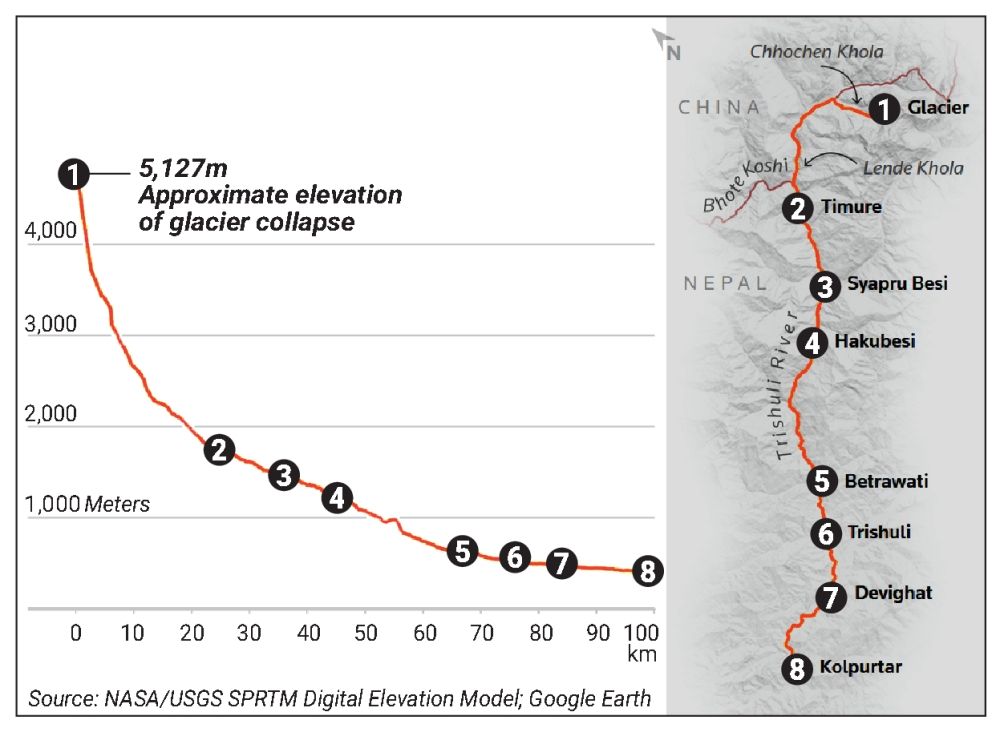
Flood waters created by the collapse rushed through valleys in Nepal and altered river channels more than 100km downstream, near the Indian border, after a descent of more than 4,500m in elevation from the Himalayas.
The Red Cross said that entire villages had been destroyed and impassable roads and bridges had left communities cut off.
The full scale of the disaster remains unclear, it added.
“It was a huge gush of mud coming straight towards us,” said Keshav Prasad Baral, a 68-year-old survivor being treated in a Nepali hospital.
“As it got closer, it kept rising higher and higher. When I saw it enter our home, I tried to grab my wife’s hand and take her to the terrace. But she was swept away by the mud.”
“Climate change is generating conditions that can destabilise high-mountain rock and ice,” said Simon Cox, chief scientist at the Mountains to Sea programme at Earth Sciences New Zealand.
That in turn makes collapses and cascading hazards of the kind seen this week more frequent, he added. While experts caution against describing climate change as the sole, immediate trigger for Wednesday’s collapse, they say that rising temperatures and melting glaciers probably played a role in the disaster.
Warming can reduce ice support on steep slopes, boost meltwater, and change patterns of freezing, thawing and rainfall, which can weaken mountainsides and make large collapses more likely in some spots, Cox added. — Reuters