
The Chinese podcaster Zhongshu, who garnered widespread international acclaim for her recent interview with filmmaker Christopher Nolan, is now facing allegations of paraphrasing and plagiarism in her podcasts and published works.
The interview between Zhongshu and Nolan concerning The Odyssey, released on July 31, quickly went viral and was celebrated as “smart,” “the most interesting and profound,” and “peak journalism” by commentators in media and culture.
In the 17-minute video, the PhD candidate in political philosophy at Boston College deviated from the typical promotional questions to delve into the philosophical complexities behind The Odyssey and Nolan’s adaptation.
The video interview’s rapid success placed the 29-year-old woman in the spotlight, but she later expressed her willingness to “quit the Internet anytime” in an interview with the Chinese media outlet New Weekly if “my fame begins to consume my time.”
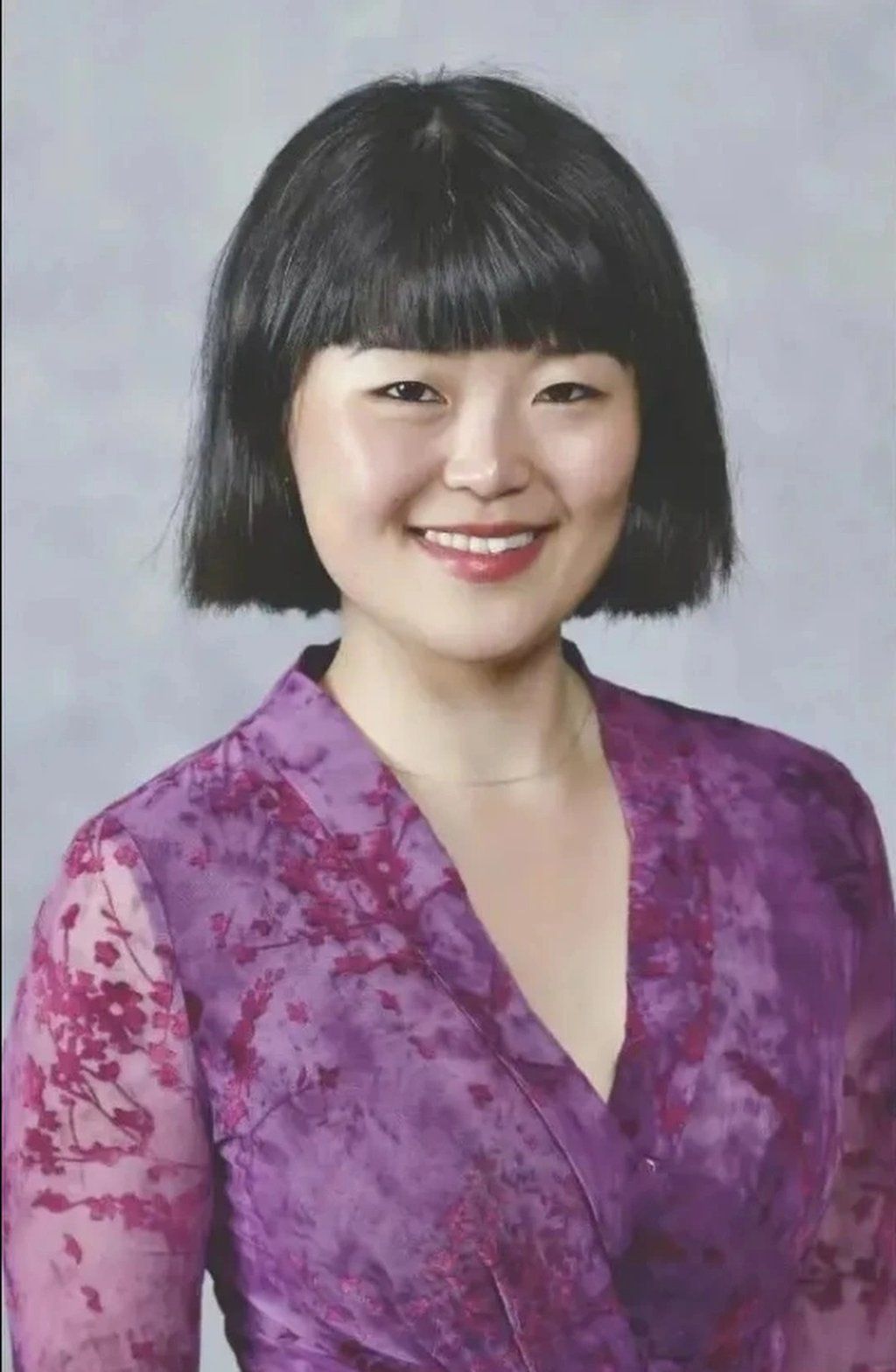
Soon after, she found herself embroiled in controversy on Chinese social media. The scrutiny began on Douban, a social networking platform favoured by culture professionals, where some users discovered that her podcast channel Du Shu Bu Cheng Lin (A single tree does not make a forest), which has nearly one million followers, paraphrased the ideas of others without proper attribution.
Netizens began to examine her content closely, accusing her of translating and paraphrasing academic publications, open courses, and podcasts from the English-speaking world.
Her podcast content was found to exhibit similarities in structure, viewpoints, and even humour with the original materials.
In one episode, a guest speaker used the phrase health and literacy “corps” – which was correct – but the AI-generated transcript mistook it for “court.” Zhongshu’s Chinese translation repeated this error by translating it as “court.”
As more people joined the campaign, they revealed that her published texts, including the Chinese article, How Universities Combat AI Cheating, released in Caixin Weekly, plagiarised Rose Horowitch’s How AI Killed a 133-Year-Old Princeton Tradition, published in The Atlantic, and contained factual inaccuracies.
Caixin Weekly has since removed the article from its website and labelled the page as “pending review.”
The translator’s preface she wrote for her translations of works such as ancient Greek scholar Plutarch’s Moralia and Hannah Arendt’s The Human Condition has also been revealed to have plagiarised ideas from other scholars.
Simultaneously, netizens investigated Zhongshu’s personal background, questioning whether she had exaggerated her credentials.
While Zhongshu often introduced herself as a university lecturer, people sought her real name – Zhuge Yiyang – and discovered that she taught at the Brandeis Osher Lifelong Learning Institute, a learning community for adults aged 50 and over.
Given that anyone can apply for a lectureship at the institute, some felt Zhongshu’s profile was less impressive, arguing that the title “university lecturer” implies formal employment with a university.
Her page at Boston College indicates no published papers, leading to questions about her academic record as she was six years into her PhD studies.
She referred to herself as a “small-town swot,” a Chinese term used by students from rural areas to humorously depict their lack of social and cultural capital, rendering their hard work seemingly futile.
Ironically, she attended Groton School, one of the wealthiest boarding schools in the U.S., and continued her studies in the U.S. for her bachelor’s degree.
Zhongshu also claimed to have mastered English, German, French, ancient Greek, and Latin. Introducing her recently published Chinese translation of The Human Condition, she referred to herself as “the scholar best suited to translate Hannah Arendt in China,” while disparaging the prior Chinese translator of Arendt’s text as “foolish and shallow,” possessing “a brain as tiny as a walnut.”
After the interview with Nolan became a sensation, Zhongshu produced a podcast longer than the original discussion to analyse why it captivated the Western Internet. She mentioned she only viewed the film a day before the interview and prepared her questions on the way home.
For many commenters, her unapologetically self-indulgent demeanour, combined with new-found scrutiny of her academic integrity, became increasingly unacceptable.
Some even drew parallels between her temperament and that of Donald Trump, noting their shared outspokenness and larger-than-life personas.
Zhongshu did not directly confront the allegations but reiterated to the Southern Metropolis Daily what she told Nolan: “We live in an age that demands apology from greatness,” positioning herself as that “greatness.”
In a recent podcast, she seemed unfazed by the surrounding criticisms, revealing plans to appear on “a series of Western intellectuals’ podcasts in the U.S.” once her autumn semester commences.
The SCMP reached out to Zhongshu and Boston College regarding the plagiarism allegations, but neither responded by the time of this article’s publication.
“Plagiarism, paraphrasing, translation without referencing – these are unacceptable behaviours for a scholar,” asserted one online observer.
“I prefer talking to AI rather than listening to paraphrased podcasts,” stated another.
“Her popularity highlights the superficiality of our time. She skilfully presents herself as a prodigy and intellectual, feeding our yearning for a cultural icon that offers the illusion of shared intellectualism,” a third commented.
“I wish I had just one per cent of her confidence. It could help me navigate the world effortlessly,” remarked another. -- SOUTH CHINA MORNING POST