
Monkeys are becoming one of the most persistent and destructive enemies of farmers in Nepal.
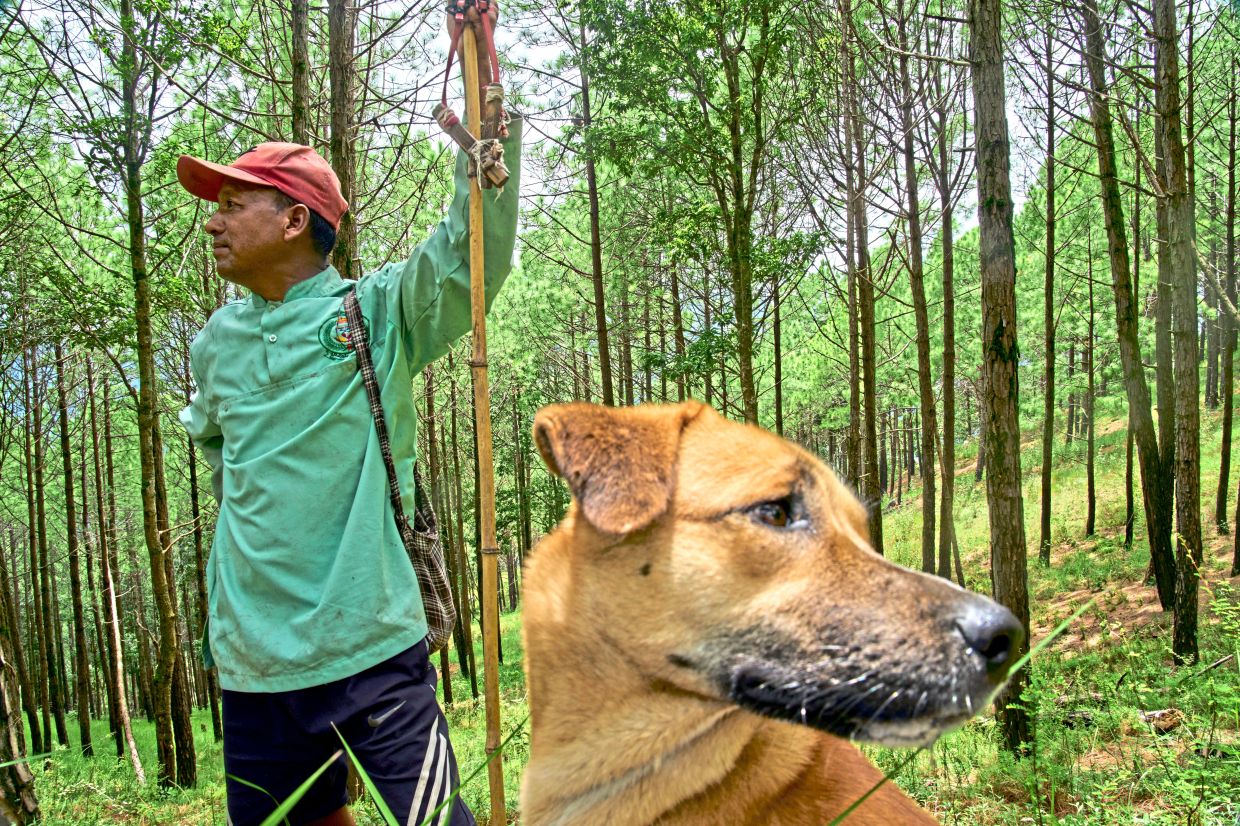
At dawn, rural communities across the country gather to fan out across fields carrying slings, sticks and homemade noise cannons and keep watch on the tree line. Some bring dogs, others shout into the forest.
The aim is to stop hordes of macaques from destroying crops that can vanish in minutes.
The daily ritual reflects a growing crisis across rural Nepal.
Farmers say the monkey raids have become one of the biggest threats to their livelihoods despite years of failed efforts to drive the aggressive animals away.
It also mirrors a broader shift in the countryside as villages lose people to cities and overseas jobs, leaving fewer hands to farm or defend the land.
Villagers have tried almost every deterrent they can think of: slings, stones, laser lights, dogs and homemade noise cannons.
In July, a rural municipality in eastern Nepal closed schools and government offices for three days so hundreds of residents could drive monkeys into the surrounding forests.
Within days, the monkeys were back.
Dhurba Rai, a lawmaker from eastern Nepal, said the problem intensified about a decade ago after the government confiscated firearms that villagers had long used to protect crops and livestock during the Maoist insurgency.
Without that deterrent, he said, the monkeys became increasingly bold.
The issue has become a political issue, with lawmakers in Parliament struggling to balance the protection of wildlife with the survival of rural communities.
For Debaka Karki, 71, those debates feel remote.
Most mornings, she stands guard over her small plot, watching the surrounding trees for movement.
On one recent occasion, she stepped away for only a few minutes to refill a bottle of warm water.
By the time she returned, a troop of monkeys had swept through the field, stripping away crops she had spent months growing.

Her sons have moved to Kathmandu for work, leaving her and her husband to manage the farm alone.
With few younger people left in the village, there is no one to help keep the animals away.
In Dharmghar, a village in Dolakha District, the population has fallen from nearly 800 people in 2017 to about 150 now, according to Ganesh Karki, who heads the local community forest.
Of its roughly 210 households, only about half remain occupied after younger residents left for cities and overseas jobs.
The abandoned fields and homes, Karki said, have given monkeys more room to spread.
Krishna Bahadur Khadka, 73, was attacked by a troop of monkeys last year.
They knocked him to the ground, bit his back and left him bedridden for nearly four months.
He has never fully recovered from the attack.
“Thankfully, other people came and chased the monkeys away. Otherwise, I don’t know what would have happened,” he said. — AP