




US President Donald Trump has personally pressed Chinese President Xi Jinping over transnational criminal organisations involved in Southeast Asia’s sprawling online scam industry, a senior State Department official said on Thursday.
Michael DeSombre, assistant secretary of state for East Asian and Pacific affairs, told the Senate Foreign Relations Committee that Washington was raising concerns about both fentanyl trafficking and scam centres “at the highest levels” with Beijing.
“President Trump has raised transnational criminal organisations with President Xi,” DeSombre said during a hearing on Washington’s response to global scam operations.
He said the US had urged Beijing to demonstrate that it was not helping alleged Chinese crime bosses evade international accountability.
“We’ve encouraged China to demonstrate that it is not abetting these crimes by allowing Chinese crime bosses to be held accountable internationally,” DeSombre said.
A spokesperson for the Chinese embassy in Washington confirmed that the two countries have been cooperating to combat transnational crime, calling it a “common responsibility” and saying the cooperation had yielded positive results.
“China and the United States have carried out a series of practical cooperation in such areas as combating telecom fraud and online gambling, repatriation and the pursuit of fugitives, and achieved many tangible results,” the statement said.
DeSombre's comments come as the Federal Bureau of Investigation has expanded cooperation with Chinese authorities on cyberfraud and other transnational crimes, including through exchanges of law-enforcement personnel and joint operations.
The unusual partnership has created a delicate balance for Washington: US officials are seeking Beijing’s help dismantling criminal networks while questioning whether China is doing enough to hold their leaders accountable for crimes committed against Americans.
Pressure on Beijing
Although major scam compounds are concentrated in Southeast Asian countries including Myanmar, Cambodia and Laos, US officials and international investigators have linked many of the operations to Chinese transnational criminal groups.
The compounds frequently rely on trafficked workers who are lured with fraudulent job offers and then forced under threats of violence to conduct online scams.
Senator Jim Risch, the Republican chairman of the Senate Foreign Relations Committee, said the compounds had become a multibillion-dollar criminal industry involving human trafficking, money laundering, drugs and arms.
“As these scam centres evolve to use AI and other technologies to stay ahead of law enforcement, it is more important than ever that we mount an effective response,” Risch said.
Fraudsters increasingly use artificial intelligence to create realistic voices, messages and online identities, allowing them to impersonate relatives, employers and government officials. Such technology has been deployed in romance scams, fraudulent job offers, investment schemes and sextortion.
Americans reported losing more than US$12.5 billion to fraud in 2024, according to the Federal Trade Commission, although authorities say the actual total is likely considerably higher because many victims do not report their losses.
DeSombre said a preliminary US estimate placed reported American losses to Southeast Asia-based scam groups alone at US$12.5 billion in 2025. The State Department expected its final estimate to be “significantly higher”, according to his written testimony.
Lawmakers questioned whether Beijing was concentrating its enforcement efforts on operations targeting Chinese citizens while doing less to stop the victimisation of Americans and other foreigners.
“What about the idea that China is selectively enforcing the law on these scam operators that are targeting Chinese citizens, but not really worrying about Americans or other foreigners?” asked Senator Pete Ricketts, a Republican from Nebraska.
DeSombre said Washington was urging governments in the region not to return suspected criminal leaders to China before they could be held accountable elsewhere for alleged crimes against foreign victims.
A prominent example is Chen Zhi, the founder and chairman of Cambodia-based Prince Holding Group. Cambodia extradited Chen to China in January after arresting him at Beijing’s request.
US prosecutors have separately charged Chen with wire fraud and money-laundering conspiracies, alleging that he directed forced-labour scam compounds in Cambodia. He has not faced those charges in a US court.
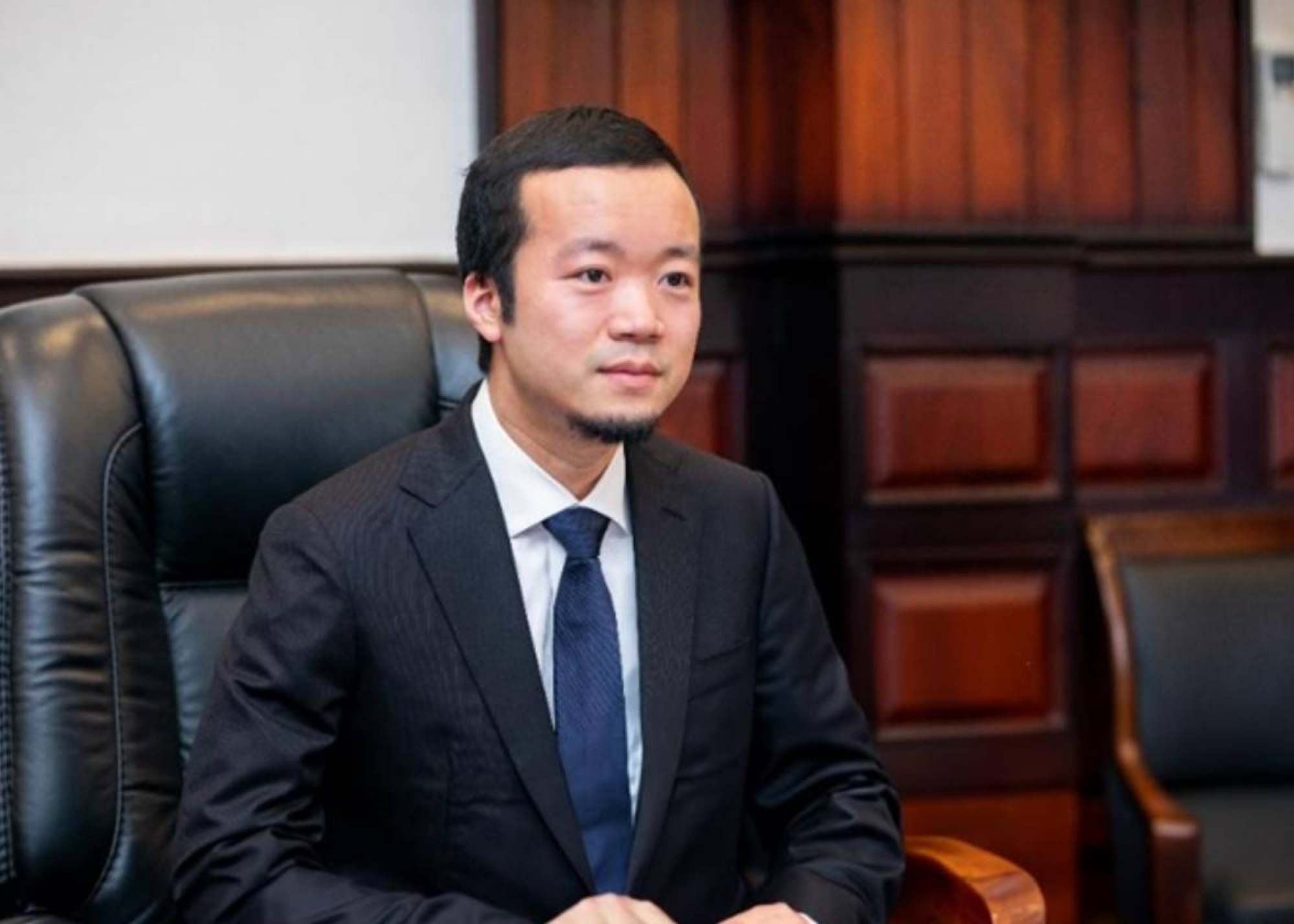
The US Justice Department also filed a civil action seeking the forfeiture of roughly 127,000 bitcoin linked to the alleged operation and valued at about US$15 billion when the action was announced. The department described it as the largest forfeiture action in its history.
China has conducted its own sweeping crackdown on online fraud, working with Southeast Asian governments on raids and the repatriation of suspects.
Analysts say Beijing’s campaign sharply reduced scams targeting Chinese citizens but also accelerated a shift by many syndicates towards American and other foreign victims.
One common form of investment fraud is known as “pig butchering”, derived from the Chinese term shazhupan . Scammers cultivate a victim’s trust over an extended period before persuading the person to transfer money into fraudulent investments.
Expanding cooperation
Despite Washington’s criticism, cooperation between Chinese and American law enforcement agencies has grown substantially over the past year.
FBI Director Kash Patel recently told Reuters that the bureau and China’s Ministry of Public Security had established working groups covering cyberfraud, fentanyl, crimes against children and fugitives.
The cooperation has included reciprocal visits by officials, intelligence sharing and joint operations. Patel said Chinese officers had visited FBI facilities in the United States, while American agents had travelled to China to work on cases, according to reports.
Patel visited Beijing in July and met Chinese Public Security Minister Wang Xiaohong, with both sides pledging to deepen what Chinese state media described as “practical cooperation” against transnational crime.
The closer relationship has nevertheless prompted concerns among former US law-enforcement officials about the counter-intelligence risks of allowing Chinese security personnel inside FBI facilities and sharing investigative information with them. Patel has said the exchanges are narrowly limited and that foreign visitors are vetted.
Trump signed an executive order in March directing federal agencies to develop a plan to disrupt cybercrime, fraud and predatory financial schemes targeting Americans.
The administration has also formed a 13-country Counter-Scams Contact Group to coordinate law enforcement, asset seizures, sanctions and information sharing. China is not among the countries listed as members of the group.
Congress is considering the bipartisan Scam Compound Accountability and Mobilisation Act, introduced by Senator Jeanne Shaheen, a Democrat from New Hampshire.
The legislation would establish a government strategy against overseas scam compounds and human trafficking, authorise sanctions against people and entities supporting the networks, and improve help for victims.
“The good news is that the United States has begun responding to this threat,” Shaheen said. “If these criminal organisations operate across borders, our response has to operate across borders.” -- SOUTH CHINA MORNING POST


