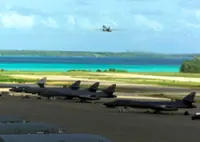
Bertrice Pompe was born in Diego Garcia, situated in the Indian Ocean halfway between Tanzania and Indonesia, in 1971, making her one of the last Chagossians to enter the world on an island that her family would soon be forced to leave.
“Some families, like brothers, sisters, were separated,” she said. “Some went to the Seychelles, some to Mauritius ... close family, brothers, sister, mother, father, separated ... and they never saw each other again.”
Before Mauritian independence in 1968, the British government detached the Chagos Islands from the Mauritius administrative boundaries to create the British Indian Ocean Territory.
The entire population of the largest island in the Chagos Archipelago was removed in the late 1960s and early 1970s to make way for one of the most strategically important US-British military bases in the world.
“We were always identified as different,” Pompe said, about growing up in the Seychelles.
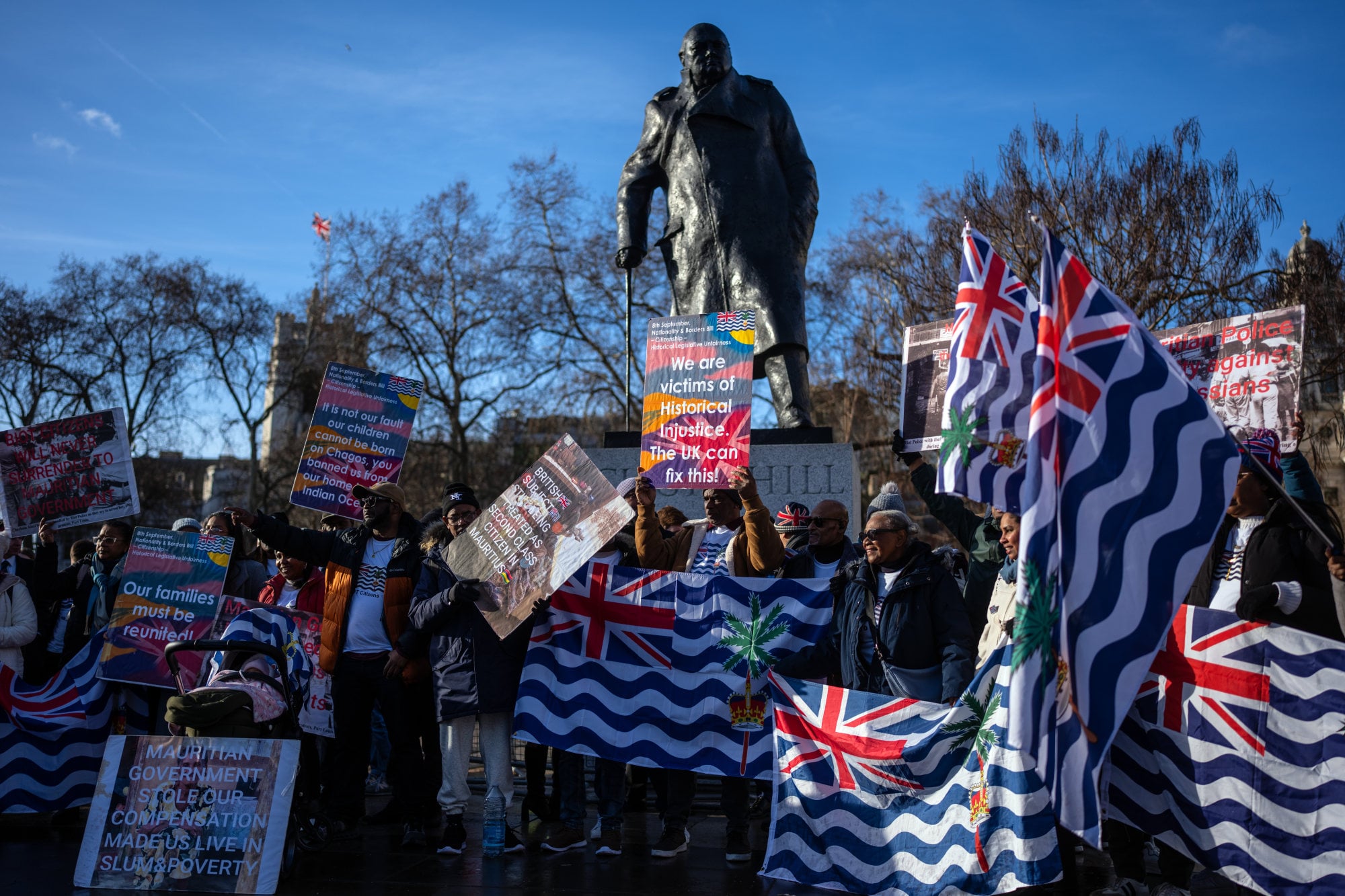
Now based in London, she has become a prominent voice in the Chagossian fight for the right to return. She also opposes the 2025 agreement to transfer sovereignty to Mauritius and allow Britain to retain a 99-year lease on Diego Garcia for billions of dollars.
“There is nothing in that deal for us,” Pompe told the South China Morning Post, adding: “I will not be allowed to go back to Diego Garcia. What’s in there for me?”
It is a question that cuts through decades of geopolitical bargaining. For more than a century, Chagos has been shaped by the strategic interests of larger powers – from Britain and the US to Mauritius, and now by the rivalry between Washington and Beijing.
As a crucial military hub, Diego Garcia supports US operations across the Middle East and the Indo-Pacific. However, the arrangement was challenged and the International Court of Justice backed Mauritius’ claim that Britain’s administration of the islands was unlawful.
Last year, then-British prime minister Keir Starmer defended the agreement to transfer sovereignty to Mauritius and instead lease Diego Garcia as necessary to protect the future of the military base.
Without it, Britain “would not be able to prevent China or any other nation setting up their own bases on the outer islands or carrying out joint exercises near our base”, he argued.
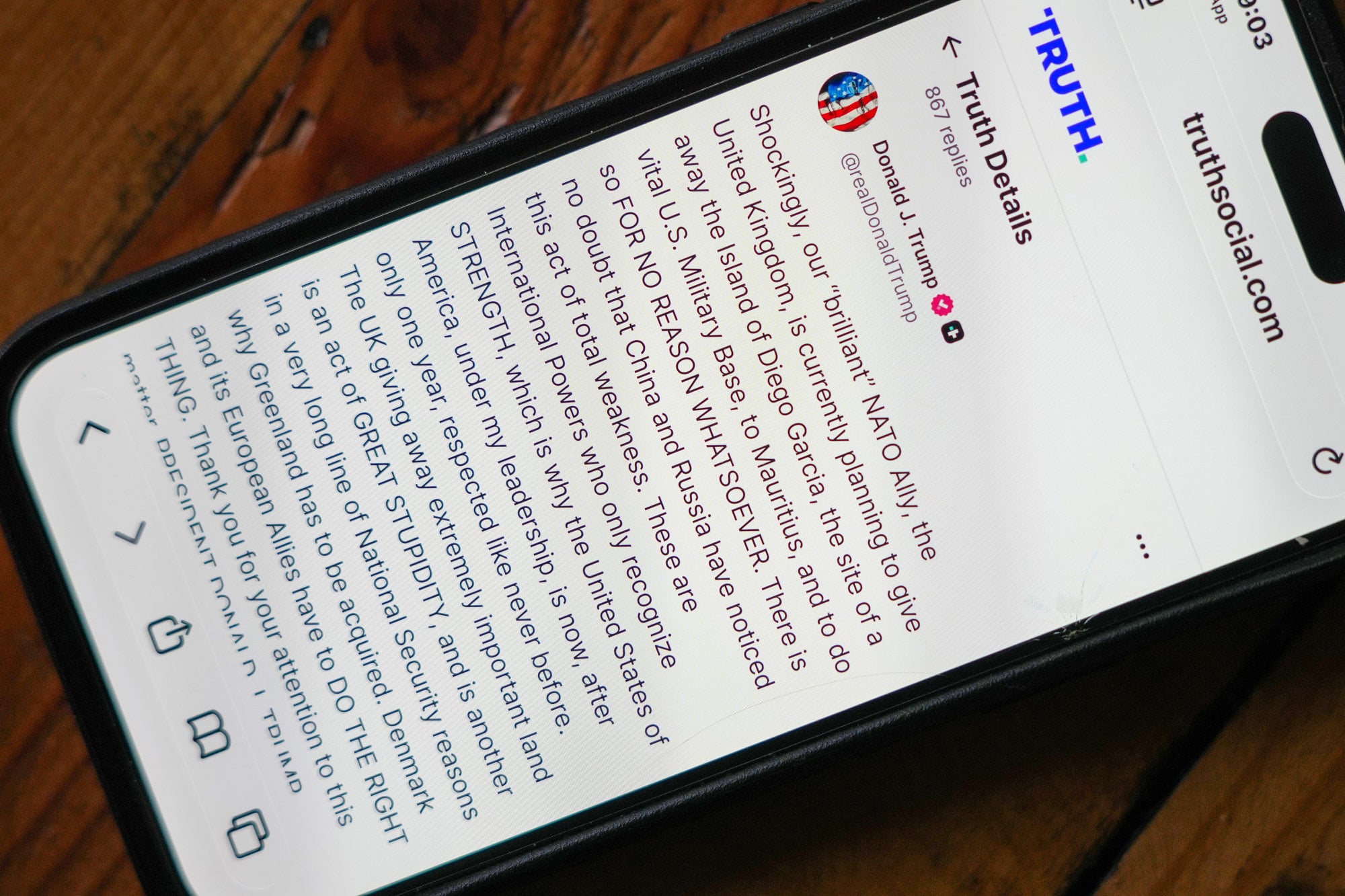
But Starmer soon found himself at odds with Washington. After initially calling the deal the “best” achievable arrangement, US President Donald Trump reversed course, urging London to scrap it as an “act of great stupidity”.
Handing sovereignty to Mauritius could open the door to greater Chinese influence in the Indian Ocean because of its close ties with Beijing, Trump warned.
Since then, the White House has floated the alternative possibility of the US buying the islands outright, saying discussions with Britain are under way.
That leaves Andy Burnham – Britain’s seventh prime minister in a decade – with a difficult inheritance: an unresolved agreement negotiated under his predecessor and one of the first domestic and foreign policy tests of his premiership.
While Starmer held back on settling the future of the Chagos Islands after Trump publicly opposed the deal, Burnham – who maintained cordial ties with China as mayor of Greater Manchester – is signalling that he may move ahead with the arrangement.
The test for Burnham will be less about the substance of the Chagos policy itself and more about how he manages disagreements with the US president, according to analysts. Not everyone believes he will be able to insulate Britain from Washington’s pressure.
Nilanthi Samaranayake, a security analyst focusing on the Indian Ocean, said that while Burnham appeared set to adopt a similar view on Chagos as Starmer, from a US perspective the more important difference might lie in style rather than substance.
“What’s different is that he may handle issue differences with Trump, like Greenland and Iran, more deftly than Starmer,” she said.
Samaranayake also noted that the idea of US-Mauritius bilateral discussions was not without precedent. Pravind Jugnauth, during his term as Mauritian prime minister, had previously suggested providing the US with a 99-year lease on Diego Garcia.
Still, it was India rather than China that was most likely to shape the space for any such arrangement, Samaranayake argued.
“India has significant weight in Mauritius’ national security calculus. Even during the best of times in the US-India relationship, India may not want the US to be a resident Indian Ocean country,” she said.
Grenville Cross, a senior counsel and former director of public prosecutions in Hong Kong, was among those questioning Burnham’s ability to withstand pressure from the Trump White House.
Writing in China Daily, Cross observed that it would be “fascinating to see how [Burnham] responds once Trump applies the thumbscrews, as he did with his predecessors”.
“The Trump administration has shown it wants to determine Britain’s domestic and foreign policies, and it has walked all over Starmer,” he added.
For Dominique Soopin, president of the self-declared transitional government of the Chagossian people, the biggest question is not who ultimately controls Chagos, but whether the people who were removed are finally allowed a voice in deciding their future.
In a letter to Burnham, Soopin called on the British government to formally recognise Chagossians as a distinct community before any final decision was made over the islands’ future.
“Before long-term political outcomes are determined, the Chagossian people should be formally recognised as a distinct community, enabling them to participate meaningfully in decisions affecting their future,” she wrote.
Chagos is ‘not for sale’
For Soopin, the dispute is not a chess game between global powers. It is about a people whose homeland has been treated as a strategic asset for generations.
“Powerful countries just see Chagos as strategic. I don’t see strategic,” she said in a separate interview with the SCMP.
“I see the human life. I see the human value, the connection, the nature, the stories that people left because people decided for them by ignoring them, because they were not considered as human.”
As Washington weighs the strategic importance of the islands, Soopin has a message for any government deciding the archipelago’s future without Chagossians: “Chagos is not for sale. It is a homeland that needs to be repaired with its people.”
That argument has gained unexpected political weight in Britain. A YouGov poll released days before Burnham’s arrival at No 10 showed that 72 per cent of adults believed Chagossians should have a vote on whether the islands’ sovereignty was transferred to Mauritius.
Only six per cent opposed the idea, according to the survey, commissioned by campaign group the Great British Political Action Committee. Chief executive Claire Bullivant described the result as “one of the clearest messages you will ever see from the British public”.
Frustration has also taken a more dramatic form. In February, a small group of British-Chagossian campaigners landed on a remote island north of Diego Garcia and have refused to leave.
Misley Mandarin, a member of the group, has said the campaigners want the islands to remain under British sovereignty. An effort to remove them stalled when a court granted a temporary protection order. A final ruling is expected in September.
Their presence challenges one of the central realities of the Chagos dispute – that the islands remain a tightly controlled British military territory where ordinary Chagossians are not allowed to freely return or settle.
Middle path
The puzzle for Burnham to solve is whether any realistic middle path still exists – one that protects the Diego Garcia base, manages the relationship with Washington and finally gives the people who were removed a meaningful voice in their own future.
Some analysts argue such a path is still possible. According to Nitya Labh of Chatham House, Chagossian resettlement and the continued operation of the military base are compatible, with British-US-Mauritius maritime cooperation helping to ensure its uninterrupted functioning.
However, diplomats had long assumed Mauritius represented Chagossian interests, Labh warned. “This assumption is dangerous,” she said, arguing that it overlooked the racial and socio-economic dynamics that had repeatedly marginalised Chagossians.
Labh also suggested that both governments might delay the final sovereignty transfer to reduce political scrutiny and allow regional tensions to ease.
With the US continuing to use Diego Garcia for regional operations and logistics, its “position in the ongoing conflict further complicates any considerations of a sovereignty transfer”, she said.
For now, Pompe has made clear that she does not yet trust either Burnham or Trump.
“Until [Burnham] or Trump come to speak with us ... put us on the table, see us, include us in the negotiation, not just tell us afterwards what they’re doing ... we don’t trust no one,” she said.
“I didn’t vote for anyone ... who voted for him? The trust will come after, but if he doesn’t do that, why would we trust him?” -- SOUTH CHINA MORNING POST