




Donald Trump’s demands that American allies in the Asia-Pacific region share more of the defensive burden have renewed questions about how far they can rely on the United States to help deter the likes of China and North Korea.
Such concerns have led to an increasing focus on developing their own defence industries – but analysts have said that may eventually weaken American dominance in the global arms trade.
Questions over Washington’s commitment
In the National Security Strategy released in December, the Trump administration urged allies such as Japan and South Korea to spend more on collective defence to strengthen their ability to deter “aggression”.
It said this was “necessary to deter adversaries and protect the first island chain”, a series of islands and archipelagos that runs from Japan to the Philippines and Borneo.
The chain stands between mainland China and the Pacific and has been identified as a strategic barrier that could be used to block access to the open waters.
Its significance is heightened by the fact that Taiwan sits at its heart.
Beijing regards the island as part of China and has never renounced the use of force to bring it under its control.
Most countries, including the US and its allies, do not recognise Taiwan as an independent state, but Washington opposes any attempt to seize the island by force and is legally bound to supply Taipei with defensive weapons.
Pentagon chief Pete Hegseth drove home the message about defence spending in June, when he told the Shangri-La Dialogue in Singapore that the era of the US “subsidising the defence of wealthy nations is over”, and that his country needed “partners, not protectorates”, with alliances built on “shared responsibility, not dependency”.
Doubts about the US commitment to the region have been growing since the National Security Strategy designated the western hemisphere as its top priority.
The war against Iran has raised further questions after Washington relocated Patriot and Terminal High Altitude Area Defence anti-missile system batteries from South Korea to the Middle East to top up US stockpiles that were depleted by the war.
Benjamin Barton, an associate professor of international relations at the University of Nottingham Malaysia, said recent efforts by Asia-Pacific countries to develop their own defence industries seemed to be driven by Washington’s “erratic grand strategy”.
Barton said the US had “castigated” its allies for not spending enough on defence in the hope they would “increase expenditure as a means of fuelling demand in the American military-industrial complex” but this seemed to be “backfiring”.
“Allies have responded by increasing military spending to purchase weapons systems built locally or by sometimes diversifying away from the US due to trust issues,” Barton said.
“China and North Korea’s military build-ups do count too, but these threats have been fairly constant. Consequently, the stronger variable of the two seems to be coming from the growing unreliability of US foreign policy.”
The US is the world’s largest arms exporter, with 42 per cent of the global market share between 2021 and 2025, and is especially dominant when it comes to advanced weapons such as warplanes.
Major US allies in the region are among the biggest recipients of these sales, with Australia, Japan and South Korea all among the top 10 buyers of US weapons, according to the Stockholm International Peace Research Institute.
Domestic arms development
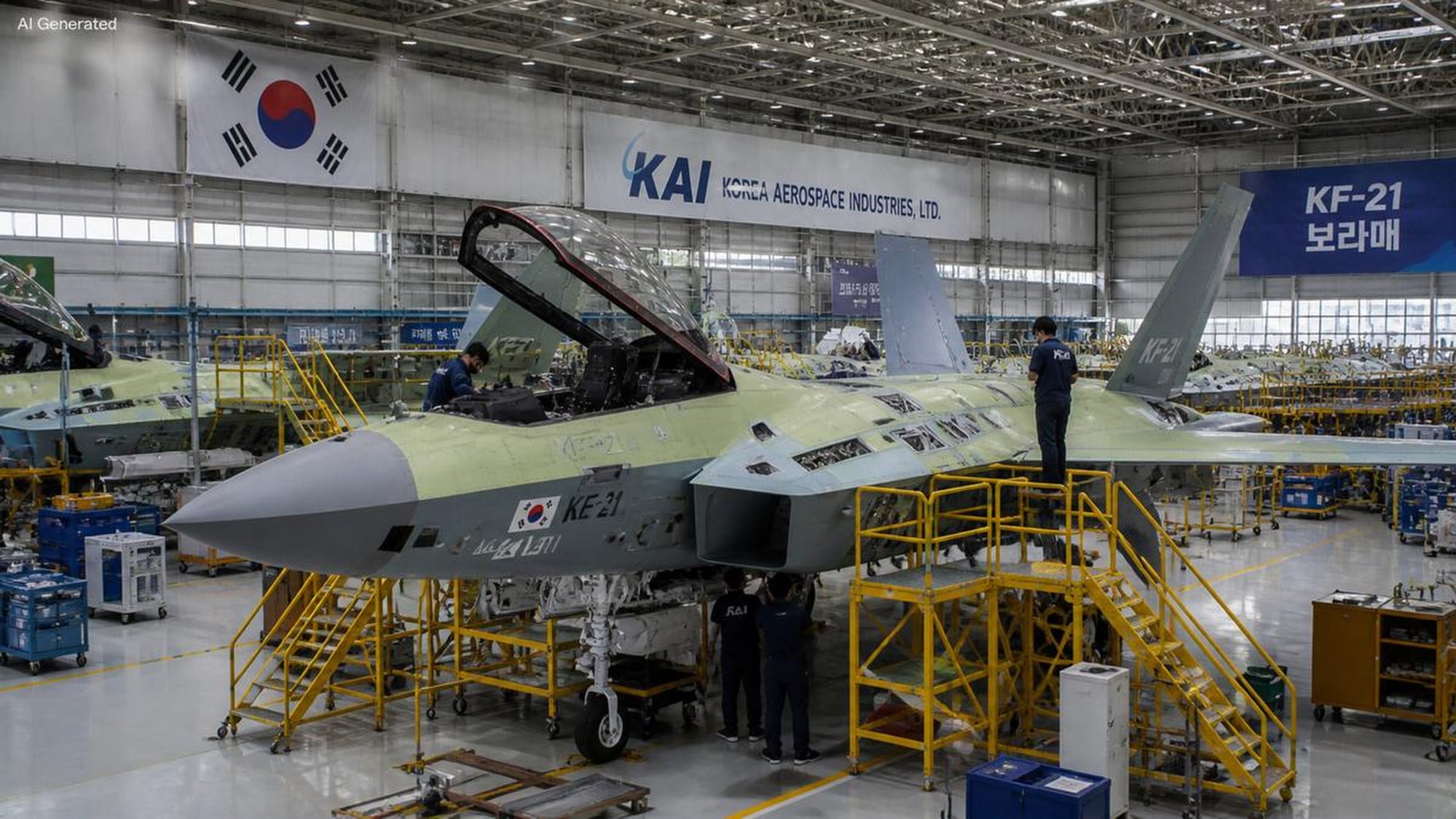
South Korea has been at the forefront of the drive to develop its domestic defence industry and was the only US regional ally to feature in the institute’s list of the top 10 global arms exporters over the past five years.
It has announced plans to develop a nuclear-powered submarine and later this year will start delivering 4.5-generation KF-21 fighters to its air force. Seoul is also planning to upgrade the fighter to at least fifth-generation status in the future.
Bence Nemeth, a senior lecturer in defence studies at King’s College London and executive director of the King’s Centre for Defence Economics and Management, said other countries in the region were also developing their domestic defence industries but were lagging behind South Korea in this regard.
“This is not simply a reaction to the current political climate: Seoul has systematically developed its defence industry for roughly five decades,” Nemeth said.
“Today, over 80 per cent of South Korean arms procurement is domestic, including combat aircraft, main battle tanks, armoured vehicles, naval vessels, submarines and missile systems. Depending on the weapons system, the localisation rate can range from roughly 50 to 90 per cent.”
Japan is also stepping up efforts to build up its military and plans to raise defence spending to 2 per cent of GDP by 2027.
It is also attempting to diversify by developing advanced long-range missiles, including Type-12 anti-ship missiles, that would allow them to strike back in the event of an attack.
It is also a member of the Global Combat Air Programme, which aims to develop a sixth-generation warplane by 2035, along with Britain and Italy.
“Japan has a capable defence-industrial base in some areas, especially in naval shipbuilding and selected advanced technologies ... but it has historically been more constrained politically and industrially than South Korea,” Nemeth said.
Its post-war constitution renounces the use of force to settle disputes and states its armed forces can only be used for defensive purposes, but Prime Minister Sanae Takaichi is seeking to revise it – a move certain to fuel tensions with China.
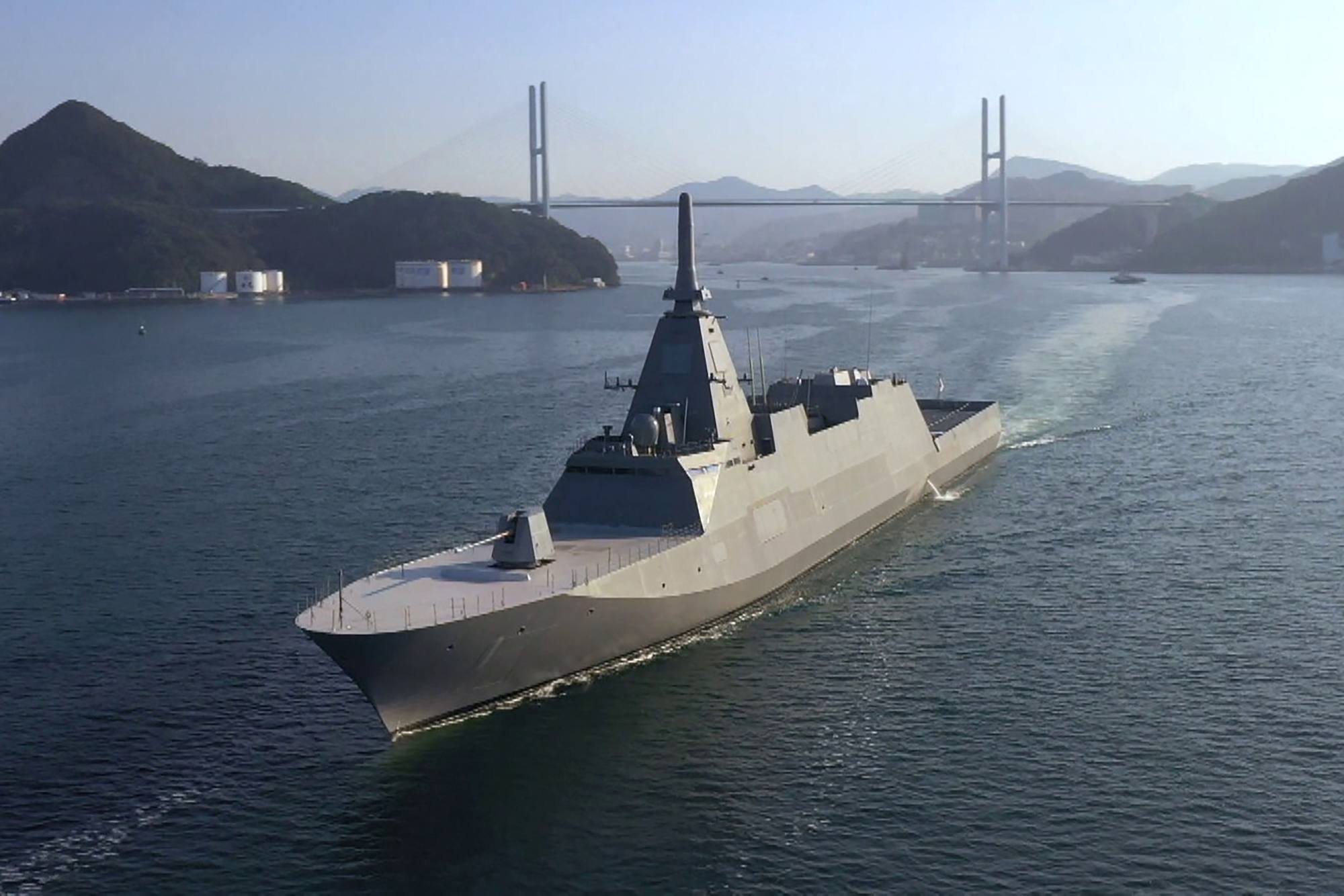
This shift has also seen it stepping up its arms exports – a development highlighted by the recent deal to supply Australia with Mogami-class frigates.
Australia is also likely to acquire the ability to build its own nuclear-powered submarines within two decades as part of the Aukus pact with Britain and the US, which will allow technology transfers from Washington.
Nemeth said these developments could “strengthen” the allied network by increasing the ability to maintain and develop arms supplies.
“Overall, I would not interpret regional defence indigenisation as a rejection of the US alliance system per se. It is better understood as a hedge against uncertainty and as a response to the fact that the US cannot and does not want to provide everything, everywhere, at the speed and scale required,” Nemeth said.
Tom Corben, a research fellow with the United States Studies Centre at the University of Sydney, said there was a “widespread perception” that the “regional strategic balance is shifting and that the risks of a regional conflict are growing”.
“That’s driven by a combination of China’s relatively opaque military build-up and perceptions that, while America remains indispensable to regional security, its relative military power in Asia is declining,” Corben said.
He said there were “clear incentives” for countries in Asia to develop their own weapons, but there was “no such thing as absolute self-reliance on this score”.
“Many regional countries – including US allies – perceive a growing need to boost their own national defence capabilities not only to better look after their own national security priorities, but also to make themselves more attractive and reliable defence partners for other like-minded states in the region, including the US,” Corben said.
China’s response
Meanwhile, China’s own military modernisation drive continues to gain momentum as it works towards a “centennial” goal in 2027 – the 100th anniversary of the founding of the People’s Liberation Army.
It has never specified what this goal is, but it is widely believed by outsiders to be related to deterring the US and ensuring the People’s Liberation Army has the ability to take Taiwan by force.
China is currently developing sixth-generation fighter jets, known unofficially as the J-36 and J-50, and is now thought to have the world’s largest navy.
Its third and most advanced aircraft carrier, the Fujian, entered service last year, and the Pentagon has said China plans to build six more by 2035.
Xiao Liang, a researcher for the Military Expenditure and Arms Production Programme at the Stockholm Institute, said the overall trend was “clear”: almost all Asia-Pacific countries were trying to strengthen their domestic arms industries, but China was the only one capable of producing complex weapon systems for all sectors.
In contrast, Australia, Japan, and South Korea specialised in certain areas, with Seoul being the “most successful recent case”.
“China’s military modernisation is still the most important driver, while uncertainty about long-term US commitments has reinforced and accelerated efforts to strengthen domestic industries and reduce dependence on foreign suppliers, although to the same extent as European Nato allies,” Liang said.
“But replacing leading US capabilities in areas such as stealth aircraft, engines, ISR [intelligence, surveillance and reconnaissance], advanced semiconductors or integrated command-and-control systems remains extremely difficult and expensive. I would expect more co-development and diversification rather than outright replacement of US systems.”
Liselotte Odgaard, a senior fellow at the Hudson Institute in Washington, said divergent standards or protectionism could “weaken” cohesion between allied nations.
She added that critical chokepoints, such as chips, propulsion and software, would “remain globally concentrated, limiting full autonomy”.
“Beijing will largely see it as containment continuity, not US withdrawal. Indigenous build-up by allies will be framed as US-aligned balancing and used to justify China’s own military expansion, while also worrying about tighter, more resilient regional coalitions,” she said.
Barton said this trend had “not gone down well in Beijing”, and may “not bode well” for future regional stability if China responded by increasing its own military spending.
“Although leaders in China may be satisfied to see growing evidence of a US strategic retreat – which is clearly what underpins Chinese grand strategy in Asia – they may not be reassured by the increasing ability of some of its neighbours to strike out alone and/or serve themselves as suppliers or security guarantors for others in the region,” Barton said.
“Were China to face multiple simultaneous threats along its eastern and southern periphery, this would force it back to a situation akin to the 1960s, where instability and unpredictability – which are not beneficial for growth – was the order of the day.”
Bence Nemeth, a senior lecturer in defence studies at King’s College London and executive director of the King’s Centre for Defence Economics and Management, said that indigenisation is developing at “very different levels” across the region, with South Korea clearly being the “most advanced case.”
“This is not simply a reaction to the current political climate: Seoul has systematically developed its defence industry for roughly five decades. Today, over 80 per cent of South Korean arms procurement is domestic, including combat aircraft, main battle tanks, armoured vehicles, naval vessels, submarines and missile systems,” said Nemeth. -- SOUTH CHINA MORNING POST


